10 hours
1-1 UCAT tutoring
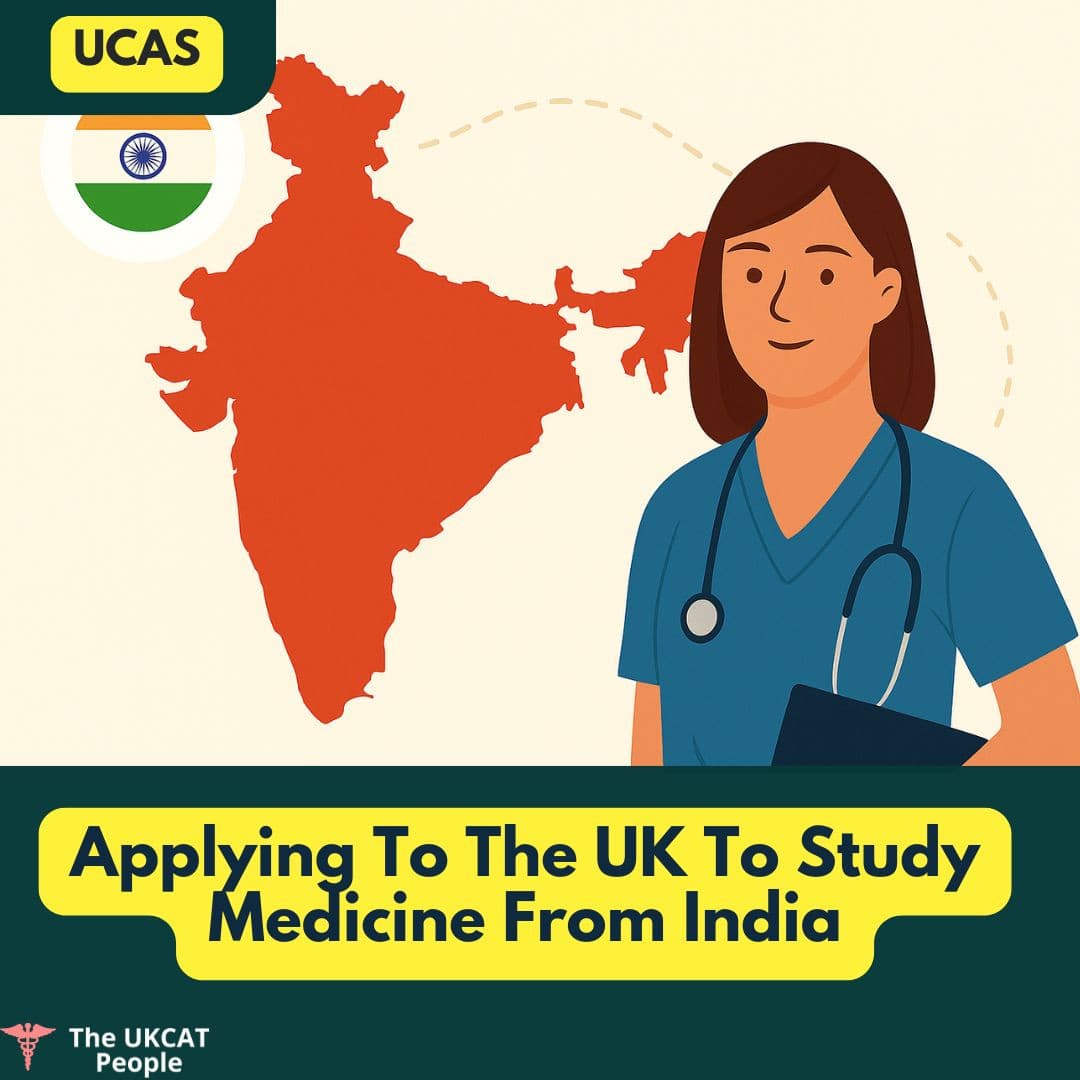
Studying medicine in the UK is becoming an increasingly popular choice for Indian students.
With its world-class healthcare system, prestigious universities and direct undergraduate entry route, the UK offers Indian applicants a clear and respected path to becoming a doctor.
Unlike in India, where NEET competition is intense and private MBBS seats can be costly, the UK system provides a more transparent and accessible alternative for many families.
At TheUKCATPeople, we support Indian students every year through their applications to UK medical schools.
Our Ultimate Package for medicine includes one-to-one mentoring, UCAT preparation, personal statement editing and tailored interview coaching. We are here to help you every step of the way.
There are several reasons why Indian students are increasingly choosing the UK as their preferred destination for medical studies:
For many families, the cost is comparable or even lower than private MBBS options in India or overseas
Yes. Many UK medical schools are recognised by the National Medical Commission (NMC), allowing graduates to return to India and practise medicine after completing the appropriate licensing exams.
We strongly recommend checking the current NMC list of recognised foreign medical institutions before applying. This list is updated regularly and can be found on the official NMC website.
Studying at an NMC recognised UK medical school allows you to return to India and sit the Foreign Medical Graduate Examination (FMGE), the screening test all foreign medical graduates must pass to be licensed. The FMGE remains the operational exam in 2026: the National Exit Test (NExT) that is due to replace it has been deferred, with the NMC running mock tests for several years before full rollout, so check the latest position on the official NMC website before you apply.
Our Ultimate Package is designed specifically for international applicants like you. It includes everything you need:
Our Gold Ultimate Package is the most popular choice for students applying from India.
To apply for medicine in the UK, Indian students typically need:
We help students from a range of educational backgrounds and can advise you based on your specific circumstances.
Many Indian parents weigh this up before Class 11. The short answer: all four can lead to a place at a UK medical school. If your child has a free choice, A levels or the IB are usually the stronger option.
If your child is already studying CBSE or ISC, there is usually no need to switch. Strong board results, a good UCAT score and four well-chosen medical schools is a proven route, and we support CBSE and ISC students every year. Changing curriculum part-way through can cost more in grades than it gains. Before you finalise choices, email or call each medical school's admissions team to confirm they accept your child's board for medicine and what percentages they need. Entry pages are not always up to date, and a written reply is worth keeping.
A common question is whether you need to sit the NEET to study medicine outside India. The simple answer is no.
If you plan to practise medicine abroad (for example, in the UK, Canada or Australia), you do not need NEET at all. Many of our students choose this route, as the UK offers direct admission through UCAS without requiring NEET scores.
NEET is only required for admission to MBBS courses in India (and for Indian students taking MBBS abroad who intend to return). Because UK medicine is undergraduate entry through UCAS, your route in is the UCAT and your school grades, not NEET. If you want to compare the two, the UCAT is an aptitude test of speed and reasoning rather than a syllabus exam, so it suits a very different style of preparation. See our UK medical school entry requirements for the full academic picture.
This is especially important for students exploring admission through NEET other than MBBS or for MBBS abroad after NEET due to limited seats in India.
Yes. Almost all UK medical schools require international students to sit the UCAT exam.
The UCAT (University Clinical Aptitude Test) assesses cognitive ability, problem-solving skills and your capacity to cope with medical training. Since 2025 the Abstract Reasoning subtest has been removed, so the UCAT now has four parts: Verbal Reasoning, Decision Making and Quantitative Reasoning, which together give a total score out of 2700, plus a Situational Judgement Test reported separately in Bands 1 to 4.
Indian students can take the UCAT at Pearson Vue test centres in major cities such as:
The test is offered between July and September, and early booking is essential as test centres fill up quickly.
Your UCAT score will play a major role in which universities you are likely to receive interviews from.
At TheUKCATPeople, we specialise in helping Indian students achieve top UCAT scores through one-to-one tutoring, mock exams and proven strategies.
On the 2700 scale, a score around 2500 or above is highly competitive for the most selective UK medical schools, while many strong applicants sit in the 2300 to 2500 range. Your target depends on the schools you choose, as each university weights the UCAT differently.
Whether you are looking for UCAT classes in India or UCAT coaching in Hyderabad, most find that general test prep centres are not familiar with the unique challenges of the UCAT.
Unlike NEET or JEE, the UCAT is an aptitude exam that requires speed, strategy, and tailored preparation.
At TheUKCATPeople, we offer personalised UCAT preparation in India through expert 1-1 online tutoring.
All our tutors are qualified UK doctors or top-decile medical students who have sat the UCAT themselves. Lessons are scheduled around Indian time zones and focus on your weakest areas through adaptive planning.
Whether you're based in Delhi, Hyderabad, Bangalore or anywhere else, our online UCAT coaching for Indian students offers maximum flexibility and outstanding results, making it a better option than generic UKCAT classes in India.
For free revision material, our UCAT Guides hub breaks down every subtest, scoring and timing, and you can drill timed questions on the UCAT online trainer.
Be mentored 1-1 by a doctor
Every question answered from abroad, from fee status to interview day, in your time zone.
Applications to UK medical schools are made through the UCAS platform. Indian students need to:
We support students with every aspect of this process, including writing an outstanding personal statement tailored to UK universities.
Our Ultimate Package is designed specifically for international applicants like you. It includes everything you need:
Our Gold Ultimate Package is the most popular choice for students applying from India.
Most UK medical schools welcome international applicants from India, some of the common medical schools include:
We have helped Indian students secure offers from all of the above, and can advise on which schools are most likely to suit your profile and preferences.
We also support Indian students applying to direct-entry schools, such as Buckingham Medical School, UCLAN, and Brunel Medical School, which are excellent options for students with slightly lower UCAT scores or non-traditional profiles.
These are ideal for applicants who might be exploring MBBS abroad for Indian students without NEET or want alternatives to highly competitive NEET-based admissions in India.
Boost your UCAT with 1-1 tutoring
Rated 5.0 from 660+ reviews. 1-1 sessions with top-scoring tutors, weekly or more often, built around your weakest subtests.
10 hours
1-1 UCAT tutoring
20 hours
1-1 UCAT tutoring
30 hours
1-1 UCAT tutoring
Tuition fees for international (overseas) students are usually between £38,000 and £68,000 per year as of 2026 entry, and many universities charge more for the clinical years (typically Years 3 to 5) than the early pre-clinical years. Most schools also raise fees by around 3 to 5 percent each year, so budget for increases across the five-year course. In addition, you should budget for:
While the cost may appear high, it is often comparable to or even lower than private MBBS colleges in India or abroad. Plus, a UK medical degree opens the door to high-quality training, job opportunities and international mobility.
Yes. Graduates from UK medical schools are eligible to apply for the UK Foundation Programme, which is a two year paid foundation programme required before becoming fully licensed.
After completing this, you can apply for:
The UK also offers a Graduate Visa route, which lets international students remain in the UK to work after completing their studies. It currently lasts two years, but for those applying from 1 January 2027 it will be reduced to 18 months (PhD graduates keep three years), so check the current rules with UK Visas and Immigration before you rely on it.
Every year, we help Indian students from cities including Delhi, Mumbai, Bangalore, Hyderabad and Pune to gain places at top UK medical schools.
Many of our students come from CBSE and ISC schools and achieve excellent UCAT scores with our help, some of these students go to Indian schools in Dubai and the UAE.
We understand the Indian education system and what it takes to stand out to UK universities. Our tailored approach has helped students secure offers from schools like St Andrews, Bristol and Queen Mary University of London.
Applying to medicine in the UK from India takes planning and organisation. Below is a step-by-step timeline to guide you through the entire process if you are aiming to apply in 2026 or 2027.
Start early. This is the best time to begin exploring your options and building your profile.
This is the perfect time to begin preparing for the UCAT exam.
This is the UCAT testing window. You will need to sit the exam at an official test centre.
This is the UCAS application deadline for all UK medical schools.
This is the interview period. Most UK interviews for international students are now held online.
This is when you will receive offers and begin preparing for your move.
Have a qualified doctor oversee your application via our Medicine Ultimate Packages
Our most popular programme for Indian applicants is the Ultimate Package, which includes:
✅ Join our incredibly successful Ultimate Packageprogramme
Choose your Ultimate Package, mentored from abroad
Rated 5.0 from 660+ reviews. 1-1 mentoring from doctors across UCAT or UCAT ANZ, personal statement, fee-status shortlisting and online interviews, scheduled in your time zone.
Bronze
20 hours
Silver
35 hours
Gold
50 hours
Platinum
75 hours
Next Steps for Indian Students Applying to Medicine in the UK
If you want support with any part of the process, our team of UK doctors and medical school admissions experts is here to help. We offer a free strategy consultation to help you get started.
Yes. UK medicine is an undergraduate degree, so Indian students can apply straight after Class 12 with no prior degree needed. You apply through UCAS, sit the UCAT, and provide strong Class 11 and 12 results in Biology and Chemistry (or A Levels, IB or Cambridge), plus evidence of English. There is no need for a foundation year at most schools.
No. NEET is only required for MBBS admission within India. UK medical schools do not use NEET scores; admission is through UCAS, the UCAT and your school grades. If you intend to study and practise abroad, you can skip NEET entirely, though you may still want it as a backup if you are also considering Indian colleges.
They are very different exams. NEET is a knowledge-based syllabus test of Physics, Chemistry and Biology, while the UCAT is a timed aptitude test of reasoning, decision making and problem solving with no curriculum to memorise. Many students find the UCAT less content-heavy but harder on speed and exam technique, so it rewards focused, strategy-led preparation rather than rote learning.
Since 2025 the UCAT has four parts. Three cognitive subtests, Verbal Reasoning, Decision Making and Quantitative Reasoning, each score 300 to 900 and combine into a total out of 2700. Abstract Reasoning was removed. The Situational Judgement Test is reported separately in Bands 1 to 4 and does not count toward the 2700 total.
Indian students take the UCAT at Pearson VUE test centres in major cities including Delhi, Mumbai, Bengaluru, Chennai, Hyderabad and Kolkata. The testing window runs roughly July to September in the year of application. Book early, as popular slots and centres fill up quickly. You register online through the official UCAT website before booking your test date.
On the 2700 scale, around 2500 or above is competitive for the most selective schools, while many strong applicants score in the 2300 to 2500 range. There is no single cut-off because each university weights the UCAT differently, some heavily and some only as a threshold. Choosing schools that match your score is as important as the score itself.
Most UK schools want strong results in Biology and Chemistry, typically around 85 to 95 percent in CBSE or ISC, or equivalent A Level, IB or Cambridge grades. Requirements vary by university, and some specify exact subject combinations or minimum board percentages. Always check each medical school's international entry page, as policies on Indian boards differ.
All four can lead to a UK medical school place. A levels and the IB are the most widely accepted, because UK medical schools set their offers in them, so they are usually the better choice if your child has a free choice. CBSE and ISC Class 12 are accepted by most UK medical schools with high percentages in Biology and Chemistry, but a few schools do not accept them on their own for medicine. If your child is already on CBSE or ISC, there is usually no need to switch: email or call each medical school's admissions team to confirm they accept the board and what percentages they need.
Not always. Many UK universities will waive IELTS if your schooling was conducted in English and you have strong CBSE or ISC English marks. Others still ask for IELTS Academic (often 7.0 to 7.5 overall) or an accepted equivalent. Because policies differ widely between schools, confirm the exact English requirement for each university on your shortlist before applying.
Many UK medical schools are recognised by the National Medical Commission (NMC), so graduates can return to India and practise after passing the licensing exam. The NMC list of recognised foreign institutions is updated regularly, so check it on the official NMC website before you apply. Recognition can change, so verify your specific school rather than assuming.
Yes, provided your school is NMC recognised. You return to India and sit the Foreign Medical Graduate Examination (FMGE), the screening test for foreign medical graduates. The FMGE remains the live exam in 2026; the planned National Exit Test (NExT) has been deferred, so confirm the current requirement on the NMC website near your graduation.
International tuition is usually around £38,000 to £68,000 a year for 2026 entry, often higher in the clinical years, and many schools raise fees 3 to 5 percent annually. Add living costs of roughly £12,000 to £15,000 a year, with London most expensive. Over five years this is a significant sum, though often comparable to private MBBS options.
Medicine applications must reach UCAS by 15 October (18:00 UK time) in the year before entry. This deadline is earlier than for most other courses and applies to all UK medical schools, including for international students. Medical schools rarely consider late applications, so finalise your UCAT, personal statement and references well before the date.
Yes. UK medical schools expect evidence that you understand the realities of medicine. Hospital or clinic shadowing, volunteering, or care experience in India all count, and reflection on what you learned matters more than the hours. Start early so you can write about it convincingly in your personal statement and discuss it at interview.
Yes. UK medical graduates can apply for the two-year UK Foundation Programme, the paid training all new doctors complete. There is also a Graduate Visa, currently two years but reducing to 18 months for applications from January 2027. After Foundation you can pursue UK speciality training or move to postgraduate routes in India, the USA or Canada.
Many UK schools welcome Indian applicants, including St Andrews, Bristol, Leicester, Aberdeen, Queen Mary University of London, Birmingham and Queen's Belfast. Direct-entry options such as Buckingham, UCLan and Brunel can suit applicants with slightly lower UCAT scores. Always check each school's international entry criteria and how it weights the UCAT before building your shortlist of four.

Want expert help with your application?
From 1-1 tutoring and personal statement editing to interview coaching and our all-in-one Ultimate Package, we support every stage. Tell us what you are aiming for and we will recommend the right option.
Ultimate Package students from our 2025/26 cycle, with their UCAT scores and offers, who trained with us for the UCAT, personal statements and interviews.
“Harry got my UCAT up to 2,590, working through the sections I kept dropping marks on week by week. Gemma then ran my interview practice so the MMI stations didn't catch me out, and Dr Akash mentored me the whole way through. I'm off to King's for Medicine.”
“The interview prep was the part that actually moved the needle. Proper mock MMIs, not just lists of questions, and feedback that was honest about what I was getting wrong. I ended up with four offers and firmed UCL.”
“The Ultimate Package kept me organised from UCAT through to interviews. They knew what dental schools actually ask and tightened up my personal statement. Four offers in the end, and I'm going to Birmingham.”
“Vet applications come down to the written SAQs as much as the interview. Dr Rebecca went through my SAQs line by line, sharpened my answers and prepped me for the panels. I came away with four offers and chose the RVC.”
Book your FREE consultation today
Click to book your free consultation