10 hours
1-1 UCAT tutoring
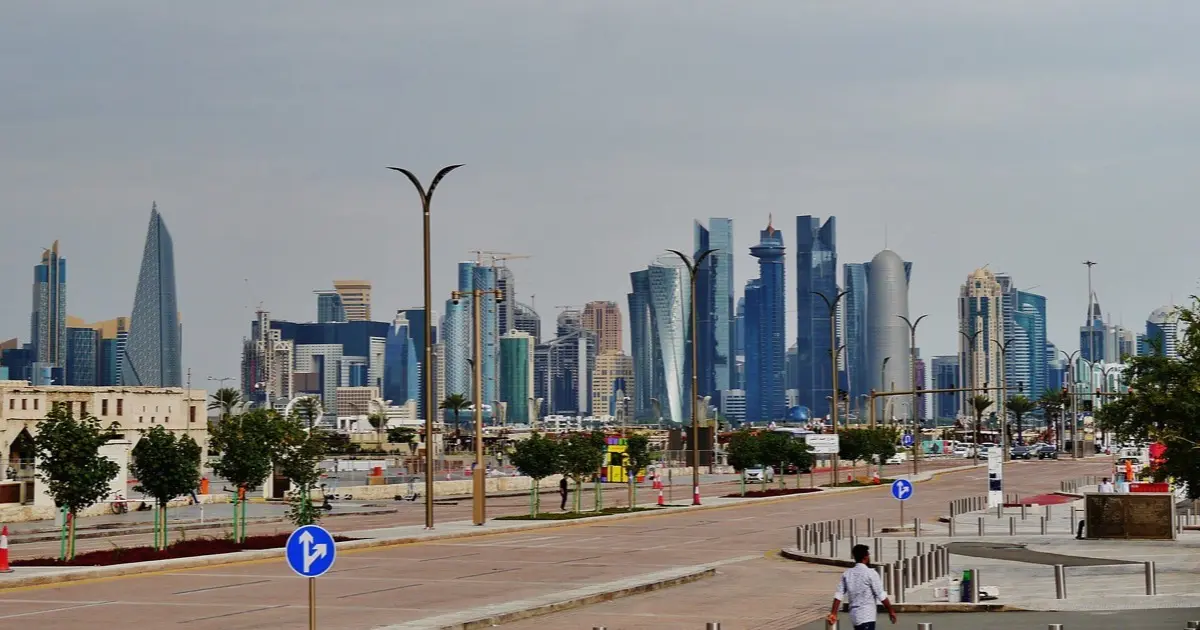
Qatar is a small but fast-growing and heavily sponsored student market, with more than 3,000 Qataris now studying at UK universities. A UK medical degree remains one of the most respected qualifications a Qatari doctor can hold, and the UK offers a direct five to six year path from school to a globally recognised degree, clinical training inside the NHS, and, since 2026, priority for Foundation Programme jobs for graduates of UK medical schools.
For Qatari families there is also a route most countries do not have: a government-sponsored foundation programme at the University of Manchester that leads into its medical degree, open only to sponsored students from Qatar, Kuwait and Oman.
This guide walks you through the whole journey: which qualifications UK medical schools accept from Qatar, how government sponsorship works through the Ministry of Education and Higher Education, the UCAT, costs in riyals, and how you return to practise through the Qatar Council for Healthcare Practitioners afterwards.
At TheUKCATPeople, we support international students every year through their applications to UK medical schools. Our Ultimate Package includes one-to-one mentoring, UCAT preparation, personal statement editing and tailored interview coaching.
The first thing to understand is that the Qatari Secondary School Certificate is not accepted on its own for direct entry to UK medicine. It is treated as below A Level standard, which is why sponsored Qatari students are routed through a foundation year rather than straight into Year 1.
In practice, Qatari students reach UK medicine one of two ways:
Alongside grades you will need a strong personal statement, healthcare work experience, a competitive UCAT score and evidence of English. Full academic detail for every school is in our UK medical school entry requirements guide.
Two things shape a Qatari application. The national certificate is not accepted for direct entry to medicine, so you need A Levels or the IB, or the government-sponsored Manchester foundation route open to Qatar Cultural Attaché students. And if you are sponsored through the Ministry of Education and Higher Education, that process runs alongside your university application.
Our Ultimate Package keeps both on track. You work one to one with UK doctors who sat the UCAT and won their own places. They confirm which route fits you, train you for the UCAT, edit your personal statement through up to five drafts, and run mock MMIs until you are sharp. Your mentor is on WhatsApp all year.
Applying to UK medicine from Qatar is high stakes and unfamiliar, so who guides you matters as much as how hard you work. Here is why families choose us over a generic study-abroad agent:
A study-abroad agent can file forms and manage sponsorship paperwork. What actually wins a UK medicine place is a high UCAT score, a sharp personal statement and a confident interview, and that is exactly what we build with you. It is the difference between hoping for a place and planning for one.
Qatar funds its nationals to study abroad on a significant scale, and sponsorship is central to many Qatari applications.
The standout Qatar-specific route into a UK medical degree is the University of Manchester International Foundation Programme:
No UAE or Saudi student can use this route, which makes it a real advantage for sponsored Qatari applicants.
Be mentored 1-1 by a doctor
Every question answered from abroad, from fee status to interview day, in your time zone.
Yes. Almost every UK medical school requires the UCAT, and there is no longer a BMAT alternative (it was scrapped after 2023).
Since 2025 the UCAT has three scored cognitive subtests, Verbal Reasoning, Decision Making and Quantitative Reasoning, each marked 300 to 900 for a total out of 2700, plus a Situational Judgement Test reported separately in Bands 1 to 4. Abstract Reasoning has been removed.
Key practical points for Qatari candidates in 2026:
On the 2700 scale, around 2500 or above is highly competitive for the most selective schools, while many strong applicants sit in the 2300 to 2500 range. Your UCAT score largely determines which universities invite you to interview.
All our tutors at TheUKCATPeople are UK doctors or top-decile medical students, and lessons are online and scheduled around Doha time. Start with our free UCAT Guides hub and practise under timed conditions on the UCAT online trainer.
UK medical schools require proven English. For most Qatari applicants this means IELTS Academic, with medicine offers typically asking for 7.0 to 7.5 overall and strong minimums in each component.
Students taught fully in English at a British school in Doha may be exempt at some universities, but medical schools are stricter than other faculties, so check each one.
One important visa nuance: for a degree-level course such as the MBChB, the university assesses your English and a standard IELTS Academic is usually fine. For a below-degree course, such as the Manchester foundation year, the Student visa requires an approved SELT, specifically IELTS for UKVI. Book the right test type from the start.
👉🏼 Read more: IELTS Exam English Language Requirements For Medicine In The UK
Boost your UCAT with 1-1 tutoring
Rated 5.0 from 660+ reviews. 1-1 sessions with top-scoring tutors, weekly or more often, built around your weakest subtests.
10 hours
1-1 UCAT tutoring
20 hours
1-1 UCAT tutoring
30 hours
1-1 UCAT tutoring
Applications to UK medical schools go through UCAS. Qatari students need to:
Most UK interviews for international applicants are now held online, so you can complete MMIs and panel interviews from Qatar without travelling. Coordinate your Ministry sponsorship paperwork alongside the UCAS process.
We support students with every part of this, from building a shortlist of four schools around your UCAT score to polishing the final personal statement.
Every mentor on our team is a UK doctor or top-decile medical student who has been through this exact application, so we can present your profile the way UK admissions tutors want to see it, whether you are self-funded or sponsored by the Ministry of Education and Higher Education, and we coach around Doha time.
We build the strategy with you: which four schools suit your score, whether the Manchester sponsored foundation route fits you, how to book the UCAT, and how to interview with confidence online.
Choose the support level that fits you: Silver (35 hours), Gold (50 hours, our most popular) or Platinum (75 hours).
At roughly 4.85 riyals to the pound (the riyal is pegged to the US dollar, so this moves with the dollar), here is what to budget:
For sponsored students, the Ministry covers tuition and living costs, and an official sponsor letter replaces personal bank evidence for the visa.
See a breakdown of all medical school fees for international students here
A UK medical degree is well regarded in Qatar, but there is a defined process to practise, run by the Qatar Council for Healthcare Practitioners (QCHP), now part of the Department of Healthcare Professions at the Ministry of Public Health:
Always confirm the current QCHP requirements as you approach graduation, as the rules are being updated.
Yes, and the position for international graduates of UK medical schools improved significantly in 2026.
Choose your Ultimate Package, mentored from abroad
Rated 5.0 from 660+ reviews. 1-1 mentoring from doctors across UCAT or UCAT ANZ, personal statement, fee-status shortlisting and online interviews, scheduled in your time zone.
Bronze
20 hours
Silver
35 hours
Gold
50 hours
Platinum
75 hours
Here is the step-by-step timeline if you are aiming for 2027 entry.
Have a qualified doctor oversee your application via our Medicine Ultimate Packages
Our most popular programme for international applicants is the Ultimate Package, which includes:
We adapt everything to Doha time and to the routes Qatari students actually use, whether that is A Levels, the IB, or the government-sponsored Manchester foundation programme.
✅ Join our incredibly successful Ultimate Package programme
Next Steps for Qatari Students Applying to Medicine in the UK
If you want support with any part of the process, our team of UK doctors and medical school admissions experts is here to help. We offer a free strategy consultation to help you get started.
Not for direct entry. UK medical schools do not accept the Qatari Secondary School Certificate on its own for medicine, as it is treated as below A Level standard. Qatari students need A Levels or the IB for direct entry, or the government-sponsored Manchester International Foundation Programme, which accepts the national certificate at a high grade because it is a foundation year rather than direct entry.
Apply through UCAS, choosing up to four medical schools, by the 15 October deadline. You need A Levels or the IB (or the sponsored Manchester foundation route), a competitive UCAT score from the Pearson VUE centre in Doha, IELTS, a personal statement and a school reference. Shortlisted applicants are then interviewed, almost always online for international students. Coordinate any Ministry sponsorship alongside the application.
Yes. The Ministry of Education and Higher Education runs government scholarships, including the Amiri and external scholarship programmes, applied for on its scholarship platform, and medicine is among the named priority fields. Sponsorship typically covers tuition and living costs. The approved fields, universities and stipends change each cycle, so confirm the current position on the Ministry's platform rather than relying on unofficial figures.
It is a one-year International Foundation Programme at the University of Manchester, open only to government-sponsored students from Qatar, Kuwait and Oman, that leads into its MBChB (course code A106). For Qatar it is for Cultural Attaché sponsored students and accepts the national certificate at 90 percent or above with AS-level BBB including two sciences, so it is a genuine route into medicine without A Levels. English is IELTS for UKVI 6.0 at entry.
The UCAT is delivered at a Pearson VUE test centre in Doha. Check the exact centre and dates in the Pearson VUE system when booking opens on 23 June 2026, as overseas September slots fill quickly. The testing window runs 13 July to 24 September and the international fee is £115. Booking early in July or August is strongly advised.
On the 2700 scale, around 2500 or above is highly competitive for the most selective schools, and many strong applicants score between 2300 and 2500. Each university weights the UCAT differently, so choosing four schools that match your score matters as much as the score itself. Our UCAT cut-off guide shows how each school uses the test.
International tuition for 2026 entry runs from about £38,000 a year pre-clinically to £70,000 or more in the clinical years, which at roughly 4.85 riyals to the pound is around 184,000 to 340,000 QAR a year. With living costs, a five to six year course commonly exceeds 1.2 million QAR in total. Sponsored students have tuition and living costs covered by the Ministry.
Usually yes. Most medical schools ask for IELTS Academic around 7.0 to 7.5 overall with strong component minimums, though students schooled fully in English may be exempt at some universities. If you take the Manchester foundation year, which is below degree level, the visa requires IELTS for UKVI specifically, so book the correct test type from the start.
Yes. To practise, you register with the Qatar Council for Healthcare Practitioners (QCHP), part of the Department of Healthcare Professions. Every applicant must complete DataFlow verification (mandatory from January 2026) and sit the Qatar qualifying exam through Prometric, though UK-trained doctors may qualify for a conditional fast-track exemption. Confirm the current criteria with the Department, as recognition and exemptions are approved case by case.
Possibly not, but do not assume it. The Qatar Council for Healthcare Practitioners offers fast-track exemptions from the qualifying exam to doctors with strong recognised qualifications, which can include UK-trained doctors, but the exemption is conditional and approved case by case. Everyone must complete DataFlow verification first. Confirm the current exemption rules with the Department of Healthcare Professions near graduation.
Yes. Under the Medical Training (Prioritisation) Act 2026, graduates of UK medical schools, including Qatari nationals, are prioritised for the two-year Foundation Programme, typically on a Health and Care Worker visa. You also get GMC provisional registration without the PLAB test. Note that this priority requires graduating from a UK medical school in the UK, not an overseas campus. Sponsored students usually return to Qatar.
There is no official ranking for Qatari applicants, so the best schools are those that accept your qualifications and match your UCAT score, plus Manchester if you are sponsored and suited to its foundation route. Qatari students are found across London, Manchester, Edinburgh and Birmingham, and Aberdeen has strong Qatar links. Build your four UCAS choices around where your score is genuinely competitive rather than on reputation alone.
15 October 2026 at 18:00 UK time. Medicine, dentistry and veterinary science share this earlier deadline, and UK medical schools rarely consider late applications. Aim to sit the UCAT by September at the Doha centre, finish IELTS, and have your personal statement and reference ready well before October, especially if you are also arranging Ministry sponsorship.
Both are strong options. Studying at Weill Cornell Medicine-Qatar in Education City keeps you at home and can be supported by Qatar Foundation aid, but it is a graduate-entry US-style route. A UK medical degree is undergraduate entry straight from school, five to six years, and gives you priority for UK Foundation Programme jobs. The right choice depends on whether you want to train in the UK system or stay in Doha.
International medicine fees range from around £29,000 a year in the pre-clinical years at the lower end to £70,000 or more in the clinical years at the priciest schools. Compare the full five to six year cost, watch for extras like clinical placement levies, and remember six-year courses at Oxford and Cambridge add a year of fees. Our international fees guide breaks down every school.

Want expert help with your application?
From 1-1 tutoring and personal statement editing to interview coaching and our all-in-one Ultimate Package, we support every stage. Tell us what you are aiming for and we will recommend the right option.
Ultimate Package students from our 2025/26 cycle, with their UCAT scores and offers, who trained with us for the UCAT, personal statements and interviews.
“Harry got my UCAT up to 2,590, working through the sections I kept dropping marks on week by week. Gemma then ran my interview practice so the MMI stations didn't catch me out, and Dr Akash mentored me the whole way through. I'm off to King's for Medicine.”
“The interview prep was the part that actually moved the needle. Proper mock MMIs, not just lists of questions, and feedback that was honest about what I was getting wrong. I ended up with four offers and firmed UCL.”
“The Ultimate Package kept me organised from UCAT through to interviews. They knew what dental schools actually ask and tightened up my personal statement. Four offers in the end, and I'm going to Birmingham.”
“Vet applications come down to the written SAQs as much as the interview. Dr Rebecca went through my SAQs line by line, sharpened my answers and prepped me for the panels. I came away with four offers and chose the RVC.”
Book your FREE consultation today
Click to book your free consultation