10 hours
1-1 UCAT tutoring
Reviewed by Dr Akash Gandhi·4 September 2026
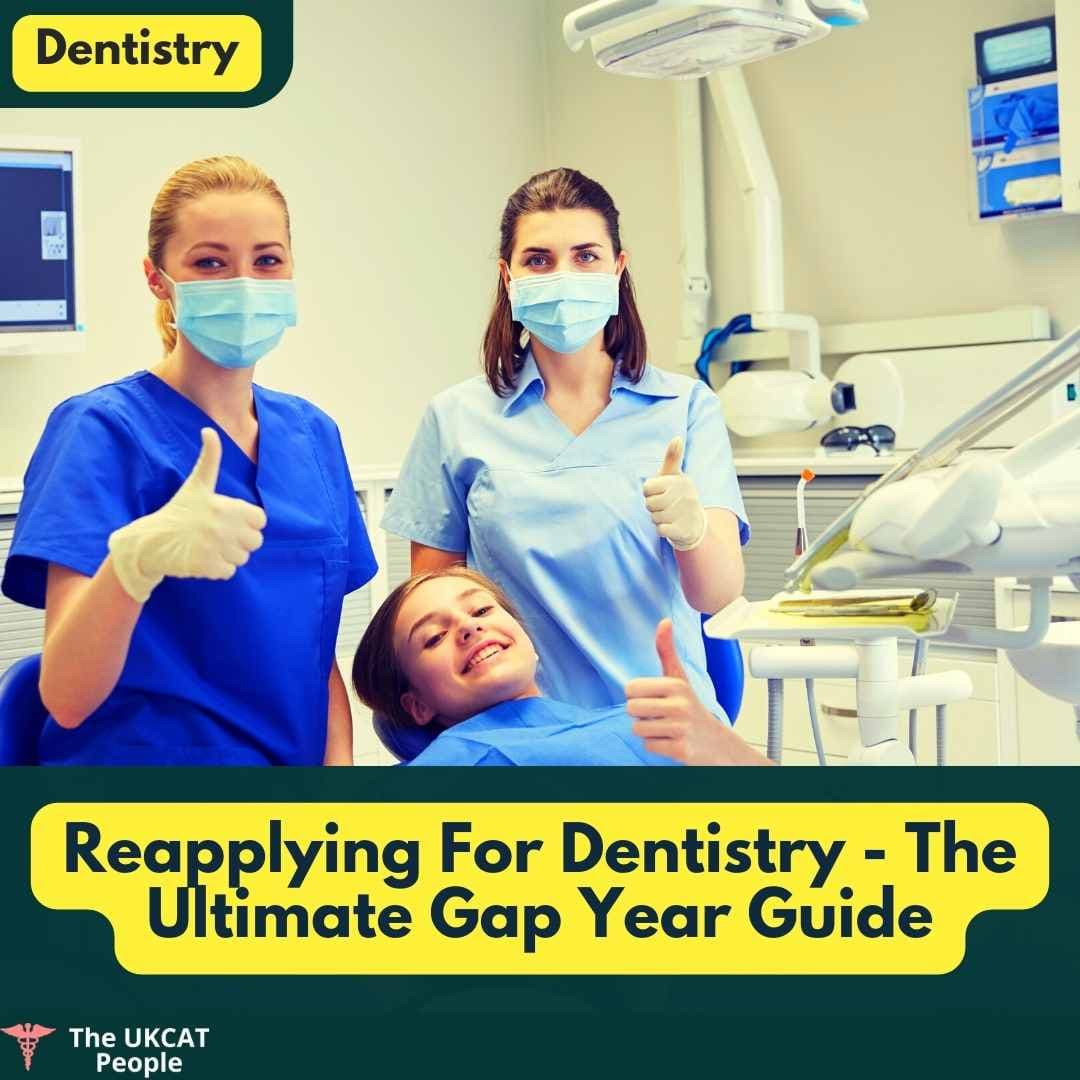
Applying for Dentistry can be stressful itself but not getting into Dental School can be even worse. Spending a vast amount of time preparing and completing your UCAS application but resulting in a lack of Dental offers can be painful, however, this does not have to be the end of your Dental journey!
A dentistry gap year offers an incredible opportunity for students to expand their knowledge, improve their skills, and gain valuable experience before embarking on their dental education journey. Many students choose to volunteer in underserved communities, providing much-needed dental care and education.
Additionally, a gap year before dental school can also involve travelling to different countries, exploring new cultures, and learning about the diverse approaches to dental care worldwide. These experiences can help develop a well-rounded perspective, making you a better healthcare professional in the long run.
There are several options available including reapplying for Dentistry.
This is a great year for you to take a break from education, earn money and even travel! In these 12 months you can also gain more dental work experience, maybe get a job as a dental receptionist or even redo exams to boost your grades and heighten your chances of gaining a place at Dental School when you do reapply for dentistry.
Your gap year goes quickly so make sure you plan it well, use it productively and gain as much dental work experience as possible!
The best way to reapply to Dentistry is to assess your initial application and find ways to improve it.
Be honest about the weakest link. Roughly, the four things that sink a dental application are grades, UCAT score, work experience, and interview performance. If your UCAT held you back, remember your score only lasts one cycle, so you must resit it for 2027 entry. Our UCAT preparation guides and the UCAT online trainer are the fastest way to lift a weak score the second time around. If your grades were the issue, read our guide on getting into dentistry with low grades.
To become a dentist, qualifications are important.
Find out where the weaker areas of your application are and improve them the best you can. If you do not know where the weak points are it is definitely beneficial having someone check it over.
This could be your friend, teacher, or even someone from a dental background who has gone through the process themselves.
Contact our dental specialists at TheUKCATPeople to help you with your re-application.
Should you need any help with any of these aspects - contact one of our qualified dentists for free advice and help to boost your application and get you in the second time around.
Be mentored 1-1 by a dentist
Every question answered, from choosing schools to interview day.
Dental work experience is an amazing opportunity to see Dentistry in person and confirm your interest in pursuing this field.
Where can you obtain work experience to boost your application in your gap year?
Use our free UK work experience finder to locate dental practices, hospitals and care settings near your postcode, then read the Ultimate Dentistry Work Experience Guide for how to reflect on what you observe.
Gaining dentistry work experience in both NHS and private practices will allow you to appreciate the similarities and differences between them both.
Doing dental work experience in other healthcare settings can also make you stand out and set you apart from the other candidates. This can include work experience in a specialist dental practice (such as orthodontics or with a restorative specialist), in a hospital, or even abroad.
If hands-on placements are hard to secure, virtual work experience platforms (such as the Observe GP-style dental schemes and university taster days) are now a recognised way to supplement in-person hours and aid your application. Most dental schools accept a reflective mix of in-person and online experience.
The more procedures you observe and the more experience you gain the more you can write in your personal statement and talk about in your interview. Some universities have mandatory work experience requirements so please check the individual website for more information.
Empathy and good communication are qualities you need as a dentist so having a wide range of volunteering can show you have these necessary qualities. This does not have to be related to dentistry at all.
It can be in a charity shop or even in an elderly home. The most important part is making sure you are able to develop qualities that will help you as a dentist and show that you are a caring individual.
Boost your UCAT with 1-1 tutoring
Rated 5.0 from 660+ reviews. 1-1 sessions with top-scoring tutors, weekly or more often, built around your weakest subtests.
10 hours
1-1 UCAT tutoring
20 hours
1-1 UCAT tutoring
30 hours
1-1 UCAT tutoring
Dental schools want to see that you are an all-rounded person, have various skills and interesting hobbies. This can be absolutely anything from sports, music, baking or even travelling.
Having these hobbies will allow you to gain new skills that you may use as a dentist, allow you to de-stress, and it is also something to put in your UCAS application whether it is on your personal statement or discussed in your interview.
Your gap year dentistry personal statement is a crucial element of your dental school application. It provides a platform to express your motivation for taking a gap year, detailing the experiences you've had and the skills you've acquired.
When writing your personal statement, focus on the unique aspects of your gap year, such as volunteering, tutoring, or research work, and demonstrate how these experiences have enriched your understanding of dentistry.
To strengthen your UCAS gap year application, be sure to link your experiences to your future goals as a dental professional.
👉🏼 Read more about our dentistry personal statement tutoring services
Prepare for your dental school interviews
Rated 5.0 from 660+ reviews. Mock MMI and panel interviews with expert tutors, built around dental school questions.
10 hours
1-1 interview coaching
20 hours
1-1 interview coaching
30 hours
1-1 interview coaching
Yes. Reapplying for dentistry is common and entirely accepted by dental schools. The key is to diagnose why your first application fell short (grades, UCAT, work experience or interview) and visibly improve that area. A gap year gives you time to resit the UCAT, gain more dental experience and rewrite your personal statement before reapplying through UCAS for the next entry cycle.
Most UK dental schools welcome gap year and reapplicant students, provided you can show the year was used productively. Many state in their admissions policy that they consider applicants who are on, or wish to take, a gap year. Use the time for dental work experience, paid work, volunteering or further study, and be ready to explain in your statement and interview exactly what you gained.
Dentistry applications for 2027 entry must reach UCAS by 6pm on 15 October 2026, the same early deadline as medicine, veterinary medicine and Oxbridge. Applications open on 1 September 2026. Because dentistry is highly competitive, universities rarely consider late applications, so reapplicants should aim to submit well before the October deadline.
Yes. Your UCAT score is only valid for one application cycle, so a score from a previous year cannot be carried over. If you reapply for 2027 entry you must sit the UCAT again in 2026 (the testing window runs roughly mid-July to late September). This is good news if your score held you back, as you get a fresh chance to improve it.
Since 2025 the UCAT has four subtests: Verbal Reasoning, Decision Making, Quantitative Reasoning and Situational Judgement. Abstract Reasoning was removed. Your cognitive subtests give a total scaled score out of 2700 (an average of around 675 per subtest), while Situational Judgement is reported separately in Bands 1 to 4. Dental schools use these in different ways, so check each school's policy.
A gap year can strengthen a dental application significantly if used well. It lets you gain more dental work experience, resit the UCAT, retake or improve A-levels, earn money and add meaningful volunteering. Dental schools value reapplicants who can show clear growth and reflection. A drifting, unplanned gap year is the only real risk, so set goals early and keep a record of what you learn.
Start by identifying the weakest part of your first attempt. Common fixes are: resit the UCAT to raise your score, gain more NHS and private dental work experience, rewrite your personal statement to be more specific and reflective, and practise interview and MMI technique. Having someone from a dental background review your application, and reapplying to schools that suit your profile, also makes a real difference.
Build the parts of your application that need work. Arrange dental work experience in NHS and private settings, take a job (a dental nurse or receptionist role is ideal), volunteer to show empathy and communication, resit the UCAT, and improve grades if needed. Keep reflective notes throughout so you have fresh, specific material for your new personal statement and interviews.
There is no national limit on how many times you can apply to dental school, though a few individual universities cap the number of attempts they will consider, so always check their policy. UCAS lets you apply once per cycle (up to four dentistry choices plus a fifth non-dentistry choice). Reapplying after a gap year is a well-trodden, accepted route into dentistry.
No, a gap year does not look bad as long as you can justify it. Dental schools are far more interested in what you did than in the gap itself. A year spent gaining work experience, resitting the UCAT, volunteering or working shows maturity and commitment. The only gap year that raises concern is one with no clear purpose or development to discuss.
Some dental schools allow you to defer a confirmed offer for one year, effectively building in a planned gap year, but policies vary and not all permit deferral for dentistry. If you already hold an offer, contact the admissions team directly to ask. Deferring is different from reapplying: it only applies once you have an offer you wish to hold for a later start.
There is no single required number, but reapplicants should aim to add meaningfully to their previous experience across NHS and private dental settings. Quality and reflection matter more than raw hours. Observing a range of procedures and practitioners gives you specific examples for your statement and interview. Some universities set mandatory minimums, so check each school's requirements before you apply.
Often, yes. Reapplying to the same four schools without changing anything rarely works. Review each school's UCAT thresholds, entry requirements and how they weight the interview, then build a shortlist that genuinely fits your refreshed profile. Our UK dental schools ranking hub lets you compare entry requirements and UCAT use side by side so you target schools where you are competitive.
Yes. Career changers and graduates can apply to standard or graduate-entry dentistry courses. Many use a year to gain dental work experience, sit the UCAT and demonstrate genuine motivation for the switch. Read our graduate entry dentistry guide for the routes available, funding considerations and which schools accept graduate and career-change applicants.

Want expert help with your application?
From 1-1 tutoring and personal statement editing to interview coaching and our all-in-one Ultimate Package, we support every stage. Tell us what you are aiming for and we will recommend the right option.
Ultimate Package students from our 2025/26 cycle, with their UCAT scores and offers, who trained with us for the UCAT, personal statements and interviews.
“Harry got my UCAT up to 2,590, working through the sections I kept dropping marks on week by week. Gemma then ran my interview practice so the MMI stations didn't catch me out, and Dr Akash mentored me the whole way through. I'm off to King's for Medicine.”
“The interview prep was the part that actually moved the needle. Proper mock MMIs, not just lists of questions, and feedback that was honest about what I was getting wrong. I ended up with four offers and firmed UCL.”
“The Ultimate Package kept me organised from UCAT through to interviews. They knew what dental schools actually ask and tightened up my personal statement. Four offers in the end, and I'm going to Birmingham.”
“Vet applications come down to the written SAQs as much as the interview. Dr Rebecca went through my SAQs line by line, sharpened my answers and prepped me for the panels. I came away with four offers and chose the RVC.”
Book your FREE consultation today
Click to book your free consultation