10 hours
1-1 UCAT tutoring
Reviewed by Dr Shaneil Tanna
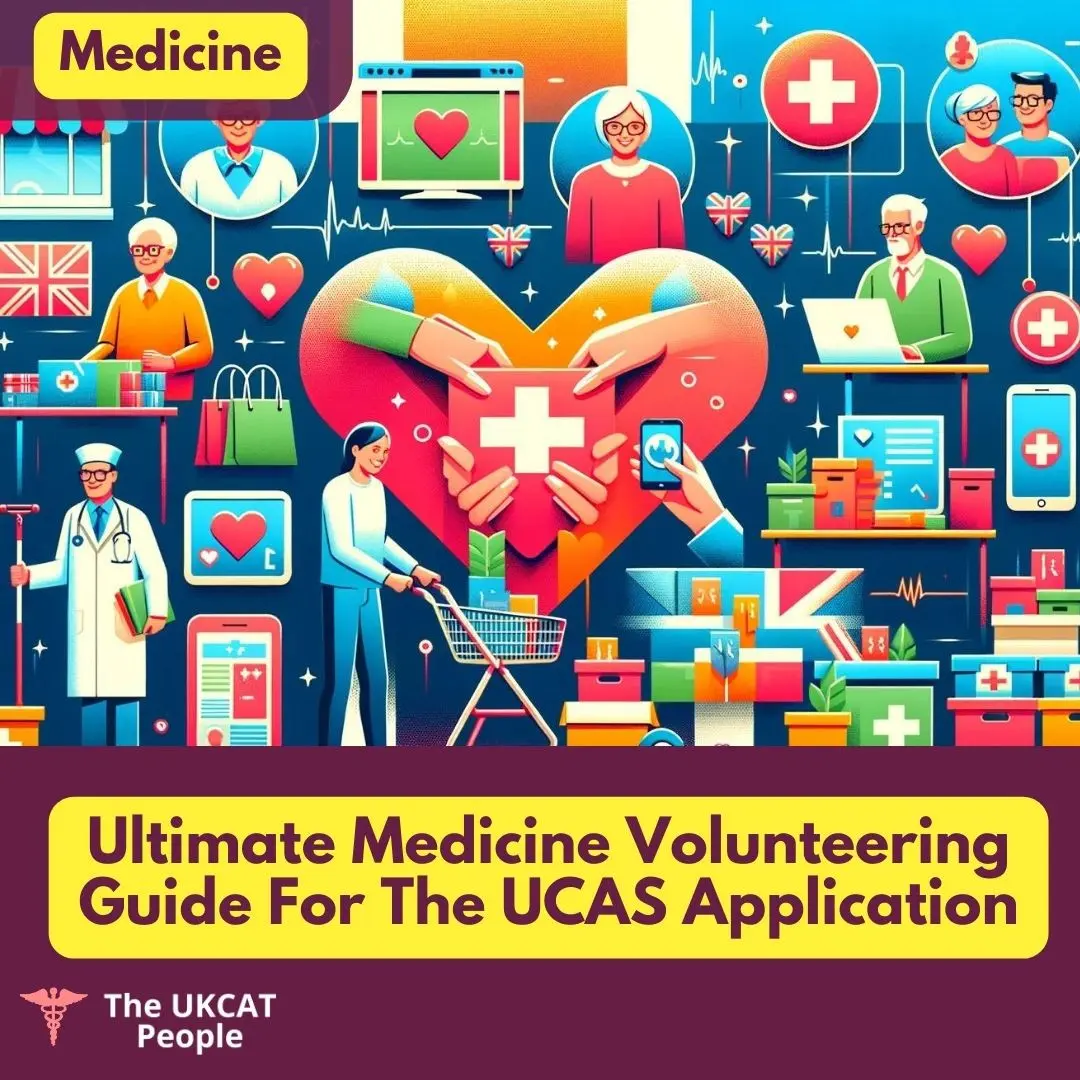
On this page, you will have everything you need to know about volunteering for your medical school application. How much do you need? Where should I volunteer? How long do I need to volunteer for?
Experience working as a volunteer is a great way of demonstrating your commitment to the community and helping people. Additionally, it is a valuable opportunity to build up key skills such as communication, empathy and teamwork - as well as potentially allowing you to observe a clinical setting.
If hands-on clinical work experience is hard to come by where you live, volunteering is an excellent and equally respected way to demonstrate your commitment to medicine and to people-focused care.
You can volunteer with a variety of organisations, and both explicitly medical and non-medical volunteer work is extremely valuable to medical schools.
They give you great experiences upon which you can reflect in your personal statement and interviews. Volunteering is always a valuable experience, regardless of what you are doing - voluntary work experience and programs such as NCS do indeed count as work experience.
There are broadly two ways of categorising volunteer work experience for medicine: medical or non-medical, and long-term or short-term.
Each of these entails different things and provides different benefits.
Unlike the UCAT, a set length of work experience and amount volunteering aren’t a formal requirement for applying to medicine.,
However, the Medical Schools Council (MSC) describes that it is “essential” for applicants to have experience in people-focused care or service to understand what a career in medicine involves.
The best way to gain people-focused experience is through volunteering with vulnerable groups, such as disabled people, children or older adults. Through working with these groups, you will be able to appreciate the skills required to work in a patient-centred caring profession, such as medicine.
You may also be able to gain this appreciation from work experience in a healthcare field, such as shadowing a doctor
Therefore to summarise, to have any chance of receiving an offer to study medicine in the UK, you are expected to have been exposed to working with people in a caring setting, either through volunteering or work experience.
The only university that looks at the number of hours of volunteering in recent years has been the University of Sunderland Medical School - though of course, this may change in the future.
👉🏻 Read more: The Ultimate Guide To Medical Work Experience
Volunteering can make a real difference to the community and the lives of the people you work with. Through engaging in volunteer work, you’ll gain firsthand experience of observing and listening to the problems that people in your community face.
This is beneficial for studying medicine, as you will be able to gain a deeper understanding of the wider determinants of health - for instance, how a person’s social circumstances can affect their health.
Good volunteering for medical school includes anything where you are shown to be in a caring capacity over a period of time.
To be a good doctor, you need to be able to interact with others in a meaningful way, to build relationships and develop trust.
Volunteering will allow you to practice, develop and demonstrate these skills.
This will be useful in your personal statement for medicine as well as provide experiences to draw upon during your responses during your medicine interview.
👉🏻 Read more: How To Write An Excellent Medicine Personal Statement
All types of volunteering are considered highly in medical school applications, however, if you’re struggling to choose where to volunteer, here are some pointers:
This could include volunteering as a befriender in a care home, volunteering as a youth leader with children or at a parent-toddler group, or working for charities for people with disabilities.
Working with people who may need extra care or attention will require you to have patience and excellent communication skills, both of which are also essential for working as a doctor.
You will also be working with similar groups of people as a doctor and a medical student, so previous experience interacting in this environment will be beneficial.
Some medical schools prefer work experience which is more directly related to working in a clinical or healthcare environment.
Examples of this type of volunteering may include more hands-on care work, such as being a volunteer care assistant or working for healthcare charities such as St John Ambulance or Headway.
👉🏻 Read more: Ultimate Medical School Guide
Be mentored 1-1 by a doctor
Every question answered, from choosing schools to interview day.
Volunteering involves donating your time and energy to an organisation without pay, in exchange for developing vital skills such as teamwork and communication.
Some voluntary posts may have a minimum number of hours that they expect you to be able to volunteer each week, whilst other posts may work on an as-and-when basis.
The most important aspect of volunteering is that you must be genuinely interested in the cause for which you are volunteering. You must volunteer for the right reasons, not just as a hurdle to get into medical school.
I applied to medical school in 2019 and received 4/4 offers. I took a gap year before medical school, and during this year I volunteered 3 times a week at a local community care charity.
In this role, I helped with the running of the day centre, making drinks for staff and clients, organising games and activities, chatting with clients, and providing assistance in serving dinners.
I continued this for 12 months. This was really helpful to reflect on during my medicine personal statement and during my university interviews.
👉🏻 Read more: How Much Do Doctors Earn In The UK?
There are several routes to find volunteering opportunities near you.
Firstly, there may be opportunities through your school, college or sixth form. If you inform your school that you are planning to apply to medicine, there may also be further resources that they can offer you, such as guidance for personal statement writing.
The Royal Voluntary Service provide a large database of trusted volunteering opportunities which can be searched for by location to find an opportunity that is convenient for you.
To find caring placements near you fast, use our free work experience finder, which lets you search GP surgeries, hospitals, care homes and hospices by postcode and radius. It is the quickest way to turn "where should I volunteer for medical school?" into a shortlist of real, contactable placements close to home. Pair it with our ultimate medical work experience guide for how to approach and make the most of each setting.
If you’d like specifically hospital-based volunteering, you should contact the hospital trust through their volunteering contact email.
👉🏻 Read more: What To Do If You Get No Medical School Offers
Long-term volunteering generally involves spending a certain amount of time on a weekly or fortnightly basis volunteering - or perhaps even more regularly.
It is a great way of demonstrating commitment over an extended period of time, something which medical schools look for, especially those that have previously looked at this on a roles & responsibilities form such as Keele & Sunderland (they no longer do this).
Some examples of volunteering opportunities near you that you could look into for medical long-term volunteering include:
Additionally, you could look at long-term volunteering that is less directly medical but still highly valuable:
Boost your UCAT with 1-1 tutoring
Rated 5.0 from 660+ reviews. 1-1 sessions with top-scoring tutors, weekly or more often, built around your weakest subtests.
10 hours
1-1 UCAT tutoring
20 hours
1-1 UCAT tutoring
30 hours
1-1 UCAT tutoring
Short-term volunteering entails spending anywhere from half a day to a week or two volunteering at a particular place. The types of events that are run are extremely varied.
You should keep an eye on the websites of local charities for one-day or half-day events that they are running where they may be looking for volunteers.
Similarly, local care homes often run events where they require outside volunteers. High schools are often contacted by organisations looking for outside volunteers, so you should let your school’s admin team know if this is something that you’re interested in, and they may be able to forward relevant contact to you.
Additionally, it can be a great idea to try to spend a week or so volunteering somewhere full-time. One particular type of volunteering that is good can be helping out at a school or summer camp for children with special needs.
Not only does this allow you to practice your communication and teamwork skills, but it is also an extremely rewarding experience in and of itself.
Simply, get in touch and ask whether they are interested in having pupil volunteers - usually, they’re very keen on the extra help.
Volunteering in a care field is a fantastic opportunity to discover whether a job in healthcare, or as a doctor, is for you before investing in 5 years of education through medical school.
To get the most out of a volunteering opportunity, you need to be proactive. This means seizing and creating new opportunities for yourself, by asking to get involved in jobs or activities both inside and outside of your role.
For instance, if you’re volunteering with St John’s Ambulance, why not ask to shadow a paramedic on a night shift, or observe a patient handover in A&E.
You should also reflect on your experiences throughout.
As part of your personal statement, you should discuss your work experience and what you learnt from it. To help you with this, throughout your volunteering, you should keep a reflection diary where you document what you did each session, and reflect on what you learnt from it.
For a step-by-step approach to weaving volunteering into your statement, see our ultimate medicine personal statement guide, and read about how non-clinical roles fit alongside your other activities in our extracurricular activities guide.
There are a number of reflective models online that you can use to help structure your writing.
We recommend the “What” Rolfe, Freshwater and Jasper model of 2001, which focuses on:
Having clearly documented examples of learning points from your work experience will allow you to draw on specific experiences to demonstrate your commitment and understanding of the healthcare profession.
👉🏻 Read more: Medicine Interview Preparation Help
Check the website or details of any organisation to which you are considering applying for information on how to do so. The key thing to remember is to apply early.
Many volunteer organisations are extremely busy and will take time to review an application. Additionally, you may be required to complete a PVG/DBS background check which takes more time - so this must be accounted for.
If you cannot find any volunteer work experience but would like to volunteer, you can start your own group! Try forming a group of pupils from your school with a particular goal in mind. This shows leadership potential and initiative in addition to the other relevant key skills.
For more information on how to reflect on this work experience in your personal statement & interviews, check out our guide.
We recommend volunteering for at least 1 year to show your sustained commitment to helping people.
Over this amount of time, you should be able to experience different circumstances and events which you can reflect on and gain an understanding of the role of a healthcare professional, or skills required by staff working with people.
Volunteering for over 6 months will help you to develop a deeper relationship with your coworkers, and fully integrate yourself into the team to get the most out of volunteering. It will also provide the greatest opportunity for personal growth and development.
Of course you may be reading this with less than one year until your UCAS application is due, in which case do start volunteering as soon as you can!
👉🏻 Read more: How To Accept A Medical School Offer
Choose your Ultimate Package
Rated 5.0 from 660+ reviews. 1-1 mentoring from doctors across UCAT, personal statement and interviews.
Bronze
20 hours
Silver
35 hours
Gold
50 hours
Platinum
75 hours
Unfortunately, the process of applying to become a volunteer can be lengthy, and there may be extra requirements before you start, such as DBS checks or training. This means that you should apply early.
You want to have volunteered for at least 6 to 12 months before you submit your UCAS application, which for medicine closes at 18:00 on 15 October (for entry the following year). Building that experience early gives you more to reflect on in your personal statement and interviews.
Given that it may take a month for a DBS check to be finalised, we recommend applying to your chosen voluntary position at the start of year 12, or just following your exams if you are taking a gap year.
👉🏻 Read more: Medicine Training Pathway For Doctors
The best volunteering for medical school puts you in a caring role with vulnerable people: care home befriending, support for older adults with Age UK, working with children, or helping people with disabilities. Healthcare-related roles such as St John Ambulance, hospital ward volunteering or care assistant work are also valued. Any role where you show compassion and communication over time works well.
Medical schools look for sustained, people-focused volunteering that demonstrates commitment, empathy, communication and teamwork. The Medical Schools Council calls experience of caring or service essential. Both medical roles (care assistant, hospital volunteer) and non-medical roles (charity shop, youth work, coaching) count, as long as you can reflect meaningfully on what you learned about working with people.
There is no set number of volunteering hours required for UK medical school. Most schools value quality and reflection over a high hour count. Aim for sustained commitment, typically a regular weekly or fortnightly role over at least 6 to 12 months, rather than a one-off burst. The University of Sunderland is the main school that has looked at volunteering hours specifically.
Volunteering is not a formal entry requirement for UK medical school. However, the Medical Schools Council describes experience in people-focused care or service as essential to understanding what a medical career involves. In practice, to have a realistic chance of an offer you should have spent time in a caring setting, whether through volunteering or healthcare work experience.
Good places to volunteer include care homes, hospices, hospitals, charities for older adults or disabled people, youth groups and mental health support lines. Use a tool like our work experience finder to search caring placements near you by postcode, or contact your local NHS trust's volunteering team and charities such as Age UK and the Royal Voluntary Service directly.
The strongest volunteering combines regular contact with vulnerable people and the chance to reflect on real situations. Befriending in a care home, supporting people with disabilities, hospital ward volunteering or working with a healthcare charity all stand out. What matters most is sustained commitment and your ability to explain what you learned about communication, empathy and the realities of caring for others.
Yes. Voluntary work and structured programmes such as NCS count as work experience for medical school applications. Many schools treat caring volunteering as equivalent to clinical work experience, especially when hands-on shadowing is hard to arrange. The key is that you reflect on what you observed and learned, not whether the role was paid or strictly clinical.
Aim to volunteer for at least 6 to 12 months before submitting your UCAS application. Sustained volunteering shows commitment, lets you build relationships with the people you support, and gives you a bank of experiences to reflect on. If you have less than a year before applying, start as soon as possible, as even a few months of regular volunteering is worthwhile.
Start volunteering early, ideally at the beginning of Year 12, or just after your exams if you are taking a gap year. Applications can take time to process and some roles need a DBS or PVG check, which can add a month. Starting early means you will have 6 to 12 months of experience before the 15 October UCAS medicine deadline.
Yes, hospital volunteering is highly valued because it shows you in a healthcare environment and lets you observe how teams care for patients. Ward, welcome or befriending roles give insight into the day-to-day reality of hospital life and can be gateways to further clinical experience. Contact your local NHS trust's volunteering team early, as these roles are popular and require checks.
To become a medical volunteer, identify caring roles near you (care homes, hospices, hospitals or healthcare charities), then apply directly through their websites or volunteering teams. Apply early, as you may need a DBS or PVG check and short training before you start. Our work experience finder helps you locate and contact suitable placements by postcode in minutes.
Volunteering is very important. While not formally required, it provides the people-focused care experience medical schools expect and gives you compelling, real examples for your personal statement and interviews. Strong, well-reflected volunteering can set you apart, demonstrating empathy, commitment and an honest understanding of what a career in medicine involves.
Volunteering abroad can broaden your perspective on global health, but it is not more impressive than UK volunteering. Admissions tutors often prefer sustained domestic roles because they are more relevant to the NHS and easier to commit to long-term. A regular local role over many months usually demonstrates more about you than a short overseas trip.
Keep a reflection diary throughout your volunteering and record specific situations, what they meant, and what you learned. A simple model like Rolfe's What, So What, Now What helps structure each entry. In your personal statement, focus on insight and skills (communication, empathy, teamwork) rather than listing tasks, and link each experience to why you want to study medicine.
Yes, continuing to volunteer after you apply is worthwhile. It deepens your skills, gives you fresh examples for interviews, and shows genuine, ongoing commitment to caring rather than ticking a box. Admissions tutors and interviewers often respond well to applicants who clearly volunteer because they value the work, not just to strengthen an application.

Want expert help with your application?
From 1-1 tutoring and personal statement editing to interview coaching and our all-in-one Ultimate Package, we support every stage. Tell us what you are aiming for and we will recommend the right option.
Ultimate Package students from our 2025/26 cycle, with their UCAT scores and offers, who trained with us for the UCAT, personal statements and interviews.
“Harry got my UCAT up to 2,590, working through the sections I kept dropping marks on week by week. Gemma then ran my interview practice so the MMI stations didn't catch me out, and Dr Akash mentored me the whole way through. I'm off to King's for Medicine.”
“The interview prep was the part that actually moved the needle. Proper mock MMIs, not just lists of questions, and feedback that was honest about what I was getting wrong. I ended up with four offers and firmed UCL.”
“The Ultimate Package kept me organised from UCAT through to interviews. They knew what dental schools actually ask and tightened up my personal statement. Four offers in the end, and I'm going to Birmingham.”
“Vet applications come down to the written SAQs as much as the interview. Dr Rebecca went through my SAQs line by line, sharpened my answers and prepped me for the panels. I came away with four offers and chose the RVC.”
Book your FREE consultation today
Click to book your free consultation