Complete University Guide 2027
3rdof 40 UK medical schools
Top40th
- Overall score
- 98%
- Entry standards
- 77%
- Student satisfaction
- 85%
- Research quality
- 90%
Source: Complete University Guide 2027 medicine league table.
Reviewed by Dr Akash Gandhi, MBBS MA (Cantab) DGM DRCOG MBA MRCGP
Trusted UK medicine admissions specialists since 2012 · 2,700+ students taught
At a glance
Imperial College London does not tie its medicine interview dates to a named cycle. The university's usual window is January to February. The interview format is MMI.
Source: Imperial College London official page, checked 16 September 2026. Universities can change interview dates, so confirm before you book travel.
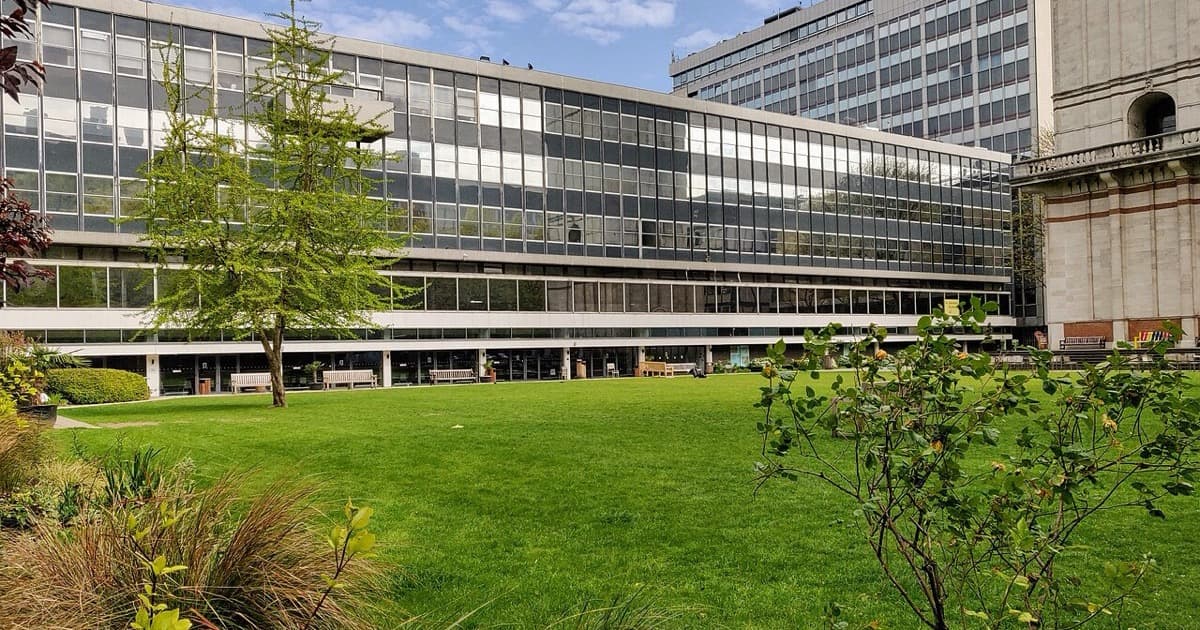
Imperial College London Medicine is one of the largest schools in the country, training more than 2000 students in Medicine and Biomedical Science. Programmes are delivered at four main campuses across London including: South Kensington, Charing Cross, Chelsea and Westminster, Hammersmith, Royal Brompton and St Mary’s as well as at a wide range of partner hospitals and general practices. Imperial College School of Medicine has an international reputation for excellence, routinely ranked among the world’s top five in the sector.
Complete University Guide 2027
Source: Complete University Guide 2027 medicine league table.
The Guardian University Guide 2027
Source: The Guardian University Guide 2027 medicine league table.
~37% of applicants receive an offer
2025 entry data
For 2025 entry, Imperial College London received 1,369 home applications for Medicine. It made 501 offers, so 37% of home applicants received an offer.
All applicants (home and international)
| Entry year | Applications | Interviewed% of applicants | Offers | Post-interview success% of interviewed | Offer rate% of applicants |
|---|---|---|---|---|---|
| 2026 | — | 870 | — | — | — |
| 2025 | 2,149 | 85240% | 661 | 78% | 31% |
| 2024 | 3,444 | 84425% | 668 | 79% | 19% |
| 2023 | 3,459 | 97528% | 648 | 66% | 19% |
| 2022 | 4,184 | 90222% | 545 | 60% | 13% |
| 2021 | 4,045 | 1,06526% | 573 | 54% | 14% |
| 2020 | 3,365 | 1,24537% | 733 | 59% | 22% |
Home applicants
| Entry year | Applications | Interviewed% of applicants | Offers | Post-interview success% of interviewed | Offer rate% of applicants |
|---|---|---|---|---|---|
| 2025 | 1,369 | — | 501 | — | 37% |
| 2024 | 2,246 | — | 610 | — | 27% |
| 2023 | 2,094 | — | 595 | — | 28% |
| 2022 | 2,637 | — | 514 | — | 19% |
| 2021 | 2,488 | — | 527 | — | 21% |
| 2020 | 1,940 | — | 613 | — | 32% |
International applicants
| Entry year | Applications | Interviewed% of applicants | Offers | Post-interview success% of interviewed | Offer rate% of applicants |
|---|---|---|---|---|---|
| 2026 | — | 253 | — | — | — |
| 2025 | 693 | 28040% | 153 | 55% | 22% |
| 2024 | 1,198 | 22619% | 58 | 26% | 5% |
| 2023 | 1,365 | 13510% | 53 | 39% | 4% |
| 2022 | 1,547 | 1469% | 31 | 21% | 2% |
| 2021 | 1,185 | 12911% | 46 | 36% | 4% |
| 2020 | 905 | 12614% | 63 | 50% | 7% |
Last checked September 2026.
Expert 1-1 support for your application
1-1 support from doctors and admissions experts across every stage of your medicine application.
Interview Coaching
Mock MMI & panel interviews
1-1 Mock Interview
Marked on real criteria
Ultimate Package
Full application support
Years 1 & 2
Focus on the scientific basis of medicine and introductory clinical experience. Teaching is delivered through a range of lectures, tutorials and problem-based learning sessions.
Year 3
Three 10-week hospital attachments covering General Medicine and Surgery, complemented by a central teaching programme and e-learning.
Year 4
Working towards the BSc (the intercalation)
Year 5
A dedicated Pathology course followed by a year of clinical specialities in rotation, including Obstetrics and Gynaecology, Psychiatry, General Practice and Paediatrics.
Year 6
A range of clinical placements and lecture courses designed to prepare you for your first job as a doctor and a student-selected specialist study module. Exceptional students may be offered the opportunity to include a PhD as part of the course.
Imperial Medical School’s teaching style blends scientific depth with hands-on clinical experience from the very start. Through a spiral, integrated curriculum, students build knowledge progressively while applying it in real-world settings via early placements and clinical skills training. A mix of lectures, team-based learning, tutorials, and simulation ensures varied, interactive education. The dedicated BSc year fosters research and critical thinking, helping students become both skilled clinicians and reflective, evidence-based practitioners.
In Year 4 you will be undertaking a series of modules and a supervised research project or a specialist course, giving you an opportunity to delve deeply into a subject that catches your interest.
Universities revise entry requirements between cycles, usually in August and September. Always confirm with the university before you apply.
The minimum A level requirement for Imperial Medical School is A*AA, with the A* and A in Biology and Chemistry (the A* in either) and an A in a third subject (2027 entry).
Predicted Grades: applicants must be predicted to meet the minimum entry requirements.
Compare this with the A-level requirements for every UK medical school.
Minimum GCSE grade requirement for Imperial Medical School is grade 6 (B) in English Language. There is no other GCSE or Scottish Nationals requirement.
Still sitting your GCSEs? Protect the grades this course screens for with 1-1 GCSE Maths, Biology and Chemistry tutoring from medics.
38 points including grade 6 in Biology at Higher Level and grade 6 in Chemistry at Higher Level. The typical offer is 39 points, with grades 6 and 7 in Biology and Chemistry at Higher Level.
Advanced Highers are required; Scottish Highers alone are not sufficient. See the Advanced Higher requirement.
Our minimum entry standard is AAA overall, to include:
Graduate applicants apply to the separate Graduate Entry Medicine programme (A102): a 2:1 or above in a Biosciences or Allied Healthcare degree.
Applicants sit either the GAMSAT or the UCAT, and must meet a minimum threshold score in whichever test they take.
IELTS: 7.0 overall (minimum 6.5 in all elements)
No. Imperial College London does not accept A Level resits for the A100 Medicine programme. Its 2027 entry course page states that it will not accept resit qualifications, and that all qualifications must be taken in the same sitting. Imperial's adviser guidance adds that the Faculty of Medicine does not accept resit qualifications unless the applicant has applied for mitigating circumstances, so any resit applicant would need an evidenced mitigating circumstances case.
Minimum grade at first sitting: Not accepted (EC only).
See A-Level & GCSE resit policies for every UK medical school →
No
You must be 18 years of age by the time you would start this course.
Compare minimum age requirements at every UK medical school →
Yes. Imperial College London publishes a contextual adjustment for medicine applicants.
Who it applies to, in the university's own words:
Guaranteed minimum offer, guaranteed interview, extra support, and a reduced minimum threshold for GAMSAT and UCAT. For 2026 entry the UCAT minimum threshold was a total score of 2320 for home applicants against 2170 for widening participation applicants, with SJT band 3 the minimum for both.
The UCAT thresholds are re-set annually and were published for 2026 entry. The size of the guaranteed minimum offer is not quantified for medicine.
Source: Imperial admissions schemes. Last checked 16 September 2026.
Compare contextual offers at every UK medical school, with each university's criteria in its own words.
Most useful
How Does Imperial College London Look At The UCAT?
👉🏼 LOWEST UCAT Score INVITED TO INTERVIEW [ie Imperial Medicine UCAT Cut Off Score]:
SJT Band 4 = Rejection
This is what Imperial said for 2025 entry: The UCAT score will be used to help rank candidates to invite for interview. We anticipate inviting the top third [approximately] ranked candidates to interview.
The selection panel is comprised of teachers in undergraduate education with experience in the admissions process, who will ratify overall interview numbers. The following criteria may be considered when assessing your application:
📝 PS - Have your PS checked - 5⭐ Rated
🎙️ Interviews - 1-1 Online Medicine Interview (Panel & MMI) Tutoring & Mocks tailored to Imperial - 5⭐ Rated
** PLEASE NOTE: For 2025 Entry for Medicine at Imperial - the BMAT will not be used. Instead, the UCAT will be used **
Imperial used a BMAT cut-off every year. There is a minimum score for each of the 3 BMAT sections.
👉🏼 BMAT Thresholds for Home Applicants for 2023 entry:
🌍 BMAT Thresholds for Overseas / European Union / Query Applicants for 2023 entry:
BMAT Thresholds for Widening Participation Applicants
Imperial BMAT Cut-off 2022
The Imperial BMAT cutoff for 2022 Entry for UK students was:
For international applicants, the following BMAT cut-off scores apply for 2022 entry:
Past BMAT Imperial Cut-off Scores:
BMAT Thresholds for Widening Participation Applicants
All candidates were required to score the minimum in Section 1, Section 2 and Section 3 as well as achieve or exceed the sum of scores of Sections 1 and 2.
No
Imperial does not specify or recommend any specific type or duration of work experience for applicants as it is more what the individual takes out of the experience rather than the placement itself. Any amount of community or volunteer work is looked upon favourably and should demonstrate evidence of working as a leader and as part of a team.
Interview preparation
Our 1-1 medicine interview tutoring is online and your tutor is matched to Imperial College London, so every mock runs in the multiple mini interview (MMI) format Imperial College London uses, with written feedback after each one.
We cover every UK medical school and last year our students were offered places at every one, including Imperial College London.
Ten hours is £749 (£75 an hour) and includes the £349 Ultimate Q&A Guide free (500+ questions with model answers written by doctors), plus WhatsApp support between sessions.

 Most popular
1-1 Interview Coaching
Our best-value full programme
Free Q&A Guide (£349)
Buy
1-1 Interview Coaching
Deepest prep for multiple offers and Oxbridge
Free Q&A Guide (£349)
Buy

Interview Guide
Model answers to every common interview question
Free with any coaching package
BuyNot sure which option fits? Explore all interview coaching or book a free consultation.
Imperial does not score or assess the personal statement. Shortlisting for interview is based solely on UCAT score and academic eligibility (predicted AAA). The personal statement is not used to rank applicants, though its content may be referred to during the MMI.
Note: from 2026 entry, UCAS replaced the single free-text personal statement with three structured questions: why you want to study the course, how your studies have prepared you, and what else you have done to prepare. Any guidance above still applies; it is simply spread across those questions. For worked examples and a review of your own statement, see our medicine personal statement examples and review service.
See our medicine personal statement examples: model statements in the new UCAS format, each with commentary on what works and why.
No graduate course in London. Imperial's four-year graduate entry MBBS (A102) is taught entirely at the Pears Cumbria School of Medicine in Carlisle, for home fee payers with a 2:1 in a bioscience or allied health degree. Pears Cumbria graduate entry
Imperial does not offer its own Foundation Programme.
Currently, Medicine courses do not accept UCL UPCSE or Warwick IFP Science and Engineering applications.
Imperial College London selects A100 Medicine (MBBS/BSc) applicants using a Multiple Mini Interview (MMI), confirmed on both the official course page and the Faculty of Medicine admissions pages. The circuit runs as a series of short, timed stations (Imperial's own materials describe 7 stations of around 5 minutes each, with roughly 1 minute between stations to read a briefing); the official MMI page confirms the 5-minute-per-station timing and a marking scheme of 6 points for content and 4 for communication.
Stations assess teamwork and leadership, motivation to study medicine, understanding of the role of a doctor, empathy and breaking bad news, ethics and values-related scenarios, and data interpretation, with interviewers drawn from academic staff, practising healthcare professionals, and current students. Imperial normally invites the top third of applicants (screened on academics and UCAT) on a rolling basis from December, with interviews typically held across January to February/March.
The exact delivery method for the current cycle (online/asynchronous video versus in-person) is not explicitly confirmed on the official pages consulted; recent cycles have used a hybrid approach, so applicants should check Imperial's admissions timeline for the format applying to their year.
Imperial College London has not published specific Medicine interview dates for 2027 entry. Its Faculty of Medicine says only that multiple mini interviews are typically held throughout January and February, and no exact dates appear on its admissions pages.
For 2027 entry, Imperial receives UCAT scores in November and then sends interview invitations on a rolling basis from December, normally interviewing the top third of applicants. The invitation explains how the interview will run. No offers are made without an interview.
Comparing this against your other choices? Every UK medical school's interview window is in one table, checked against each university's own website, in our UK medical school interview dates guide.
Although questions and stations may vary through the years, these are the main topics that you will ask questions on (for 2026 entry):
If you are shortlisted, you will be invited to take part in multiple mini interviews. The following criteria may be considered when we assess you:
Your UCAS application is unlikely to be referred to during the interview stage.
In the past there have been: 7 stations of 5 minutes each with 1 minute between stations during which you will be instructed to read a brief about what the station is assessing. Each station will be assessing one core element of your fitness to study and practise medicine.
Answers are marked out of six points (6) for content (what you say) and out of four (4) for communication (how you say it). Often there is no right or wrong answer - the interviewers are assessing your ability to explain your thinking.
If you change your mind on a specific question half way through your answer, they will consider your ability to reflect on your ideas and how you think on your feet.
Please find below a list of suggested questions that could come up at your interview this year, created by our team to help guide your preparation.
Motivation to study medicine
Personal Insight
NHS & Local Area
Ethical Scenarios
Prepare with 1-1 medicine interview coaching and practise with our medicine interview questions guide.
Practise under timed conditions with our free generator. It builds a randomised circuit from real Imperial College London interview themes, with follow-up questions and a notes summary you can keep. It opens preset to Imperial College London's own interview format, and you can record your answers to watch them back.
Medical School Admissions Registry
Imperial College London
South Kensington Campus
London
SW7 2AZ
Tel: 020 7594 8056
Email: medicine.ug.admissions@imperial.ac.uk
Website: www.imperial.ac.uk
Boost your medical school application
Imperial College London is ranked 3rd out of 40 UK medical schools for Medicine in the Complete University Guide 2027.
Imperial College London is ranked 1st out of 40 UK medical schools for Medicine in the Guardian University Guide 2027.
Imperial College London is ranked 3rd out of 40 UK medical schools for Medicine in the Complete University Guide 2027.
In the Complete University Guide 2027 it scores 77% for entry standards, 85% for student satisfaction and 99% for graduate prospects.
The minimum A level requirement for Imperial Medical School is A*AA, with the A* and A in Biology and Chemistry (the A* in either) and an A in a third subject (2027 entry).
Predicted Grades: applicants must be predicted to meet the minimum entry requirements.
Minimum GCSE grade requirement for Imperial Medical School is grade 6 (B) in English Language. There is no other GCSE or Scottish Nationals requirement.
No. Imperial College London does not accept A Level resits for the A100 Medicine programme. Its 2027 entry course page states that it will not accept resit qualifications, and that all qualifications must be taken in the same sitting. Imperial's adviser guidance adds that the Faculty of Medicine does not accept resit qualifications unless the applicant has applied for mitigating circumstances, so any resit applicant would need an evidenced mitigating circumstances case.
The UCAS course code for the standard Medicine course at Imperial College London is A100, and the degree awarded is the MBBS.
The course is based in London, England and lasts 6 years.
Yes, Imperial College London requires the UCAT for entry to Medicine (new for 2025 entry).
2026 Entry (/2700): 2320 (non-WP), 2170 (Contextual), 2310 (Overseas).
2025 Entry (/3600): 3020 (non-WP), 2830 (Contextual).
SJT Band 4 = Rejection.
This is what Imperial said for 2025 entry: The UCAT score will be used to help rank candidates to invite for interview. We anticipate inviting the top third [approximately] ranked candidates to interview.
Selection Process at Imperial Medicine.
For 2025 entry, 37% of home applicants to Medicine at Imperial College London received an offer (501 offers from 1,369 applications). An offer is not a confirmed place.
Yes, Imperial College London interviews applicants for Medicine, using a multiple mini interview (MMI) format.
Imperial College London uses a multiple mini interview (MMI) format for Medicine interviews.
Yes. Our 1-1 medicine interview tutoring is online and your tutor is matched to Imperial College London, so every mock runs in the multiple mini interview (MMI) format Imperial College London uses, with written feedback after each one.
We cover every UK medical school and last year our students were offered places at every one, including Imperial College London.
Ten hours is £749 (£75 an hour) and includes the £349 Ultimate Q&A Guide free (500+ questions with model answers written by doctors), plus WhatsApp support between sessions.
Book on the medical school interview coaching page at www.theukcatpeople.co.uk/medicine-interview-tutor-coaching, or start with a single £125 mock: upgrade within 7 days of your feedback and the full £125 comes off any package.
The Medicine interview at Imperial College London covers scientific curiosity & research, data analysis & logic, motivation & imperial context, ethical reasoning, the nhs & healthcare systems, teamwork & leadership, communication skills and resilience & self insight.
Imperial College London has not published specific Medicine interview dates for 2027 entry. Its Faculty of Medicine says only that multiple mini interviews are typically held throughout January and February, and no exact dates appear on its admissions pages.
No, Imperial College London does not offer a foundation or gateway year for Medicine.
Imperial does not offer its own Foundation Programme.
Currently, Medicine courses do not accept UCL UPCSE or Warwick IFP Science and Engineering applications.
No graduate course in London. Imperial's four-year graduate entry MBBS (A102) is taught entirely at the Pears Cumbria School of Medicine in Carlisle, for home fee payers with a 2:1 in a bioscience or allied health degree.
Admissions test for graduates: GAMSAT or UCAT (Carlisle course).

Want expert help getting into Imperial College London?
From admissions test prep and personal statement editing to interview coaching and our all-in-one Ultimate Package, we help applicants at every stage. Tell us where you are and we will recommend the right option.
Schools ranked closest to this one in the Complete University Guide 2027.
Ultimate Package students from our 2025/26 cycle, with their UCAT scores and offers, who trained with us for the UCAT, personal statements and interviews.
“Harry got my UCAT up to 2,590, working through the sections I kept dropping marks on week by week. Gemma then ran my interview practice so the MMI stations didn't catch me out, and Dr Akash mentored me the whole way through. I'm off to King's for Medicine.”
“The interview prep was the part that actually moved the needle. Proper mock MMIs, not just lists of questions, and feedback that was honest about what I was getting wrong. I ended up with four offers and firmed UCL.”
“The Ultimate Package kept me organised from UCAT through to interviews. They knew what dental schools actually ask and tightened up my personal statement. Four offers in the end, and I'm going to Birmingham.”
“Vet applications come down to the written SAQs as much as the interview. Dr Rebecca went through my SAQs line by line, sharpened my answers and prepped me for the panels. I came away with four offers and chose the RVC.”
Book your FREE consultation today
Click to book your free consultation