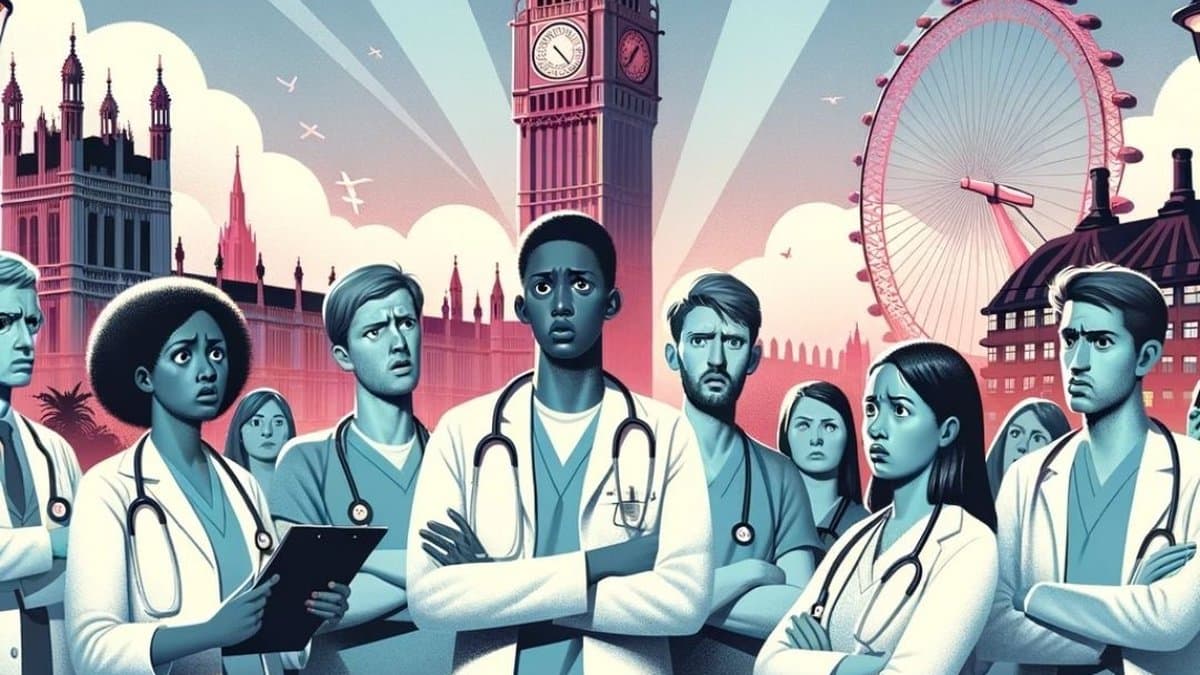
You will need to provide some examples of hot topics you can apply during your medical school interviews. Here you will learn everything you need to know about the junior doctor contract.
Summary of the Junior Doctor Contract for Medical Interviews
A junior doctor is any doctor in training who is not yet a consultant or GP - they could have been out of university for 1-10 years (or, rarely, even more)
The junior doctor contract details terms and conditions for junior doctors’ employment in the UK
In 2016, the government imposed a new contract that was widely opposed by doctors, triggering the first all-out strikes in around 40 years (including the first-ever withdrawal of emergency cover, on 26 April 2016) before a revised contract was eventually agreed
The contract was again updated in 2018 to make some minor changes
Since 2023 the dispute has shifted decisively onto pay: a major pay-restoration campaign, a 2024 deal worth an average 22.3% over two years, and a fresh 2025-26 dispute that ended in June 2026 when resident doctors in England narrowly voted to accept a new pay-and-jobs offer, closing three years of strikes in England (though Northern Ireland remains in dispute). Note that the BMA renamed 'junior doctors' as 'resident doctors' in September 2024.
What do I Need to Know About the Junior Doctor Contract for Medical School Interviews?
What is a junior doctor (now 'resident doctor')?
The progression pathway of a doctor is complex and non-linear. The BMA has a simple guide here that can help you to understand it.
A ‘junior doctor’ is any doctor in a training pathway who is not yet a consultant or a GP. A consultant is a fully qualified doctor who specialises in a particular area of medicine and usually works in a hospital, whereas a general practitioner sees patients in primary care facilities such as GP practices and manages patients with a broad range of different conditions.
Foundation Year 1/2: Foundation year 1 and foundation year 2, or FY1/FY2, doctors are those who are in their first and second year out of medical school respectively. They rotate around 3 specialities per year for four months each.
GP Specialist Trainee: GPSTs have completed their foundation years, and are in a 3-year training program where they rotate around relevant specialities before qualifying fully as a general practitioner
Core Medical/Surgical Trainee: These are trainees in ‘uncoupled training’, where their post-foundation year training is split in two: first, they train broadly in medicine or surgery; second, they train more specifically in their chosen area.
Specialist Trainee: These may be trainees in the second phase of ‘uncoupled training’, or in ‘run-through training’ where doctors enter a single, unbroken, training program between FY2 and consultancy.
Other: Various other more complex pathways exist, where doctors can work as FY3/4/5/etc, clinical fellows, and more.
Importantly, all junior (resident) doctors are fully qualified doctors with medical degrees and direct responsibility for patients. They may have been qualified for many years. Medical students are not junior doctors. In September 2024 the BMA formally renamed 'junior doctors' as 'resident doctors', because members felt 'junior' wrongly implied they were students or apprentices rather than fully licensed doctors. You may see either term used; they mean the same group.
The contract outlines all of the workers’ rights to which doctors are entitled, encompassing a wide variety of key issues. The BMA has a guide to all of these issues. Some key ones to know about include:
Overtime: The contract specifies what counts as overtime, during which doctors are paid more. Currently, overtime applies between 8 pm-6 am (or 9 pm-7 am, depending on region) Monday-Friday and all day Saturday, with rates increased further on Sundays or bank holidays.
Working limits: Doctors should work no more than 72 hours work in a consecutive 168-hour period, with a maximum of seven shifts of any length worked on seven consecutive days or four long shifts on consecutive days
Pay protection: If a doctor is switching specialities to one that is hard to fill (eg emergency medicine, psychiatry, GP), or for reasons related to disability/caring responsibilities, then their pay shall be protected at the rate that it was had they not switched for the duration of their training. They will therefore be paid more than a new trainee, to reflect their increased experience.
Pay progression: Pay progression based on experience shall continue when a doctor is on academic or maternity leave.
Junior doctor contract controversies: 2016 to 2026
The 'weekend effect' and the case for a 7-day NHS
A central justification for the 2016 contract was the so-called 'weekend effect'. The government cited research suggesting patients admitted at weekends had a higher risk of death, and ministers referred to roughly 11,000 'excess' weekend deaths to argue that a '7-day NHS' needed cheaper weekend working from doctors. This framing was politically powerful but heavily contested.
The researchers behind the original study, led by Professor Nick Freemantle, publicly cautioned that their data could not show how many of those deaths were avoidable, nor that weekend staffing was the cause; sicker patients are admitted at weekends, which skews crude mortality figures. In my experience as a GP, this is a useful example to raise at interview: it shows you can separate a genuine patient-safety question from the way a statistic is used to win a policy argument.
The deeper controversy was that junior doctors already worked weekends. Critics argued the contract did not add weekend capacity so much as reduce the premium paid for unsocial hours, effectively expecting the same workforce to spread thinner. Understanding this distinction (more cover versus cheaper cover) lets you give a far more nuanced answer than simply saying doctors wanted more money.
In 2015, Jeremy Hunt (then Health Secretary) proposed changes to the contract that included:
Pay changes: Doctors would be paid more at a base rate, but less for overtime work and therefore be up to 30% worse off overall
Pay protection removal: Doctors’ pay would not be protected when switching to a hard-to-fill speciality, reducing interest in these specialities and contributing further to understaffing.
Pay progression pausing: Doctors on academic and maternity leave would have their pay progression paused.
The contract was part of plans for a “7-day-NHS”, where similar services would be provided on weekends and weekdays.
These proposals were highly controversial. After 98% of junior doctors who voted backed industrial action, the dispute produced the first national doctors' strikes in around 40 years, beginning in January 2016, and on 26 April 2016 the first-ever full withdrawal of emergency cover in the NHS. The government announced it would impose the contract from August 2016 regardless. A revised version was eventually agreed with the BMA after a fresh referendum and rolled out from late 2016.
Resident doctors struck repeatedly in 2023-24 over pay, accepting a deal in September 2024, then re-entered dispute in 2025 with further strikes in July, November and December 2025, before narrowly voting in June 2026 to accept a fresh offer that ended the strikes in England. You can read the full timeline in our companion article on the strikes.
The resident doctor contract and pay restoration today
The current dispute is fundamentally different from 2016. Where the earlier row was about working conditions and the '7-day NHS', the 2023 onwards campaign centres on pay restoration: the BMA argues that, measured against RPI inflation, resident doctors' real-terms pay fell by more than a quarter between 2008 and 2022. The demand is to reverse that erosion rather than simply secure an above-inflation rise.
After 44 days of strike action, resident doctors accepted a deal with the new Labour government in September 2024 worth an average 22.3% across two years. Crucially, both sides accepted this was a step towards, not a completion of, pay restoration: the BMA's own analysis put pay still around 20.8% behind 2008 levels after the deal. Pay for doctors is set through the Review Body on Doctors' and Dentists' Remuneration (the DDRB), an independent panel that recommends annual uplifts to government.
The dispute reopened in April 2025, partly over the timing of the DDRB process, and led to further strikes in July, November and December 2025. In June 2026 the government tabled a fresh offer worth an average 6.6% by April 2027 (a 3.5% DDRB award plus an extra 3.1%), alongside up to 4,500 new specialty training posts over three years to ease the 'bottleneck' that leaves qualified doctors unable to secure specialty jobs, plus substantive contracts and funded first attempts at Royal College exams for locally employed (non-training) doctors. The scheduled 15-19 June strike was called off so members could vote, and on 26 June 2026 resident doctors in England narrowly voted to accept - 53% in favour on a 57% turnout - ending the England dispute after 15 rounds of strikes since 2023. The BMA stressed this is only a step towards full pay restoration, with pay still nearly a fifth behind 2008 levels. The dispute is not over across the whole UK, though: resident doctors in Northern Ireland began a 24-hour walkout on 29 June 2026 over pay erosion of up to 20% since 2008.
For interviews, the key insight is that pay is now entangled with workforce planning: a competitive contract is not only about salary but about whether trainees can actually progress into specialty training. Showing you grasp both strands (pay restoration and the training bottleneck) demonstrates the balanced, system-level thinking that panels reward.
In 2018, more changes to the contract were suggested, and in 2019, these were finalised with the BMA’s agreement.
Key Ethical and Social Issues in the Junior Doctor Contract
How can we encourage doctors to enter hard-to-fill speciality positions?
Some specialities are particularly hard to fill in the NHS - for instance, A&E medicine, general practice, psychiatry, maxillofacial surgery, and anything in very rural areas such as the Scottish highlands and islands.
This may be for a variety of reasons such as lower pay, less sociable working hours, harder working conditions, behaviourally challenging patients, or simply the fact that doctors find them less interesting. Various schemes are being introduced to help to remedy this, as you can read about in our article on the GP shortage in the NHS.
Some key factors to consider are making these specialities more appealing inherently by resolving issues such as poorer working conditions as best as possible, as well as offering additional benefits to doctors in these specialities.
Pay protection for doctors moving to these specialities later in their career is an important factor, as many doctors who eventually fill these positions come from other specialities previously.
How can we ensure fair treatment for those on academic or maternity leave?
Doctors may take leave for various reasons - perhaps to undertake important research projects, or for personal reasons such as having a family. The contract outlines that doctors should not have their pay progression (the usual increase in pay as a doctor gains experience) paused during these periods.
This is important for multiple reasons. For one, it ensures that doctors can pursue other ventures in their lives that are important to them. Additionally, it is a core part of gender equality in the NHS, which has a significant gender pay gap.
How to Answer Junior Doctor Contract Interview Questions
You could get questions about any of the above topics in your medical school interviews. Some top tips to consider are:
Remember that the contract, and the disputes surrounding it, are not just about money! Show off your understanding of more complex issues as well.
Bear in mind that ‘junior doctor’ is a very general term that can describe a variety of types of doctors at all stages of their training.
Consider the 2016 strikes in relation to the 2023 strikes - comparing and contrasting them can be extremely helpful in making nuanced and intelligent arguments.
Example Medicine Interview Questions and Answers on the Ongoing Strikes
Q: Why did junior doctors go on strike in 2016?
A: Junior doctors went on strike several times in 2016 in opposition to a new contract championed by Jeremy Hunt, the Health Secretary at the time, which the government ultimately announced it would impose.
The contract was opposed for a variety of reasons. First, it changed provisions for what counted as overtime. This meant that whilst doctors’ base rate of pay was increased, their actual earnings would likely decrease by up to 30% for those most affected. Many doctors saw this as not just an unacceptable pay cut, but an insulting and somewhat sneaky way of trying to implement it.
Second, other terms of the proposed contract would have made working conditions worse for junior doctors. These included details about night shifts and for how long doctors can work on a shift. In particular, there were concerns that these changes could have led to extreme fatigue that may have endangered patients - a common analogy used by protestors was that you wouldn’t let an exhausted pilot fly your plane, so shouldn’t let an exhausted doctor practice medicine.
Third, pay provisions aside from rates also would have worsened. This includes scrapping pay protection and pausing pay progression for doctors on maternity leave, changes that would have exacerbated understaffing in hard-to-fill specialities and worsened the already-significant gender pay gap in the NHS.
Given these proposed changes, it is no surprise that junior doctors went on strike in 2016. The strikes eventually ended when a revised contract was agreed between the BMA and the government, though many doctors regarded it as an imposed compromise rather than a genuine settlement, and pay grievances resurfaced strongly from 2023 onwards. A strong interview answer recognises that the 2016 row was largely about working conditions and the '7-day NHS', whereas the current dispute is squarely about pay restoration.
Practice Junior Doctor Contract Interview Questions
Why did the junior doctors strike?
Do you think it was acceptable for junior doctors to strike?
What impact did the strikes have on healthcare and patient safety?
(Hard) What are some key similarities between the 2016 and 2023 junior doctors' strikes?
What is a junior doctor?
(Hard) What does the junior doctor contract say about how long doctors can work in a week?
How can we ensure that doctors don’t become dangerously fatigued to the point of endangering patients? What is the junior doctor contract and what does it outline?
Overall, junior doctor contract questions can provide a valuable opportunity to reflect on the ethical challenges that can arise in medicine and to demonstrate your ability to think critically about these issues.
Contact us
Want expert help with your application?
From 1-1 tutoring and personal statement editing to interview coaching and our all-in-one Ultimate Package, we support every stage. Tell us what you are working towards and we will recommend the right option.
FAQs
Frequently asked questions
What is the junior doctor contract?
The junior doctor contract is the agreement setting out pay and working conditions for doctors in training in the NHS, from foundation year doctors up to those just below consultant or GP level. It covers issues such as basic pay, overtime and unsocial-hours rates, maximum working hours, rest requirements, pay progression and pay protection. There is a separate contract in each of the four UK nations.
Why is it now called the resident doctor contract?
In September 2024 the BMA formally replaced the term 'junior doctor' with 'resident doctor'. Members felt 'junior' wrongly implied they were students, apprentices or not fully qualified, when in fact many have practised independently for years. The change is in terminology only: the group, the contract and the issues are the same, so you may see both terms used interchangeably.
What was the 2016 junior doctor contract dispute about?
The 2016 dispute began when Health Secretary Jeremy Hunt proposed, then announced he would impose, a new contract. Doctors objected that it reduced unsocial-hours pay (leaving some up to around 30% worse off), removed pay protection for those switching to hard-to-fill specialties, and risked patient safety through fatigue. It was tied to a '7-day NHS' policy and the contested 'weekend effect' argument.
What is the 'weekend effect' and why was it controversial?
The 'weekend effect' refers to research suggesting patients admitted at weekends had a higher risk of dying, which ministers used (citing roughly 11,000 excess deaths) to justify the 2016 contract and a '7-day NHS'. It was controversial because the study's own authors warned the figure could not show how many deaths were avoidable or caused by staffing, since sicker patients are admitted at weekends, skewing the data.
When did junior doctors first go on strike over the contract?
Junior doctors took national strike action in January 2016, the first such walkout in around 40 years. The dispute escalated and, on 26 April 2016, doctors withdrew even emergency cover for the first time in NHS history. The strikes followed a ballot in which 98% of junior doctors who voted backed industrial action against the proposed contract.
Was the 2016 junior doctor contract imposed?
Yes, in effect. In February 2016 the government announced it would impose the new contract from August 2016 despite the BMA's opposition. A revised version was later negotiated and put to a referendum of doctors before being rolled out from late 2016. Many doctors continued to regard it as an imposed compromise, which helps explain why pay grievances resurfaced strongly from 2023.
What does the junior doctor contract say about working hours?
The contract limits resident doctors to no more than 72 hours of work in any consecutive 168-hour (7-day) period. It also caps consecutive working, generally allowing a maximum of seven shifts of any length in a row, or four consecutive long shifts, with mandatory rest. These safeguards exist to prevent dangerous fatigue, a major patient-safety concern raised during the 2016 dispute.
What is pay protection in the junior doctor contract?
Pay protection means that a doctor who switches into a hard-to-fill specialty (such as emergency medicine, psychiatry or general practice), or who changes path for disability or caring reasons, keeps the pay rate reflecting their existing experience rather than dropping to a new trainee's salary. It is designed to encourage experienced doctors to move into understaffed specialties without taking a financial penalty.
What is pay restoration and what does the BMA want?
Pay restoration is the BMA's demand to reverse the real-terms fall in resident doctor pay since 2008. Measured against RPI inflation, the BMA argues pay fell by more than a quarter (around 26%) by 2022. Rather than seeking only an above-inflation rise, the campaign wants this erosion fully reversed. The 2024 deal was framed by both sides as a first step towards, not the completion of, pay restoration.
What was the 2024 resident doctor pay deal?
In September 2024, after 44 days of strikes, resident doctors in England accepted a deal with the Labour government worth an average 22.3% across two years (2023/24 and 2024/25). It ended that phase of the dispute but, by the BMA's own analysis, still left pay around 20.8% behind 2008 levels in real terms, which is why the union described it as progress rather than full restoration.
Why did the pay dispute reopen in 2025?
Resident doctors re-entered formal dispute in April 2025, partly over the government's failure to keep to an agreed timetable for the DDRB pay-review process, and over the view that the 2024 deal had not gone far enough on restoration. This led to further strike action in July, November and December 2025, showing that accepting one deal did not settle the underlying pay grievance.
What is the DDRB?
The DDRB is the Review Body on Doctors' and Dentists' Remuneration, an independent panel that each year recommends pay uplifts for doctors and dentists to the UK government. Ministers usually, but not always, accept its recommendations. The DDRB's role and the timing of its reports have themselves become points of dispute, with the BMA arguing the process is not genuinely independent of government.
What is the latest on the resident doctor contract in 2026?
In June 2026 the government made a fresh offer worth an average 6.6% by April 2027 (a 3.5% DDRB award plus an additional 3.1%), together with up to 4,500 new specialty training posts to ease the jobs bottleneck. As of late June 2026 BMA members were voting on whether to accept it, with the ballot closing on 26 June 2026. Like the 2024 deal, it does not deliver full pay restoration.
Are junior (resident) doctors fully qualified?
Yes. Every resident doctor holds a medical degree, is registered with the GMC and carries direct responsibility for patients. The term covers everyone from a first-year foundation doctor to a senior registrar one step below consultant, who may have a decade or more of clinical experience. This is exactly why the BMA replaced 'junior', which it felt understated their training and accountability.
How should I discuss the junior doctor contract in a medical school interview?
Stay balanced and show system-level thinking. Acknowledge doctors' case (pay erosion since 2008, fatigue and patient safety) and the counter-arguments (NHS affordability, impact on patients during strikes). Distinguish the 2016 dispute (mainly working conditions and the '7-day NHS') from the current row (pay restoration plus the training bottleneck), use the correct 2026 facts, and avoid taking a one-sided political stance.
What is the difference between the 2016 dispute and the current dispute?
The 2016 dispute centred on working conditions: unsocial-hours pay, safe working limits and the '7-day NHS' policy underpinned by the contested 'weekend effect'. The dispute from 2023 onwards is primarily about pay restoration, reversing real-terms cuts since 2008, alongside the training bottleneck that leaves qualified doctors unable to secure specialty posts. Drawing this contrast is one of the strongest things you can do in an interview answer.
Ultimate Package students from our 2025/26 cycle, with their UCAT scores and offers, who trained with us for the UCAT, personal statements and interviews.
Ultimate Package
S
Sophie
Medicine, King's College London
2025 UCAT2,590 / 2,700
“Harry got my UCAT up to 2,590, working through the sections I kept dropping marks on week by week. Gemma then ran my interview practice so the MMI stations didn't catch me out, and Dr Akash mentored me the whole way through. I'm off to King's for Medicine.”
Ultimate Package
D
Daniel
Medicine, University College London
Medicine offers4 offers
“The interview prep was the part that actually moved the needle. Proper mock MMIs, not just lists of questions, and feedback that was honest about what I was getting wrong. I ended up with four offers and firmed UCL.”
Ultimate Package
A
Aisha
Dentistry, University of Birmingham
Dentistry offers4 offers
“The Ultimate Package kept me organised from UCAT through to interviews. They knew what dental schools actually ask and tightened up my personal statement. Four offers in the end, and I'm going to Birmingham.”
Ultimate Package
C
Charlotte
Veterinary Medicine, Royal Veterinary College
Vet offers4 offers
“Vet applications come down to the written SAQs as much as the interview. Dr Rebecca went through my SAQs line by line, sharpened my answers and prepped me for the panels. I came away with four offers and chose the RVC.”