If you are preparing for your upcoming medical school interview, being aware of the latest patient safety initiatives is crucial for demonstrating high-level NHS awareness.
One of the most significant recent developments in Primary Care is Jess's Rule, a safety protocol designed to prevent missed diagnoses in repeated GP presentations.
Understanding this rule allows you to discuss complex topics like diagnostic error, cognitive bias, and system pressures with maturity.
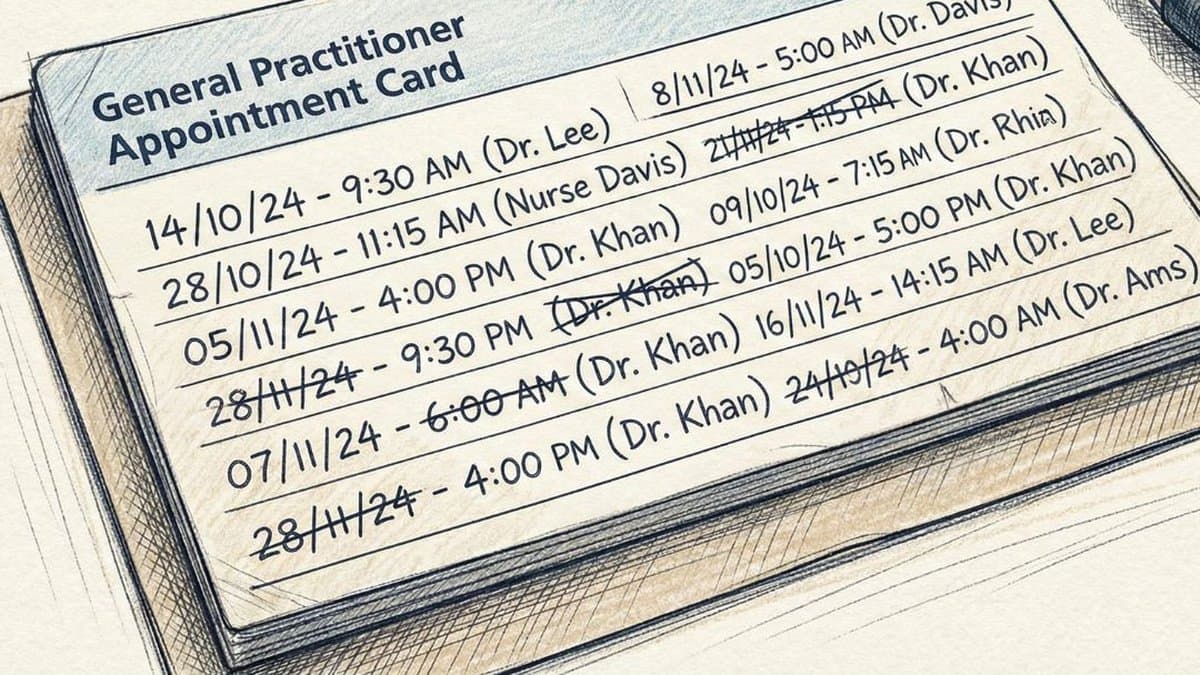
Jess's Rule (launched by NHS England in September 2025) is a patient-safety initiative built around a "three strikes and we rethink" approach. It asks GPs to take a fresh look and critically re-evaluate a patient's case, reflecting, reviewing and rethinking the diagnosis, when someone attends three times without a substantiated diagnosis or with worsening symptoms. It is guidance rather than a legal requirement, and it currently applies in England only. (launched September 2025) is an NHS patient safety initiative that mandates a "three strikes and we rethink" approach. It requires GPs to critically re-evaluate a patient's case, reflecting, reviewing, and rethinking, if they present three times with the same or worsening symptoms. It was established following the tragic death of Jessica Brady, whose cancer was missed after 20 GP contacts.
You can also have a go at examplemedicine interview questions, and can read through the model answers we have below.
Summary of Jess' Rule:
Jess’s Rule is used if a patient presents to the GP three times with worsening or similar symptoms.
It is named after Jessica Brady, whose cancer diagnosis was missed, and she subsequently passed away aged 27.
Jess’s Rule uses the ‘reflect, review, rethink’ approach.
It can be used to promote early diagnoses and continuity of care.
It acts in accordance with existing NHS rules, like Martha’s Rule.
Jess's Rule is a primary-care safety-netting initiative that encourages GPs to pause and reconsider a diagnosis when a patient repeatedly presents with similar or escalating symptoms.
It was developed in collaboration with the Royal College of General Practitioners (RCGP) and the Department of Health and Social Care (DHSC).
The rule operates on the "Three Strikes and We Rethink" principle. If a patient attends the practice three times with the same or worsening condition and there is still no substantiated diagnosis, the clinical team is prompted to stop and re-evaluate rather than continue down the same path."Three Strikes and We Rethink" principle. If a patient attends the practice three times with the same or worsening condition, the clinical team is prompted to stop and re-evaluate the entire clinical picture rather than assuming the initial diagnosis was correct.
Key Takeaway: The core purpose of Jess's Rule is to break the cycle of "confirmation bias" by forcing a formal review after three unresolved presentations.
Jess’s Rule is named after Jessica Brady, who passed away from Stage 4 Adenocarcinoma with unknown primary (this means they didn't know the origin of the cancer) in December 2020, aged 27.
In the five months prior to her death, Jess had twenty GP consultations, and her symptoms were attributed to long Covid. She had contacted six different doctors at her General Practice, and no referral to a specialist was ordered, despite symptoms of night sweats, weight loss and chronic fatigue.
Her symptoms were repeatedly attributed to Long Covid or anxiety. She was told she was "too young" for serious illness.
She had to seek private healthcare and was subsequently diagnosed with terminal stage 4 adenocarcinoma.
Due to the late stage of her cancer, no available treatment could be used, and she passed away three weeks later.
Jess’s Rule was therefore established to reduce the number of preventable deaths and to decrease the number of missed diagnoses during GP consultations.
NHS England formally launched Jess's Rule on 23 September 2025, working with the Royal College of General Practitioners (RCGP) and the Jessica Brady CEDAR Trust set up by Jess's family. In January 2026, awareness posters were sent to all 6,170 GP practices in England, so students sitting interviews this cycle should treat it as a live, current initiative rather than a proposal.
Two points are worth getting right for interviews. First, Jess's Rule is guidance and a safety campaign, not a law, it formalises good practice that many surgeries already follow, and it deliberately aligns with the GMC's Good Medical Practice rather than adding a separate legal duty. Second, because health is devolved, it currently applies in England only; Scotland, Wales and Northern Ireland run their own NHS services and would each need to adopt it separately, and the Jessica Brady CEDAR Trust is encouraging patients there to write to their representatives. A pilot from 2026 also looks at electronic safety-netting to improve follow-up on checks such as bowel cancer.
Why Jess's Rule Matters for Medical Interviews
For aspiring doctors, understanding Jess's Rule is essential because it highlights the balance between resource management and patient safety.
It is a prime example of how the NHS learns from serious incidents (SIs) and implements systemic changes to reduce "diagnostic overshadowing" - where symptoms are wrongly attributed to a previous diagnosis or anxiety.
This is why we designed TheUKCATPeople's Medicine Interview Tutoring to include specific training on "Clinical Governance" and "Patient Safety," ensuring you can handle these ethical situations like a future colleague.
Key Takeaway: Jess's Rule is a prime example of Clinical Governance in action, illustrating how the NHS adapts guidelines to safeguard patients from diagnostic errors.
Jess’s Rule in the NHS: how is it used?
Jess’ Rule uses 3 core principles: ‘to reflect, review and rethink’. This is if the patient presents to the GP three times with the same or worsening symptoms.
Reflect
GPs must think back on what the patient has already told them and what could have been missed. The doctor must offer continuity of care to the patient.
An example of this could be if previous consultations have been via the phone, face-to-face appointments could be used, and physical examinations could be conducted.
Review
If the medical professional is uncertain about the patient’s symptoms, the GP ought to seek help from a colleague and consider if any red flags may be present in the patient’s diagnosis. heck for "Red Flags" (cancer symptoms) regardless of the patient's age or demographics.
This step directly combats age-related bias.It is vital for the GP to think about other diagnoses regardless of the patient’s demographics and background.
Rethink
This is where the GP must refer the patient to a specialist or for further tests.
If the diagnosis is still uncertain, refer the patient to a specialist or order definitive investigations (like blood tests or imaging) rather than "wait and see." Dr. Akash’s Advice: If you are asked about this in an interview, link it to the GMC Good Medical Practice guidelines on "Recognising and working within the limits of your competence." Asking for a review isn't a sign of weakness; it's a sign of a safe doctor.
Which steps should be taken to implement Jess’s Rule in GPs?
There are a number of steps that GPs can take to put Jess's Rule into practice. Examples include:
Using in-person consultations if they were previously remote
Seeking a second opinion from a fellow GP or healthcare professional
Review their full medical history and record
Arrange additional tests or scans that could aid in diagnosis
It is important to note that many General Practices utilise the ‘ three strikes and rethink’ strategy; however, Jess’s Rule formalises this initiative and ensures that there is widespread use of this rule.
Jess’s Rule provides a structure for GPs to follow to ensure patient safety.
Additional training is not required for this initiative to be applied, as Jess’s rule already aligns with the GMC’s Good Medical Practice. It emphasises the importance of GPs taking a thorough history and arranging for further investigations based on the patient’s needs.
Jess's Rule is not a law. It is national guidance for GPs, launched by NHS England in September 2025 and reinforced with awareness posters in every English GP practice from January 2026.
Jess's Rule is an essential initiative that can be used to benefit and protect patients. The rule is vital as:
Missed and late diagnoses are a recognised problem. Around one in five cancers in England is still diagnosed only after an emergency presentation such as A&E, a route linked to later-stage disease and worse survival.
Diagnostic errors are the single biggest source of negligence claims against GPs, and overall NHS clinical-negligence payouts have risen to nearly £3 billion a year.
Jess’s Rule supports autonomy, as it empowers the patient to seek answers for their worsening symptoms and unexplained diagnosis. It allows for the patient’s concerns to be listened to.
Beneficence
Jess’s Rule acts in accordance with beneficence, as patients benefit from earlier diagnosis and improved prognosis.
This rule aims to reduce harm done to patients, as it endeavours to reduce preventable deaths and life-threatening diseases, like sepsis and cancer.
Justice
This rule ensures that all patients are treated equally and fairly, regardless of socioeconomic background.
Jess’s Rule vs. Martha’s Rule: What’s the Difference?
It is crucial not to confuse Jess's Rule with Martha's Rule, as they apply to different healthcare settings.
Jess's Rule (Primary Care): Focuses on GPs and repeated outpatient appointments. It is about catching chronic or developing conditions (like cancer) that are being missed over time.
Martha's Rule (Secondary Care): Focuses on Hospitals (Inpatient). It allows patients/families to call for an urgent "Critical Care Review" if they feel a patient is deteriorating acutely on a ward (e.g., Sepsis) and is being ignored.
Key Takeaway: Jess's Rule is for diagnosis in the community; Martha's Rule is for deterioration in hospital.
Ultimate Package
Choose your Ultimate Package
Rated 5.0 from 640+ reviews. 1-1 mentoring from doctors across UCAT, personal statement and interviews.
Describe an intervention that resolves issues within the NHS
An intervention that resolves issues within the NHS is Jess’s Rule. This is an initiative where if the patient presents to the GP three times with unexplained or worsening symptoms, the GP must reconsider the patient’s case.
This case is named after Jessica Brady, whose cancer diagnosis was missed, and she passed away aged 27. GPs are encouraged to arrange in-person consultations if they were previously remote, organise further tests or refer to a specialist.
This will prevent avoidable deaths, reduce the amount of missed diagnoses and improve patient diagnosis. This rule also supports the pillars of non-maleficence, as patients benefit from earlier diagnoses and justice is also supported, as all patients are treated equally regardless of their background.
Jess’s Rule Medical Interview Questions
Describe how patient safety can be improved.
Discuss an intervention that can improve missed diagnoses.
How could primary care be improved?
What issues currently exist in primary care?
Less likely to come up - harder!
Describe how Jess’s Rule is used in the NHS.
Describe initiatives that are used to improve patient safety.
Jess's Rule is a patient safety initiative that encourages GPs to "rethink" a diagnosis if a patient presents three times with the same or worsening symptoms. It aims to prevent missed diagnoses of serious conditions like cancer.
How does Jess's Rule work?
Jess's Rule is a patient safety initiative that encourages GPs to "rethink" a diagnosis if a patient presents three times with the same or worsening symptoms. It aims to prevent missed diagnoses of serious conditions like cancer.
What happened in Jess's Rule?
Jess's Rule is named after Jessica Brady, who passed away from adenocarcinoma after having 20 GP consultations. Her diagnosis was repeatedly missed and was put down to long Covid
Is Jess's Rule a law?
No, it is not a statute (law). It is a clinical directive and patient safety campaign supported by NHS England and the RCGP. It formalises "best practice" rather than creating a new legal act.
Why was Jess's Rule created?
Jess's rule was created to encourage earlier diagnosis and to prevent missed diagnoses for life-threatening conditions like sepsis and cancer. It was created to reduce avoidable patient deaths.
What are the benefits of Jess' Rule?
It promotes continuity of care and reduces "cognitive closure" (where a doctor decides on a diagnosis too early). By mandating a fresh look, it increases the chance of detecting life-threatening conditions like sepsis or cancer early.
Does Jess's Rule require extra funding?
While the rule itself is a protocol change, it implies a need for more resources, as referring more patients for scans or second opinions increases the demand on diagnostic services and GP appointment availability.
What is the "Three Strikes" concept?
It is the trigger for the rule: "Three strikes and we rethink." This means the third presentation for the same issue is the safety threshold where the standard of care shifts from "monitoring" to "mandatory review."
How can I discuss Jess's Rule in an interview?
Focus on Patient Safety and Human Factors. Discuss how doctors are human and can make mistakes due to bias or pressure, and how protocols like this act as a necessary "safety net" to protect patients.
Contact us
Want expert help with your application?
From 1-1 tutoring and personal statement editing to interview coaching and our all-in-one Ultimate Package, we support every stage. Tell us what you are working towards and we will recommend the right option.
FAQs
Frequently asked questions
What is Jess's Rule?
Jess's Rule is an NHS England patient-safety initiative launched in September 2025. It asks GPs to take a 'fresh eyes' approach and rethink the diagnosis when a patient attends three times without a substantiated answer or with worsening symptoms, using a 'Reflect, Review, Rethink' process to catch missed or delayed diagnoses such as cancer.
Is Jess's Rule a law?
No. Jess's Rule is guidance and a patient-safety campaign endorsed by NHS England and the RCGP, not an Act of Parliament or a statutory duty. It formalises existing best practice and aligns with the GMC's Good Medical Practice rather than creating a new legal requirement.
Does Jess's Rule apply in Scotland, Wales and Northern Ireland?
Not automatically. Jess's Rule was launched by NHS England and currently applies in England only, with posters going to all 6,170 English GP practices in January 2026. Because health is devolved, Scotland, Wales and Northern Ireland each run their own NHS and would need to adopt it separately; campaigners are encouraging patients there to lobby their representatives.
What is the difference between Jess's Rule and Martha's Rule?
They cover different settings. Jess's Rule is for primary care, prompting GPs to rethink a diagnosis after three unresolved presentations so slow-developing conditions like cancer are not missed. Martha's Rule is for hospital inpatients, letting patients or families request an urgent critical-care review if someone is deteriorating acutely on a ward. In short: Jess's Rule is about diagnosis in the community; Martha's Rule is about deterioration in hospital.
What happened to Jessica Brady?
Jessica Brady died in December 2020 aged 27 from stage 4 adenocarcinoma with an unknown primary. In the five months before her death she had around 20 GP consultations across several doctors, and her symptoms were repeatedly attributed to long Covid or anxiety before she was diagnosed, via private care, at a stage too advanced to treat. Jess's Rule was created in her memory to reduce missed and delayed diagnoses.
When did Jess's Rule start?
NHS England launched Jess's Rule on 23 September 2025. In January 2026 awareness posters were rolled out to all 6,170 GP practices in England, and a pilot on electronic safety-netting for conditions such as bowel cancer is planned from 2026.
How can I discuss Jess's Rule in a medicine interview?
Define the 'three strikes and we rethink' principle, mention Jessica Brady and the risk of diagnostic overshadowing in young patients, then walk through 'Reflect, Review, Rethink'. Show balance by acknowledging that it adds GP workload and pressure on diagnostics, but argue this is justified for patient safety, and link it to the four ethical pillars and clinical governance.
Does Jess's Rule require extra funding or training?
No formal extra training is required, as Jess's Rule aligns with the GMC's Good Medical Practice. However, acting on it, such as bringing patients in for face-to-face reviews, seeking second opinions and ordering more investigations, does add to GP workload and demand on diagnostic services, which is a fair point to raise in an interview.
Ultimate Package students from our 2025/26 cycle, with their UCAT scores and offers, who trained with us for the UCAT, personal statements and interviews.
Ultimate Package
S
Sophie
Medicine, King's College London
2025 UCAT2,590 / 2,700
“Harry got my UCAT up to 2,590, working through the sections I kept dropping marks on week by week. Gemma then ran my interview practice so the MMI stations didn't catch me out, and Dr Akash mentored me the whole way through. I'm off to King's for Medicine.”
Ultimate Package
D
Daniel
Medicine, University College London
Medicine offers4 offers
“The interview prep was the part that actually moved the needle. Proper mock MMIs, not just lists of questions, and feedback that was honest about what I was getting wrong. I ended up with four offers and firmed UCL.”
Ultimate Package
A
Aisha
Dentistry, University of Birmingham
Dentistry offers4 offers
“The Ultimate Package kept me organised from UCAT through to interviews. They knew what dental schools actually ask and tightened up my personal statement. Four offers in the end, and I'm going to Birmingham.”
Ultimate Package
C
Charlotte
Veterinary Medicine, Royal Veterinary College
Vet offers4 offers
“Vet applications come down to the written SAQs as much as the interview. Dr Rebecca went through my SAQs line by line, sharpened my answers and prepped me for the panels. I came away with four offers and chose the RVC.”