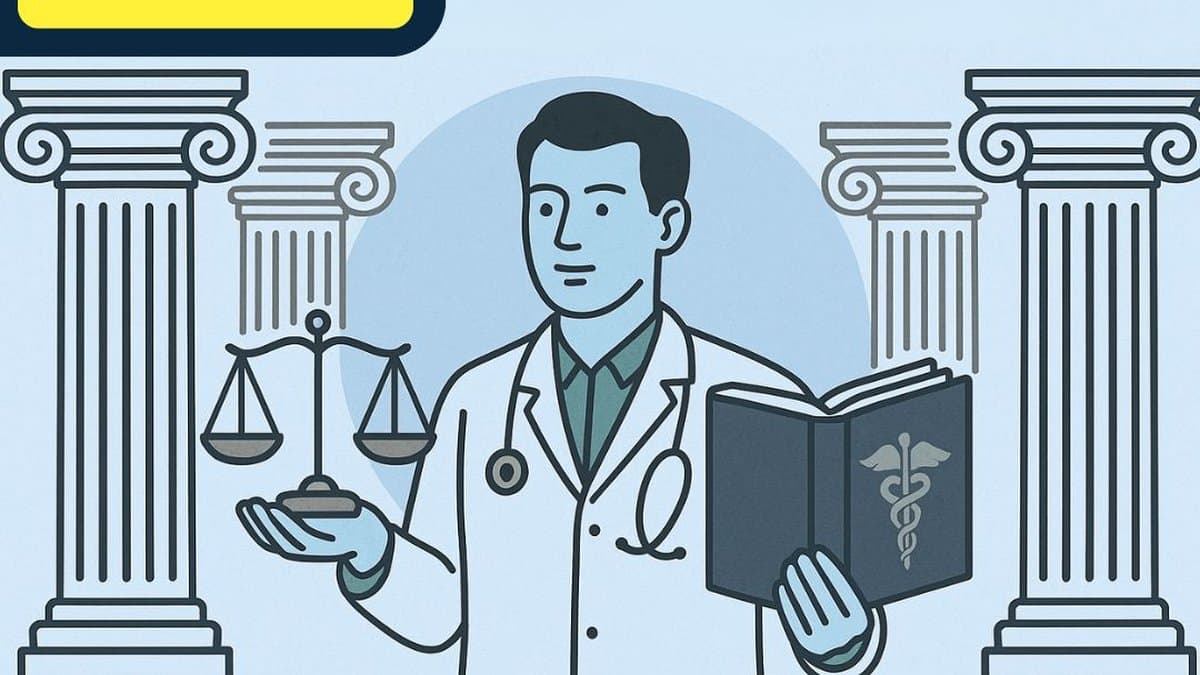
Whether you’re preparing for your MMI interviews, tackling ethical scenarios, or aligning your thinking with NHS core values, mastering non-maleficence will set you apart from other applicants.
This guide is filled with practical interview tips, real-life case studies, and model answers - designed to help you approach non-maleficence like a future healthcare professional.
On your journey to UK medical school, understanding the principle of “do no harm” isn’t just helpful - it’s absolutely essential.
What Is Non-Maleficence? Key Facts for UK Medical Interviews
Before you start to prepare answers or analyse complex ethical scenarios about Non-Maleficence, it is essential to have a firm grasp of what this Pillar really means - and why it is so vital to understand in both medical school interviews and your future career.
Here is a quick summary of what you should know about the Pillar of Non-Maleficence:
Non-Maleficence means “do no harm” - it is an ethical duty to avoid causing physical, emotional, or psychological harm to patients.
It’s one of the Four Pillars of Medical Ethics, alongside the Pillar of Beneficence, Autonomy, and Justice – all of which you are expected to understand and apply in interviews.
It guides doctors to act responsibly and with caution, especially when treatments carry risks or unintended consequences.
The principle applies to both action and inaction. Sometimes doing less, or nothing at all, is the safest and most ethical choice for a patient.
Common ethical dilemmas, such as refusing treatment, over-treatment, and end-of-life decisions, often centre around this pillar.
Non-Maleficence Definition & Meaning (Four Pillars of Medical Ethics)
Definition: ‘Non-Maleficence’’ means ‘do no harm’. It is the obligation to avoid causing harm to patients - through actions, mistakes or poor decision-making.
Etymology: From the Latin ‘malficentia’ (meaning ‘evil-doing’). It is the direct ethical opposite of ‘beneficence’ or doing what is in the best interests of the patient.
Key Points to Understand Non-Maleficence:
Non-maleficence is proactive, not passive. Doctors must take steps to prevent harm and minimise risks to patient safety.
Non-Maleficence is a concept that applies to both actions and omissions (for example, failing to diagnose a health condition can be equally as harmful as making a treatment error.
Patient safety is a cornerstone of this principle, including avoiding unnecessary treatments, investigations or interventions.
What does non-maleficence mean in simple terms?
Non-maleficence simply means “do no harm.” In practical terms, it means that doctors must avoid causing unnecessary physical, emotional, or psychological harm to patients. It also means stopping or avoiding treatments that may cause more harm than good.
How do doctors use non-maleficence in real life?
Doctors use non-maleficence every day when balancing risks and benefits before offering any treatment. This includes avoiding unnecessary tests, preventing medical errors, choosing safer alternatives where possible, and stopping interventions that may harm vulnerable patients. The principle guides clinicians to prioritise patient safety above all else.
Non-Maleficence vs Beneficence: Key Differences for Interview Scenarios
What does “primum non nocere” mean?
“Primum non nocere” is Latin for “first, do no harm” – the phrase most often used to capture the principle of non-maleficence. Closely linked to the Hippocratic tradition, it reminds doctors that before any test or treatment they must ask whether it could harm the patient, and that avoiding harm can be as important as actively doing good.
Beneficence:
Focus: Doing good and acting in the best interests of the patient
Example: Starting chemotherapy for a patient with breast cancer
Non-Maleficence:
Focus: Avoiding harm and minimising risk to the patient
Example: Withholding chemotherapy if the side effects outweigh the benefits for a specific patient.
As you can see, these two ethical pillars are often in tension, especially in complex or high-risk medical decisions. In your interview, you’ll be expected to consider how they interact together.
Why Is Non-Maleficence Important in Healthcare? (NHS & GMC Perspective)
In the NHS today, the ethical concept of ‘doing no harm’ is vital. The Pillar of Non-Maleficence underpins patient-centred care, playing an integral role in modern medical decision-making.
Here are some of the key reasons why Non-Maleficence is essential to modern healthcare:
Prevents Over-Treatment and Over-Investigation
Avoiding unnecessary tests or procedures reduces complications and healthcare costs, protecting patient wellbeing by focusing only on interventions that provide real benefit.
Protects the Most Vulnerable
Frail, elderly, or immunocompromised patients may be more harmed than helped by aggressive treatments.
Ensures care is proportionate and personalised to individual needs.
Supports Informed Consent and Shared Decision-Making
Patients must be clearly informed of potential risks and benefits.
Encourages open, honest discussions so patients can make autonomous, informed choices, a core NHS value.
Forms the Basis of GMC Good Medical Practice
GMC guidance states: “Make the care of your patient your first concern.”
This directly reflects the principle of Non-Maleficence, highlighting its legal and professional importance.
Why is non-maleficence important in medicine?
Non-maleficence is essential because it protects patients from avoidable harm and keeps healthcare safe, evidence-based, and ethical. It ensures treatments are proportionate, prevents over-treatment, and encourages doctors to consider the long-term impact of their decisions. It is central to NHS patient safety standards and GMC Good Medical Practice.
Can non-maleficence conflict with autonomy?
Yes - non-maleficence can conflict with autonomy when a patient’s choice may put them at significant risk of harm. In these cases, doctors must balance respecting the patient’s wishes with their duty to protect them. If a patient has capacity, autonomy usually prevails, but if they lack capacity or the risk is severe, non-maleficence may take priority.
Why Non-Maleficence Is Important for Your Medical School Interview
Understanding Non-Maleficence is essential - not only to excel in your Medical School Interview, but also to develop the ethical mindset of a doctor in preparation for the future.
Here are some of the reasons why this ethical pillar should be at the centre of your preparation:
Demonstrates ethical maturity in complex interview scenarios
Shows that you can balance clinical judgement with compassion (e.g. when a patient refuses a potentially life-saving treatment)
Knowing when not to act is a skill
Sometimes, doing less as a doctor is safer than doing more. Understanding when intervention could cause harm is a sign of advanced clinical reasoning!
Non-Maleficence links directly to NHS Values
Non-Maleficence aligns with Respect, Compassion and Patient Safety - values which all doctors must uphold.
Helps you to navigate ethical conflicts in interview questions
Scenarios often test your ability to balance Autonomy with Non-Maleficence (patient safety). Understanding how these pillars interact will enhance your interview answers.
Sets the foundation for real-world decision-making
Remember that you are learning about the various Pillars of Medical Ethics to benefit patients by making decisions that protect life and patient dignity, as well as succeed in your medical interviews.
Non-Maleficence Examples: Real-Life Cases in Medicine
Understanding how the Pillar of Non-Maleficence applies to real medical cases is key to demonstrating ethical understanding during your medical school interview. These examples highlight how doctors must always weigh risk vs benefit, and avoid causing harm to their patients.
Case 1: Charlie Gard - End-of-Life Care and Ethical Conflict
The case of Charlie Gard, a terminally ill baby with mitochondrial DNA depletion syndrome, raised vital questions around non-maleficence, autonomy, and best interest.
Doctors believed further treatment would prolong suffering for Charlie Gard, without a realistic chance of recovery.
Charlie Gard’s parents wanted to pursue experimental treatment abroad, hoping for improvement.
The UK courts ruled that continuing treatment would cause more harm than benefit - demonstrating how non-maleficence can override parental autonomy.
Why It Matters
This case shows that doing no harm can sometimes mean withholding treatment. It challenges future doctors to reflect on compassionate care, end-of-life ethics, and what actions are truly in the patient’s best interest.
👉🏻 Interested in the Charlie Gard Case? Click Here to Read More
Case 2: Overprescription of Antibiotics - Preventing Harm on a Larger Scale
Prescribing antibiotics for viral infections can seem harmless - but in actuality, poses serious risks:
Increases AMR (Antimicrobial Resistance), making future infections harder to treat.
Undermines public health and safety, violating the ethical principle of non-maleficence.
Why It Matters:
This example shows how non-maleficence extends beyond individual patient care - doctors must consider the wider impact of their decisions on public health, aligning with GMC principles and NHS safety guidelines.
MMI Example Question About Non-Maleficence (With Model Answer)
Question:
A parent insists their child should receive an alternative therapy that is unproven and potentially harmful. What do you do?
Answer:
This is an emotional and ethically complex situation. It involves a child who is vulnerable, balanced with their parents wishes and my duty as a doctor to ‘do no harm’ - the Pillar of Non-Maleficence.
My first step would be to speak with the child' s parents openly and compassionately to understand why they are requesting this alternative therapy. I think empathy is essential here - they are likely distressed about the health of their child and trying to do what is best for them. I know that understanding their motives for a potentially risky treatment puts me and the rest of the medical team in a better position to discuss and weigh up the risks and benefits with the parents.
This case involves multiple ethical considerations, and I would carefully weigh each of them. Firstly, I would consider the Pillar of Non-Maleficence. As a doctor, I must prioritise the child’s safety, and their quality of life. Administering a potentially harmful treatment would be causing harm, and violating this ethical principle.
Parental autonomy is also essential to consider in this situation, as it may not remain absolute. Along with the MDT, I would intervene with a parents’ decision if their child is at risk, which in this case, is likely true. Acting in the child’s best interest would be my priority, and offering other, less risky treatment options would be a consideration going forward.
Along with my senior colleagues, if the treatment is deemed too aggressive or risky, palliative care could offer the patient more dignity, comfort and peace. This is a situation where not taking steps forward could be the best option for the patient.
Escalating the situation to my senior colleagues and involving the MDT would be my priority in this case. This would include an ethics committee if needed and potentially palliative care specialists. I would want to ensure that decisions are made accounting for the parents’ emotions, balanced with clinical factors.
Overall, I know that the child is my patient, and their safety and best interests must guide all of the decisions that I take. If the alternative treatment poses more of a risk than benefit, I would, along with my colleagues, not support this plan. Instead, my goals would be to support the parents coming to terms with this decision, explore safer and more compassionate ways to manage the illness, and ensure that patient safety is upheld (according to the Pillar of Non-Maleficence).
Ultimate Package
Choose your Ultimate Package
Rated 5.0 from 640+ reviews. 1-1 mentoring from doctors across UCAT, personal statement and interviews.
How to Answer Non-Maleficence Questions in MMI & Panel Interviews
When answering questions about any of the Four Pillars of Medical Ethics, try to follow a guided structure. Below is a structured, high-scoring way to perform well in your MMI:
Define Non-Maleficence - To Do No Harm
Acknowledge the ethical tension in the scenario - What are the Ethical Values in conflict?
Apply each of the Four Pillars of Medical Ethics - How do they interact? Can one override another?
Consider Patient Capacity and Informed Consent
Communicate empathetically, considering views of the patient and their family
Escalate the situation, involving senior colleagues if necessary - In these situations, you are never alone!
Conclude - Your decision must be fair, carefully considered and above all, patient-centred
A patient insists on being discharged despite a serious risk of stroke. What do you do?
Parents demand a homeopathic treatment for their child who has a bacterial infection, despite the child requiring a course of antibiotics in the hospital. How do you respond?
From 1-1 tutoring and personal statement editing to interview coaching and our all-in-one Ultimate Package, we support every stage. Tell us what you are working towards and we will recommend the right option.
FAQs
Frequently asked questions
What is non-maleficence?
Non-maleficence is the ethical principle of “do no harm” – a doctor's duty to avoid causing physical, psychological, or emotional harm to patients. It is one of the Four Pillars of Medical Ethics, alongside beneficence, autonomy, and justice, and it requires clinicians to weigh the risks of any action or inaction before proceeding.
What is non-maleficence in simple terms?
In simple terms, non-maleficence means “don't make things worse.” Doctors must avoid causing unnecessary harm to a patient through their treatment, tests, or decisions. Sometimes this means choosing a safer option, and sometimes it means doing nothing at all when an intervention would carry more risk than benefit.
What does non-maleficence mean in medical ethics?
In medical ethics, non-maleficence is the obligation to avoid causing harm to patients – through actions, mistakes, negligence, or poor decision-making. It is one of the Four Pillars set out by Beauchamp and Childress and underpins NHS patient safety standards and GMC Good Medical Practice, which states: “Make the care of your patient your first concern.”
What does “primum non nocere” (first do no harm) mean?
“Primum non nocere” is Latin for “first, do no harm,” a phrase closely linked to medical ethics and often associated with the Hippocratic tradition. It reminds doctors that before any treatment they must consider whether it could harm the patient. It is the practical heart of the principle of non-maleficence.
What is an example of non-maleficence?
A common example is not prescribing antibiotics for a viral infection. The antibiotics would not help, could cause side effects, and would fuel antimicrobial resistance – so withholding them avoids harm. Other examples include stopping aggressive treatment that only prolongs suffering and avoiding unnecessary scans that expose patients to needless risk.
What is the difference between non-maleficence and beneficence?
Beneficence is the duty to do good and act in the patient's best interests, while non-maleficence is the duty to avoid causing harm. They often pull in opposite directions: starting chemotherapy may benefit a patient (beneficence) yet cause serious side effects (non-maleficence). Doctors must balance the two for each individual patient.
Can non-maleficence conflict with autonomy?
Yes. Conflict arises when a patient's choice may seriously harm them. If the patient has capacity and understands the risks, autonomy usually prevails, even if doctors disagree. If the patient lacks capacity or the risk is severe, non-maleficence and best-interest decision-making may take priority, often after escalation and ethical review.
What is the doctrine of double effect?
The doctrine of double effect allows an action with a foreseen harmful side effect if the intention is to do good, not harm. A classic example is giving high-dose opioids in palliative care to relieve pain, accepting that it may hasten death. It is relevant to non-maleficence because the aim is comfort, not harm.
Why is non-maleficence important in healthcare?
Non-maleficence is important because it protects patients from avoidable harm and keeps care safe, proportionate, and evidence-based. It prevents over-treatment and over-investigation, safeguards vulnerable patients, and supports informed consent. It is central to NHS patient safety standards and GMC Good Medical Practice, making it a cornerstone of ethical clinical decision-making.
How do doctors apply non-maleficence day to day?
Doctors apply non-maleficence by weighing risks against benefits before every treatment, avoiding unnecessary tests, preventing medical errors, choosing safer alternatives, and protecting vulnerable patients. It also means knowing when not to act – for example, opting for palliative care rather than aggressive intervention that offers no meaningful benefit.
Does non-maleficence ever mean doing nothing?
Yes. Sometimes withholding or withdrawing treatment is safer and more ethical than intervening. Choosing palliative care over aggressive treatment that offers no meaningful benefit is an example of non-maleficence in action. Knowing when not to act is itself a sign of mature clinical reasoning and is regularly tested in interviews.
How does non-maleficence relate to informed consent?
Non-maleficence requires doctors to explain all material risks of a treatment so the patient can make a safe, informed decision. Following the Montgomery ruling, UK doctors must disclose risks a reasonable patient would want to know. Transparent risk discussion protects patients from unintended harm and supports both autonomy and patient safety.
What real-life NHS cases involve non-maleficence?
The case of Charlie Gard is a key example: courts ruled that continuing experimental treatment would cause more harm than benefit, showing how non-maleficence can override parental wishes at end of life. Cases involving overtreatment, medication errors, and antimicrobial resistance also illustrate the principle in NHS practice.
How might non-maleficence be tested in an MMI interview?
MMI stations often present scenarios where a patient or parent requests a risky or unproven treatment. Interviewers assess whether you can balance non-maleficence with autonomy, communicate risks empathetically, escalate to senior colleagues and the MDT, and keep patient safety central. A clear, structured, patient-centred answer scores highly.
Ultimate Package students from our 2025/26 cycle, with their UCAT scores and offers, who trained with us for the UCAT, personal statements and interviews.
Ultimate Package
S
Sophie
Medicine, King's College London
2025 UCAT2,590 / 2,700
“Harry got my UCAT up to 2,590, working through the sections I kept dropping marks on week by week. Gemma then ran my interview practice so the MMI stations didn't catch me out, and Dr Akash mentored me the whole way through. I'm off to King's for Medicine.”
Ultimate Package
D
Daniel
Medicine, University College London
Medicine offers4 offers
“The interview prep was the part that actually moved the needle. Proper mock MMIs, not just lists of questions, and feedback that was honest about what I was getting wrong. I ended up with four offers and firmed UCL.”
Ultimate Package
A
Aisha
Dentistry, University of Birmingham
Dentistry offers4 offers
“The Ultimate Package kept me organised from UCAT through to interviews. They knew what dental schools actually ask and tightened up my personal statement. Four offers in the end, and I'm going to Birmingham.”
Ultimate Package
C
Charlotte
Veterinary Medicine, Royal Veterinary College
Vet offers4 offers
“Vet applications come down to the written SAQs as much as the interview. Dr Rebecca went through my SAQs line by line, sharpened my answers and prepped me for the panels. I came away with four offers and chose the RVC.”