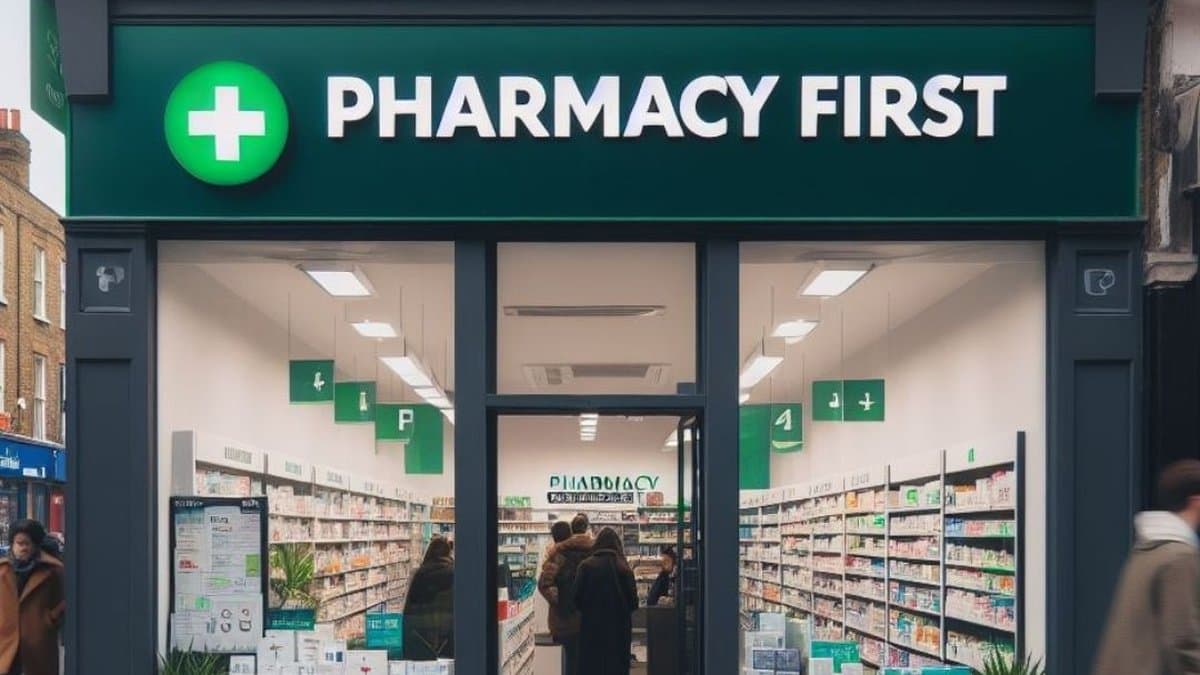
The NHS Pharmacy First Initiative, which started on January 31, 2024, is a new way for people in the UK to get quicker healthcare for common illnesses without needing to see a doctor first.
This programme lets local pharmacists take care of seven specific health problems, making it easier and faster for everyone to get help.
As of 2026, the overwhelming majority of community pharmacies in England, more than 98% of the network, are signed up to deliver the service. Between March 2025 and February 2026 pharmacies delivered over 3.3 million Pharmacy First consultations, an increase of around 43% year on year, with roughly 86% of patients reporting a positive experience.
For anyone thinking about a career in medicine or already working in healthcare, this initiative is an important topic. It shows how the healthcare system is trying to improve by letting pharmacists do more than they used to.
This can help people get better faster and make sure doctors have more time for serious cases. Understanding this program is also useful for medical school interviews because it's a good example of how the NHS is trying to solve big challenges, like long wait times and too much demand for doctor appointments.
The Pharmacy First Initiative Overview
The Pharmacy First Initiative was launched on 31st January 2024 and enables pharmacists to treat 7 common conditions.
The service expands pharmacists' roles beyond the Community Pharmacist Consultation Service by including prescription medications.
The 7 conditions covered by the Pharmacy First Initiative are: acute otitis media, impetigo, infected insect bites, shingles, sinusitis, sore throat, and UTIs.
Any registered UK pharmacy meeting specific service requirements can deliver Pharmacy First services.
The service aims to increase access to healthcare services in the UK and help reduce the burden on primary care.
What Is The Pharmacy First Initiative?
Designed by NHS England and announced in 2023, the Pharmacy First Initiative is the newest NHS service launched on the 31st of January 2024 across England.
It entrusts community pharmacists to deliver care for patients with seven common conditions, without the need for a GP visit.
The service aims to increase patient access to healthcare and reduce general practice workload.
Most notably, this allows pharmacists to supply prescription-only medicines, such as antibiotics and antivirals to patients where clinically reasonable, without seeing a GP
This is why interviewers often link Pharmacy First to antibiotic and antimicrobial resistance. Letting more clinicians supply antibiotics could, in theory, increase prescribing, so the service is built around strict clinical pathways and stewardship tools to keep antibiotic use appropriate.
Under the CPCS, pharmacists were able to provide medical advice and over-the-counter medications.
However, the Pharmacy First Initiative broadens the scope of care which pharmacists are licensed to provide. This includes providing prescription-only medication for 7 common conditions, where a patient would previously have had to have seen a GP.
What Are The 7 Conditions Covered By Pharmacy First?
Pharmacists are now equipped to offer advice and enhanced treatment for 7 common medical conditions. Here we have listed what they are, and a little bit of information about each condition.
Acute Otitis Media
A painful ear infection, which is common in children, and characterised by earache and fluid buildup in the middle ear.
Pharmacists are now able to provide treatment for 1 to 17-year-olds.
Common treatments include: watchful waiting (where you see how it progresses as if can often become better alone), painkillers, and antibiotics in certain situations
Impetigo
A highly contagious skin infection that causes red sores, often around the nose and mouth, which can break open and form crusty scabs.
Impetigo is usually caused by Staphylococcus aureus or Streptococcus pyogenes bacteria.
Pharmacists can now provide treatment for those aged 1 year and over.
Treatment is usually either topical antibiotics (creams) or in some cases oral antibiotics.
Infected Insect Bites
Bites from insects that have become red, swollen, and infected, sometimes causing increased discomfort and itching.
Pharmacists can now provide treatment for those aged 1 year and over.
The treatment of infected insect bits is often topical antibiotics or in some cases oral antibiotics.
Shingles
A viral infection which causes a painful rash that may appear as a strip of blisters on one side of the body, a reactivation of the chickenpox virus.
Pharmacists can now provide treatment for those aged 18 years and over.
This is often antiviral medication such as aciclovir, if certain conditions are met.
Sinusitis
Inflammation or swelling of the tissue lining the sinuses leads to a blocked nose, facial pain, and a reduction in the sense of smell.
Pharmacists can now provide treatment for those aged 12 years and over.
Whilst sinusitis often resolves on its own, steroid nasal sprays and in some cases, oral antibiotics can help depending on the situation.
Sore Throat
A painful, dry, or scratchy feeling in the throat, which is often caused by viral infections such as the common cold or flu.
Pharmacists can now provide treatment for those aged 5 years and over.
The treatment is often conservative management such as watchful waiting and ice lollies and difflam spray, or in some cases antibiotics where needed.
Uncomplicated Urinary Tract Infections in Women
Infections affect the urinary system, which causes burning during urination and an increased urge to urinate.
Pharmacists are now able to provide treatment for women aged between 16-64 years old.
This is often conservative management such as drinking more water, or can be through antibiotics such as nitrofurantoin and trimethoprim.
Any registered UK pharmacy can deliver Pharmacy First Services, as long as they meet the requirements for service provision and register to provide the initiative.
Only registered pharmacists can treat patients through this service.
The service requirements include:
Access to Equipment - All pharmacists must have access to an Otoscope to examine patients presenting with acute otitis media
Facilities - The pharmacy must have appropriate consultation areas that ensure privacy and confidentiality for patients
Staff trained to provide care within the clinical pathway for each condition - Pharmacists providing the service must be clinically competent to do so.
IT System - Pharmacies must have IT systems capable of supporting the service, including electronic record-keeping for consultations and the ability to communicate securely with other healthcare providers
Online Pharmacies, known as Distance Selling Pharmacies (DSPs), will be able to provide 6 out of 7 clinical care pathways (they cannot treat acute otitis media) as this would require a face-to-face appointment to examine the ear canal.
This will be provided through video consultation only, by a pharmacist on the pharmacy premises.
What Does The Pharmacy First Scheme Mean For Patients?
The Pharmacy First Initiative should provide patients with increased access to treatment and advice for conditions.
This should increase the convenience of healthcare for patients, as pharmacies in England are often located in closer proximity to patient homes and open outside of traditional GP hours, including weekends.
Through the service, patients will:
Be seen in a private consultation room by a pharmacist
Have a comprehensive medical history taken
Be thoroughly examined for their medical complaint
Be provided with treatment or advice for their presenting complaint
Have a record of their clinical consultation, which will be shared with the GP practice.
How Can Patients Access The Pharmacy First Service?
There are several routes through which patients may access this new NHS service:
Walk-in - patients will be able to attend the pharmacy and be seen by the pharmacist without the need for a referral
Telephone - patients will be able to arrange to see their pharmacist for a face-to-face consultation appointment.
NHS 111 - patients may be recommended to visit their local Pharmacy First service by a 111 operator, or 111 online.
NHS 999 services - patients may be recommended to visit their local Pharmacy First service by 999 where clinically appropriate
General Practice - some patients may be recommended to the Pharmacy First Service by their local GP if it is likely to provide an earlier available, or more appropriate appointment.
This service was designed to improve patient care provided by the NHS and the efficiency of healthcare services as part of the Primary Care Access Recovery Plan.
Demand for GP appointments continues to outpace supply, with general practice delivering well over 30 million appointments a month while access pressures persist. By moving suitable minor-illness care into pharmacies, NHS England hopes to free up GP capacity for patients with more complex needs, a key plank of the wider drive to shift care out of hospitals and into neighbourhood settings under the 10-Year Health Plan.
The Pharmacy First Initiative aims to improve this and reduce the pressure on NHS services.
What Are The Advantages And Disadvantages Of The NHS Pharmacy First Service?
Pharmacy First Advantages:
Improved Access to Care: Patients benefit from immediate access to healthcare professionals for minor conditions, reducing the need to wait for GP appointments.
Convenience: The service is offered in community pharmacies, which are often open for extended hours, including weekends, making healthcare more accessible.
Efficiency: By managing minor conditions, pharmacists can alleviate the burden on GP practices and emergency departments, enabling these services to focus on more serious health issues.
Comprehensive Care: Pharmacists can provide a range of services, from advice on self-care to treatment with over-the-counter or prescription medications, offering a holistic approach to patient care.
Patient Empowerment: The initiative encourages self-care and helps educate patients about managing minor conditions, promoting greater health literacy and self-management of health.
Cost-Effective: By utilising pharmacists to manage minor ailments, the NHS can make more efficient use of its resources, potentially saving money by reducing unnecessary GP and hospital visits.
Pharmacy First Challenges:
Scope of Practice Concerns: There may be concerns about the scope of practice for pharmacists and whether they have the necessary training and resources to diagnose and treat all the conditions covered by the service.
Consistency and Quality of Care: As the service is rolled out across a wide range of pharmacies, there may be variability in the quality and consistency of care provided, depending on the training and experience of the pharmacy staff.
Integration with Other Healthcare Services: Ensuring seamless communication and referral pathways between pharmacies, GPs, and other healthcare providers can be challenging, potentially impacting patient care continuity.
Safety Concerns: Some infections such as Urinary Tract Infections have microbiology reports on the system from previous infections that would help guide the appropriate prescription in the current illness. If pharmacists cannot access this, it can lead to incorrect antibiotics being prescribed for infections.
Public Awareness and Perception: Patients may not be fully aware of the range of services pharmacists can provide, or they may prefer to see a GP for healthcare needs, impacting the utilisation of the Pharmacy First service.
Over-reliance on Pharmacists: There's a risk that pharmacists could become overburdened with consultations, particularly in areas with high demand or during peak times, which could affect service quality.
Data Privacy and Sharing: Effective sharing of patient information between pharmacists and other healthcare providers is essential for coordinated care, but it raises concerns about data privacy and the secure handling of health information.
How Is The Pharmacy First Initiative Relevant To Medical School Interviews?
Is Pharmacy First Working In 2026? Uptake, Funding And Expansion
When I prepare applicants, I tell them that the strongest answers do not just describe a policy, they evaluate how it is actually going. Here is the current picture as of 2026, which lets you show genuine, up-to-date insight.
Uptake is now substantial. Between March 2025 and February 2026 community pharmacies delivered more than 3.3 million Pharmacy First consultations, around 43% more than the previous year, and roughly 86% of patients reported a positive experience. The service has clearly moved from launch into routine use.
Funding has been put on a firmer footing. For 2026 to 2027 the overall community pharmacy contract rose to £3.636 billion, an increase of around £340 million, and the Pharmacy First budget has been folded into the main contract to secure the funding stream. This matters because pharmacy finances have been under real strain, and many contractors argued the scheme was underfunded for the work involved.
There is genuine debate, though, which is gold for interviews. Monthly payment thresholds, requiring a set number of consultations to unlock a fixed payment, proved hard to hit. In May 2025 around 6,551 pharmacies, roughly 62% of the network in England, missed the 30-consultation threshold, and well over £70 million in threshold payments had gone unclaimed. Pharmacists also cite rigid targets, uneven GP referral, IT limitations and public awareness as barriers. A balanced answer holds both truths: rising activity and patient satisfaction on one hand, real implementation and funding challenges on the other.
Looking ahead, Pharmacy First is being expanded. From autumn 2026, NHS-funded independent prescribing is being introduced in community pharmacies, letting pharmacist prescribers work within the existing pathways and offer up to five new prescribing-only pathways. Conditions under consideration include bacterial and allergic conjunctivitis, oral thrush, skin infections and respiratory tract infections. This fits the wider left shift in the 10-Year Health Plan, moving care out of hospitals and into neighbourhood settings.
Sample Interview Question: "Is Pharmacy First A Success?"
A strong structure is: (1) define it briefly, (2) give the evidence for success (3.3 million consultations, high satisfaction, easing GP pressure, supporting the left shift to community care), (3) give the credible challenges (missed payment thresholds, antibiotic-stewardship concerns, limited access to a patient's full records, variation in uptake), and (4) reach a measured judgement, for example that it is a promising and growing service whose long-term success depends on sustainable funding, safe prescribing and joined-up records. Linking it to the four pillars of medical ethics, especially beneficence, non-maleficence and justice in access, will lift your answer further.
The recent introduction of the Pharmacy First Initiative in 2024 makes it an NHS Hot Topic, and a topic that interviewers will likely expect you to be aware of.
The issues addressed by this service reflect the broader themes in the NHS that future UK medical school applicants should be aware of, including service provision, patient care and resource allocation.
It is also a good example of multidisciplinary team working, with pharmacists, GPs and NHS 111 sharing the care of a patient. In my GP clinics I increasingly refer suitable minor-illness patients to a pharmacy colleague, and a good interview answer recognises that this is a team effort, not pharmacists working in isolation.
Given the state of NHS waiting lists and backlogs, the Pharmacy First Service is an example of an intervention created by NHS England to try and address this.
Having awareness and understanding of this initiative will indicate to your medical school interviewer an awareness of the current public health strategies and their implementation at the community level.
Pharmacy First Initiative: Medical School Interview Practice Questions & Model Answers
How Does The Pharmacy First Initiative Relieve Pressure On NHS General Practice Services?
The Pharmacy First initiative alleviates pressure on NHS services by enabling community pharmacists to manage minor conditions, thereby reducing unnecessary GP and emergency department visits.
Using pharmacists' expertise for conditions like sore throats or uncomplicated UTIs, ensures that more complex cases are prioritised for doctors, enhancing healthcare efficiency.
By diverting minor cases to pharmacies, the initiative helps to reduce wait times for GP and emergency services, contributing to better patient satisfaction and outcomes.
Furthermore, the initiative promotes preventative health care through pharmacists providing advice on self-care and healthy living. This can help reduce future health service use by encouraging patients to take proactive steps in managing their health, potentially reducing the incidence of more serious conditions that require intensive NHS resources.
This strategic use of pharmacy services effectively redistributes healthcare demands, contributing to the overall sustainability of the NHS. Hopefully, this will reduce GP appointment backlogs and waiting times.
What Are The Ethical Considerations Concerning The Pharmacy First Initiative?
The Pharmacy First initiative raises several ethical considerations essential for delivering equitable and safe healthcare:
Key considerations include ensuring equitable access for all, upholding patient autonomy through informed consent, and maintaining confidentiality in the increased patient-pharmacist interactions.
It's essential that pharmacists are well-trained, ensuring their competency aligns with the initiative's high standards of care.
This effort extends to guaranteeing quality care that mirrors that of traditional medical settings, emphasising the importance of accurate diagnosis and appropriate treatment.
The initiative also aims to support the healthcare system's sustainability by efficiently managing resources and alleviating pressure on more acute services.
Above all, patient safety remains a paramount concern, necessitating a meticulous approach to clinical pathways and treatments.
Addressing these ethical pillars is crucial for the Pharmacy First initiative to enhance healthcare accessibility and quality effectively.
From 1-1 tutoring and personal statement editing to interview coaching and our all-in-one Ultimate Package, we support every stage. Tell us what you are working towards and we will recommend the right option.
FAQs
Frequently asked questions
What is the NHS Pharmacy First initiative?
Pharmacy First, launched on 31 January 2024 in England, lets community pharmacists assess and treat seven common conditions without a GP appointment, including supplying some prescription-only medicines such as antibiotics and antivirals where clinically appropriate. It aims to improve access and reduce pressure on GPs.
What are the 7 conditions covered by Pharmacy First?
The seven conditions are sinusitis, sore throat, earache (acute otitis media), infected insect bites, impetigo, shingles and uncomplicated urinary tract infections. Each has an age range, for example earache in ages 1 to 17 and UTIs in women aged 16 to 64.
Can a pharmacist prescribe antibiotics under Pharmacy First?
Yes, but only within strict clinical pathways. Under Patient Group Directions a pharmacist can supply antibiotics for conditions such as impetigo, infected insect bites, sinusitis, sore throat and uncomplicated UTIs when set criteria are met, and antivirals for shingles. Many patients are given self-care advice rather than antibiotics.
Can a pharmacist prescribe antibiotics for a sore throat?
Sometimes. The pharmacist uses a scoring tool such as FeverPAIN to judge whether antibiotics are likely to help. Most sore throats are viral, so the majority of patients are advised on self-care and pain relief, and antibiotics are only supplied when the criteria are met.
Can a pharmacist treat a UTI under Pharmacy First?
Yes, for uncomplicated lower urinary tract infections in women aged 16 to 64. The pharmacist assesses symptoms and can supply an antibiotic such as nitrofurantoin where appropriate, or advise on self-care, and will refer if the picture suggests a more complex infection.
How is Pharmacy First different from the old CPCS?
The Community Pharmacist Consultation Service, running since 2019, mainly offered advice and over-the-counter medicines. Pharmacy First replaced it on 31 January 2024 and went further, adding seven clinical pathways and allowing pharmacists to supply prescription-only medicines for those conditions.
How do I access Pharmacy First near me?
You can walk into a participating pharmacy, ring ahead, or be referred by NHS 111, 999 or your GP practice. Most community pharmacies in England take part, and many are open in the evenings and at weekends.
Can online or distance-selling pharmacies offer Pharmacy First?
Yes, Distance Selling Pharmacies can deliver six of the seven pathways by video consultation. They cannot treat acute otitis media (earache) because that requires a face-to-face ear examination with an otoscope.
Why was Pharmacy First introduced?
It was set up under the Primary Care Access Recovery Plan to widen access to care, ease pressure on overstretched GP and emergency services, and make better use of community pharmacists' skills for common minor illnesses.
Is Pharmacy First working in 2026?
Uptake has grown strongly. Between March 2025 and February 2026 pharmacies delivered more than 3.3 million consultations, around 43% up year on year, with roughly 86% of patients reporting a positive experience. However, many pharmacies have struggled to hit payment thresholds, so success is real but uneven.
How is Pharmacy First funded?
It sits within the Community Pharmacy Contractual Framework. For 2026 to 2027 the overall contract rose to around £3.636 billion, an increase of roughly £340 million, and the Pharmacy First budget was integrated into the main contract to secure the funding stream.
What are the criticisms of Pharmacy First?
Common concerns include rigid monthly consultation thresholds that many pharmacies missed (around 62% in May 2025), antibiotic-stewardship and resistance risks, pharmacists not always having access to a patient's full medical records, variable GP referral, IT limitations and gaps in public awareness.
Does Pharmacy First worsen antibiotic resistance?
It is a genuine debate, but the pathways are designed with stewardship in mind. Tools such as FeverPAIN steer many patients towards self-care, and audits show most antibiotics supplied are first-line choices in line with NICE guidance, which helps keep prescribing appropriate.
How will Pharmacy First expand in 2026?
From autumn 2026, NHS-funded independent prescribing is being introduced in community pharmacies. Pharmacist prescribers will work within the existing pathways and offer up to five new prescribing-only pathways, with conditions such as conjunctivitis, oral thrush, skin infections and respiratory tract infections under consideration.
How is Pharmacy First relevant to medical school interviews?
It is a current NHS hot topic that lets you show awareness of access pressures, the move of care into the community (the left shift in the 10-Year Health Plan), multidisciplinary working and antibiotic stewardship. A strong answer weighs the benefits against the funding and safety challenges.
What ethical issues does Pharmacy First raise?
Key issues include patient safety and competence (non-maleficence), equitable access and the postcode lottery of provision (justice), informed consent and confidentiality (autonomy), and antibiotic stewardship for the wider population. Framing your answer around the four pillars works well in interviews.
Ultimate Package students from our 2025/26 cycle, with their UCAT scores and offers, who trained with us for the UCAT, personal statements and interviews.
Ultimate Package
S
Sophie
Medicine, King's College London
2025 UCAT2,590 / 2,700
“Harry got my UCAT up to 2,590, working through the sections I kept dropping marks on week by week. Gemma then ran my interview practice so the MMI stations didn't catch me out, and Dr Akash mentored me the whole way through. I'm off to King's for Medicine.”
Ultimate Package
D
Daniel
Medicine, University College London
Medicine offers4 offers
“The interview prep was the part that actually moved the needle. Proper mock MMIs, not just lists of questions, and feedback that was honest about what I was getting wrong. I ended up with four offers and firmed UCL.”
Ultimate Package
A
Aisha
Dentistry, University of Birmingham
Dentistry offers4 offers
“The Ultimate Package kept me organised from UCAT through to interviews. They knew what dental schools actually ask and tightened up my personal statement. Four offers in the end, and I'm going to Birmingham.”
Ultimate Package
C
Charlotte
Veterinary Medicine, Royal Veterinary College
Vet offers4 offers
“Vet applications come down to the written SAQs as much as the interview. Dr Rebecca went through my SAQs line by line, sharpened my answers and prepped me for the panels. I came away with four offers and chose the RVC.”