If you’ve been following the news, you’ll know that the NHS is in the middle of one of the most challenging periods in its history. You’ll also have seen headlines about resident doctors leaving the UK, disputes over pay, and workforce shortages across hospitals.
For prospective medical students, this can feel overwhelming. You’re in the midst of preparing to join a profession built on compassion and teamwork, yet the system itself is under real pressure. So what is actually happening, and why? And what does it mean in the context of applying to medical school today?
This article breaks down why so many junior doctors (also called resident doctors) are leaving the UK, what’s driving the NHS “doctor exodus,” and, most importantly, how you can talk about this topic confidently in medical school interviews.
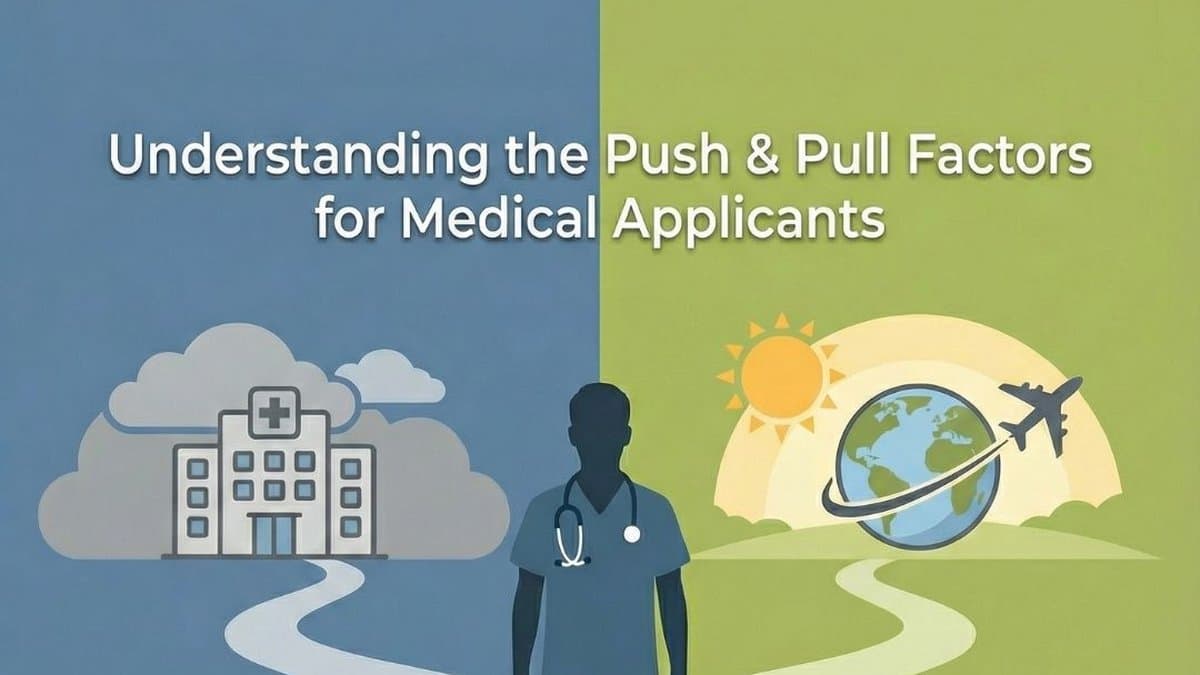
Resident doctors are leaving the NHS primarily because of a long-running pay dispute, high burnout and chronic rota gaps, and a severe specialty-training bottleneck that leaves thousands of qualified doctors unable to secure a training post. Many are moving to countries like Australia and New Zealand for higher pay and better working conditions. This is one of the most likely NHS hot topics to come up in your medical school interview, so it is worth understanding properly.
At a Glance: Why Are Resident Doctors Leaving the UK?
Real-terms pay cuts and rising living costs: Junior doctor pay has fallen significantly since 2008, while training fees, rent and basic expenses have risen, pushing many early-career doctors to seek better pay abroad.
Unsustainable workloads and rota gaps in the NHS: Chronic understaffing and high patient demand mean resident doctors routinely face burnout, unpaid overtime, and unsafe staffing conditions.
Limited training opportunities and delayed career progression: Competitive speciality training, non-training posts and bottlenecks leave many junior doctors feeling stuck and professionally undervalued.
Better pay, working conditions and lifestyle overseas: Countries like Australia and New Zealand offer higher salaries, safer rotas, improved staffing and more work–life balance, attracting UK-trained doctors.
Significant impact on NHS patient safety and workforce sustainability: High attrition rates increase waiting times, strain emergency care and cost the NHS billions, making this an essential issue for future medical students to understand.
How Big Is the Problem? The Scale of UK Junior Doctors Leaving the NHS
The Numbers Behind the Junior Doctor 'Exodus'
Surveys from the BMA and GMC consistently show that a significant proportion of resident doctors are considering leaving the NHS, either to work abroad or to leave medicine entirely. The scale of departures abroad is real: of the overseas doctors who registered in Australia in recent years, roughly 60% came from the UK or Ireland, and most apply for a GMC Certificate of Good Standing (the document you need to work overseas) at some point after the foundation programme.
Many report pay, workload, poor work-life balance, and feeling undervalued as their reasons behind the decision.
It’s important to understand the distinctions:
Some doctors leave the NHS but not the UK (for example, to do locum, private or portfolio work).
Some leave the UK entirely to work in countries offering better pay and conditions.
A smaller number leave medicine altogether.
For workforce planning, all three matter.
‘Junior Doctor’ vs ‘Resident Doctor’: What Does It Mean?
In England, the term “resident doctor” has now been introduced to replace “junior doctor,” aiming to improve public understanding and highlight the professionalism and responsibility of early-career doctors. Both terms refer to doctors who are not yet consultants or GPs.
Why does this topic matter for medical school applicants?
Medical schools expect their applicants to:
Have an awareness of the real issues facing the NHS
Speak about them calmly, professionally and neutrally
Understand the context in which you are choosing a career
Being informed doesn’t make you less committed. In fact, a well-rounded understanding makes you more prepared, and allows you to develop sincere answers during your Medical School Interview.
Push factors: why are resident doctors leaving the NHS?
1. Real-Terms Pay Cuts and Cost of Living Pressures
It is worth being precise here, because interviewers value a balanced, evidence-aware answer. The BMA argues that resident doctor pay has been eroded by around 21% in real terms since 2008 (using the RPI measure of inflation), which is why its pay-restoration campaign called for a large, one-off uplift. Other analysts disagree: work with the Royal Statistical Society put the fall closer to 6 to 7%, and the Nuffield Trust, using CPI, estimated about 4.7%. The headline figure is contested, but all sides agree pay has fallen in real terms. In an interview, showing that you know the figure is disputed, rather than quoting one number as fact, marks you out as a thoughtful candidate.
Junior doctor pay has fallen significantly in real terms since 2008. Many resident doctors feel their salary no longer reflects their responsibilities, workload, or years spent training.
Combine that with increasing living costs: rent, commuting, exams and even GMC registration fees. For this reason, many doctors say that the career is simply becoming financially unsustainable.
This frustration has contributed to ongoing strikesand widespread disillusionment.
2. Workload Pressures, Rota Gaps and Burnout
Many NHS departments operate chronically understaffed. When a rota has gaps, the doctors who remain often end up:
Covering multiple wards
Staying late after shifts
Losing breaks
Running unsafe workloads - working outside of their remits.
3. The training bottleneck: why can't junior doctors get jobs?
The training bottleneck is now one of the biggest factors of all, and it is the issue behind GSC-style questions such as "why can't junior doctors get jobs?". Competition for specialty training has risen sharply: there were around 1.4 applicants per place in 2019, but roughly 3.5 per place by 2025. In practical terms, about 30,000 doctors applied for close to 10,000 training posts in 2025, meaning many thousands missed out. Many resident doctors therefore struggle to secure a training post on their first attempt due to:
High competition for speciality training
Limited number of funded posts
Increasing exam pressures and portfolio demands
Some get stuck in non-training roles, delaying their progression. For an ambitious junior doctor, this can be incredibly frustrating.
This bottleneck also connects to another big NHS hot topic: as training posts fill up and rota gaps remain, some trusts have expanded the use of physician associates and other non-doctor roles, which has become a flashpoint in the wider workforce debate. Being able to link these issues together is exactly what interviewers mean by "insight".
4. Workplace Culture and Feeling Undervalued
Surveys show high levels of:
Bullying or undermining behaviour
Feeling blamed when systemic issues cause problems
A lack of meaningful support from management
Poor access to rest areas, healthy breaks or wellbeing resources
5. Wellbeing and Work–Life Balance
The combination of:
Long shifts
Nights and weekends
High-pressure decision-making
Emotional strain: Some doctors feel as if they have no control over their lives and no say in their working schedule.
Some struggle to maintain relationships, a family life, or their hobbies. Others feel as if their mental health is declining. For many, leaving the UK is a way to regain balance and stability.
Pull factors: why are UK doctors moving to Australia and New Zealand?
1. Higher Pay in Australia, New Zealand and Canada
Doctors often report earning significantly higher salaries abroad, sometimes 1.5 to 2 times their UK pay, depending on seniority and specialty. Australia and New Zealand have actively recruited UK-trained doctors, and the relative ease of registration (via a Certificate of Good Standing and recognised pathways) makes the move straightforward after foundation training.
Some overseas jobs offer:
Relocation bonuses
Paid flights
Housing allowances
Improved overtime rates
2. Better Working Conditions and Staffing
In countries like Australia or New Zealand, doctors commonly report:
Better staffing ratios
Safer rotas
More predictable hours
Less pressure during shifts
Greater autonomy
3. Lifestyle Benefits
Good weather, beaches, outdoor life, and a more relaxed pace are significant pull factors. Many doctors initially go abroad “just for a year”, but end up staying long-term after experiencing a healthier work–life balance.
4. Training and Career Opportunities
Some overseas healthcare systems offer clearer pathways, more funded training positions, or opportunities for fellowship experiences.
For ambitious doctors, it can feel like progression is faster and more supported abroad.
What Does This Mean for You as a Prospective Medical Student?
Should This Put You Off Studying Medicine?
No, however, you should be aware of the realities of studying medicine.
Medicine within the NHS still remains,
One of the most meaningful, impactful careers you can have.
A profession with incredible variety and diversity
A globally transferable degree
Equally, it is also challenging, emotionally demanding, and shaped by the health system you work in.
Understanding the reality makes you a stronger applicant, not a weaker one.
How to Talk About This in Medical School Interviews
This topic appears frequently in interview questions such as:
“Why are so many junior doctors leaving the NHS?”
“Would you still choose medicine given today’s pressures?”
“How would you fix the NHS workforce crisis?”
Use this structured approach:
Acknowledge the issue: Mention pay, workload, morale and burnout. Keep your tone neutral and factual.
Show empathy and insight: Talk about the impact on patient care, remaining staff and system sustainability.
End with a balanced, personal perspective: Explain why you still want to pursue medicine, how the challenges motivate you, and how you hope to contribute positively.
When students ask me how to prepare for questions on this topic, I tell them to look beyond just reading news headlines. Many popular resources or generic interview books only list the problems without explaining the impact. In my professional experience, simply listing negative statistics will not impress an interviewer.
This is precisely why we developed TheUKCATPeople's Medicine Interview Tutoring to provide a complete solution. We teach you to analyse these hot topics critically - balancing empathy for staff with a commitment to patient care - something self-study often misses.
Will Things Change By the Time You Graduate?
Yes, things should change by the time you graduate. Healthcare is constantly evolving, and the government's 10-Year Health Plan for the NHS sets out a direction of travel. Recent commitments include:
Prioritising UK medical graduates for specialty training (the Medical Training Prioritisation Bill aims to give UK graduates priority access to core and higher training from 2026)
Creating around 1,000 additional specialty training posts in England to ease the bottleneck
Improving workforce planning and retention through the 10-Year Health Plan, alongside efforts to resolve the pay dispute
The NHS you work in could look completely different: with more digital health, team-based care, and new professional roles.
Wider Impacts – Why Doctors Leaving the UK Matters for Patients and the NHS
Impact on Patient Safety
When doctors leave:
Waiting lists grow
Rotas stretched thin
Clinics are cancelled
Emergency care becomes strained
These pressures peak in the colder months, which is why staffing shortages and the NHS winter and flu crisis are so closely linked. Fewer doctors on the rota during peak demand directly lengthens waits in A&E and delays planned care.
Staff shortages directly affect patient experience and outcomes.
Financial Cost to the NHS
Training a doctor costs hundreds of thousands of pounds. When doctors leave early in their careers, the NHS effectively loses that investment.
Some estimates place the cost of poor retention in the billions.
Ethical Questions Around Relying on Overseas Doctors
As UK doctors leave, the NHS increasingly recruits from abroad. However, this raises ethical dilemmas, especially when recruiting from countries facing their own doctor shortages.
This is a key discussion point for interviews.
Ultimate Package
Choose your Ultimate Package
Rated 5.0 from 640+ reviews. 1-1 mentoring from doctors across UCAT, personal statement and interviews.
How Future Doctors Can Respond – Constructive Ways to Engage With the Crisis
1. Protect Your Own Well-being Early
Well-being habits start in medical school:
Sufficient sleep
Exercise
Support networks
Setting healthy boundaries
Seeking help early
A sustainable career starts with looking after yourself.
2. Get Involved in Advocacy
You can contribute through:
Student unions
BMA medical student committees
Quality improvement projects
Wellbeing initiatives
Hospital leadership programmes
You don’t need to set out to “fix the NHS”, but you can be part of gradual, meaningful change.
3. Stay Informed Without Becoming Overwhelmed
Stick to credible sources like:
BMA
GMC
BMJ
NHS England
Resident doctor interview questions (and how to answer them)
Worked example: "Why are so many resident doctors leaving the NHS?"
Here is the structure I coach applicants to use. It keeps you balanced and stops you sounding like you are simply criticising the NHS.
Identify the push factors: the pay dispute, burnout and rota gaps, and the training bottleneck (around 30,000 applicants for roughly 10,000 specialty posts in 2025).
Identify the pull factors: higher pay and better conditions abroad, with Australia and New Zealand actively recruiting UK-trained doctors.
Show empathy and link to ethics: relate it to the patient (beneficence and non-maleficence) and to fairness for staff (justice). This is where the four pillars of medical ethics help you sound mature.
Pivot to a balanced personal answer: acknowledge the challenges honestly, then explain why you still want to do this job and how you would look after your own wellbeing.
A quick warning I give every applicant: do not take a strongly political stance for or against the strikes. Interviewers are testing your insight and professionalism, not your opinion on government policy. Acknowledge that doctors have a right to take industrial action and that patient safety is the shared concern, then move on.
In your medical school interviews, you need to be prepared to discuss this topic without sounding overly negative. Here is how questions on this topic usually appear.
You are unlikely to be asked any of these word for word, and you do not need a prepared answer to each one. Use them to check your understanding: if you could speak for a minute on most of them, you know this topic well enough for whatever the interviewer actually asks.
Questions to get you thinking
We are currently seeing many junior doctors leaving for Australia. Why do you think this is happening?
What are the main challenges facing the NHS workforce today?
Given the current retention crisis and strikes, why do you still want to study medicine?
Discuss the ethical implications of the NHS recruiting doctors from developing countries to plug workforce gaps.
Harder questions to stretch you
How would you solve the retention crisis if you were the Health Secretary?
Do you think medical graduates who receive taxpayer-funded training should be bonded to work in the NHS for a set number of years? (This tests your understanding of justice in medical ethics.)
Conclusion – Informed, Not Discouraged
The fact that many junior doctors are leaving the UK reflects real issues with pay, workload, training pressures and workplace culture. But it doesn’t mean the profession is broken, or that you shouldn’t apply.
The NHS needs the next generation of doctors: thoughtful, informed, motivated and resilient young people who understand the challenges but are willing to work toward solutions.
If you’re still excited about becoming a doctor after understanding these issues, you’re already showing the insight, maturity and commitment that Interview tutors look for.
From 1-1 tutoring and personal statement editing to interview coaching and our all-in-one Ultimate Package, we support every stage. Tell us what you are working towards and we will recommend the right option.
FAQs
Frequently asked questions
Why are doctors leaving the NHS?
Mainly because of a long-running pay dispute, burnout from chronic rota gaps, and a severe training bottleneck that leaves many qualified doctors without a specialty post. These push factors drive many resident doctors to seek better pay and work-life balance overseas, especially in Australia and New Zealand.
What is a resident doctor in the UK?
A resident doctor is a qualified doctor who is not yet a consultant or GP. The term was introduced in the UK in 2024 to replace "junior doctor", which was felt to undersell the experience of these doctors. It covers everyone from a first-year foundation doctor to a senior registrar.
Are resident doctors the same as junior doctors?
Yes. "Resident doctor" is simply the new official name for what used to be called a "junior doctor". The change was agreed in 2024 to better reflect their training, responsibility and expertise. Both terms mean a doctor who has qualified but is not yet a consultant or GP.
Why are junior doctors now called resident doctors?
The BMA and others felt "junior doctor" was misleading, because it lumped a first-year doctor in with a registrar of ten years' experience and made all of them sound inexperienced to the public. "Resident doctor" was adopted in 2024 to better signal their professional standing.
What is the difference between a resident doctor and a consultant?
A resident doctor is still in training and works under supervision, whereas a consultant is a fully trained specialist who takes ultimate responsibility for patient care. Resident doctors are working towards becoming either consultants or GPs, a path that usually takes several years after graduation.
Has resident doctor pay really fallen in real terms?
Pay has fallen in real terms since 2008, but the exact figure is contested. The BMA puts the erosion at around 21% using the RPI measure of inflation, while analysis with the Royal Statistical Society suggests closer to 6 to 7%, and the Nuffield Trust (using CPI) around 4.7%. In an interview, it is wise to note that the figure is disputed.
Why are resident doctors striking in the UK?
The dispute centres on pay restoration, plus jobs and training. The BMA Resident Doctors Committee held several rounds of strike action across 2025 and into 2026. As of mid-2026, the government has made a revised offer (an average uplift of around 6.6% by April 2027, plus funded exam attempts and more secure contracts), which doctors are voting on.
Are resident doctors still on strike in 2026?
As of June 2026, strikes that had been planned were called off after the government made a revised offer, and resident doctors are voting in a referendum on whether to accept it. The strike mandate runs until early August 2026, so the position can change quickly. Always check the latest BMA updates before an interview.
Why can't junior doctors get jobs in the UK?
Because of a training bottleneck. Medical school places were expanded without a matching rise in specialty training posts, so competition has soared from about 1.4 applicants per place in 2019 to around 3.5 per place in 2025. Roughly 30,000 doctors applied for close to 10,000 posts in 2025, leaving many thousands without a training place.
How is the government trying to fix the training bottleneck?
Through the 10-Year Health Plan and the Medical Training Prioritisation Bill, which aims to give UK medical graduates priority access to core and higher training from 2026. The government has also pledged around 1,000 additional specialty training posts in England, although the gap remains large.
Why are so many doctors moving to Australia and New Zealand?
These countries offer higher pay (often 1.5 to 2 times UK rates), better staffing ratios and a more relaxed lifestyle, and they actively recruit UK-trained doctors. Registration is relatively straightforward via a GMC Certificate of Good Standing and recognised pathways, so the move is common after foundation training.
Are resident doctors leaving medicine entirely?
Most are not leaving medicine, they are leaving the NHS. The majority move to healthcare systems abroad or into locum, private or portfolio work where they feel better paid and valued. Only a smaller number leave clinical medicine altogether, though for workforce planning all three matter.
How much does a resident doctor earn in the UK?
It depends heavily on grade and on extra payments for nights, weekends and on-call work. A first-year foundation doctor's basic pay is well below that of a senior registrar several years into training. Because pay rates and the ongoing dispute keep changing, quote ranges cautiously and check the current BMA pay scales rather than a fixed figure.
How should I talk about resident doctors leaving the NHS in my interview?
Use an "identify, empathise, pivot" structure. Identify the push and pull factors, empathise with both staff and patients, link it to the four pillars of ethics, then pivot to why you still want to do the job. Stay neutral on the politics of the strikes; interviewers test insight and professionalism, not your policy opinions.
Will the NHS workforce crisis affect me as a future medical student?
You will likely train and work in a busy, stretched system, and you will eventually face competitive specialty recruitment. However, reforms under the 10-Year Health Plan, prioritisation of UK graduates and extra training posts mean the landscape may look different by the time you qualify in five or six years.
Should I still apply to medical school given the doctor exodus?
Yes. Medicine remains a hugely rewarding, varied and globally transferable career. Understanding the current pressures before you apply makes you a more realistic and resilient candidate, and that maturity is exactly what interviewers are looking for.
Ultimate Package students from our 2025/26 cycle, with their UCAT scores and offers, who trained with us for the UCAT, personal statements and interviews.
Ultimate Package
S
Sophie
Medicine, King's College London
2025 UCAT2,590 / 2,700
“Harry got my UCAT up to 2,590, working through the sections I kept dropping marks on week by week. Gemma then ran my interview practice so the MMI stations didn't catch me out, and Dr Akash mentored me the whole way through. I'm off to King's for Medicine.”
Ultimate Package
D
Daniel
Medicine, University College London
Medicine offers4 offers
“The interview prep was the part that actually moved the needle. Proper mock MMIs, not just lists of questions, and feedback that was honest about what I was getting wrong. I ended up with four offers and firmed UCL.”
Ultimate Package
A
Aisha
Dentistry, University of Birmingham
Dentistry offers4 offers
“The Ultimate Package kept me organised from UCAT through to interviews. They knew what dental schools actually ask and tightened up my personal statement. Four offers in the end, and I'm going to Birmingham.”
Ultimate Package
C
Charlotte
Veterinary Medicine, Royal Veterinary College
Vet offers4 offers
“Vet applications come down to the written SAQs as much as the interview. Dr Rebecca went through my SAQs line by line, sharpened my answers and prepped me for the panels. I came away with four offers and chose the RVC.”