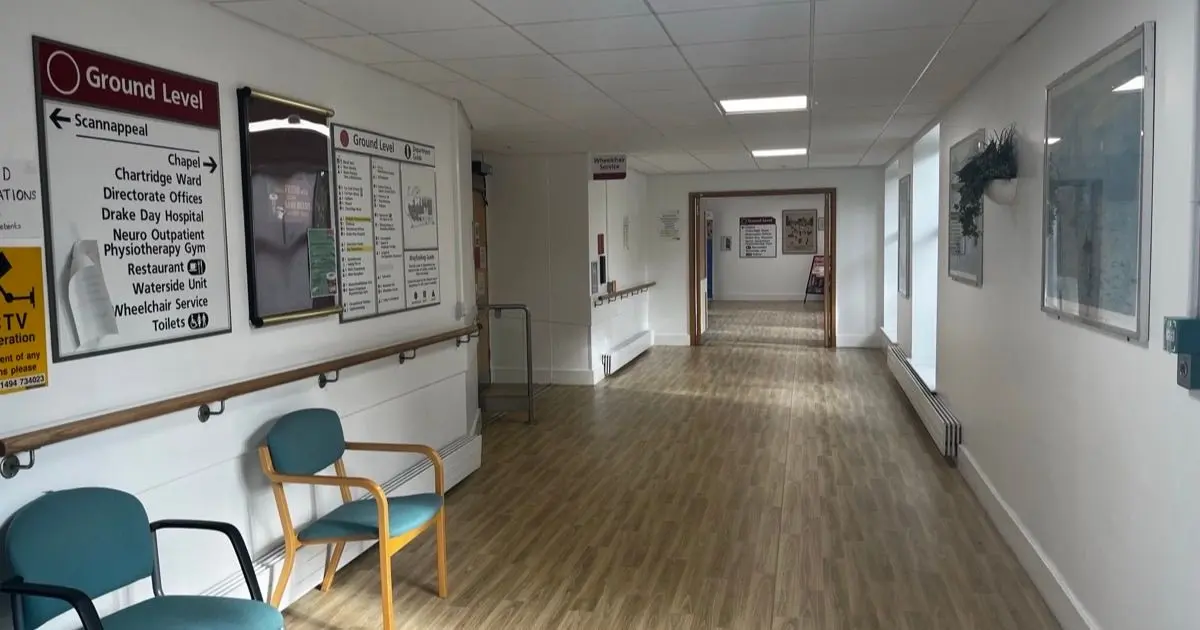
Corridor care is when hospital patients are assessed, treated or left waiting on trolleys and chairs in corridors and other spaces not designed for care, because no bed or cubicle is free. NHS England counted around 3,000 patients a day in July 2026. For medicine interviews, it's a clear way into dignity, safety and NHS pressures.
I'm Dr Akash Gandhi, an NHS GP and the founder of TheUKCATPeople, and I've been helping students prepare for medicine interviews since 2012. Corridor care links the patient on the trolley to the whole health and care system, and this guide sits alongside our wider NHS hot topics guide.
What is corridor care in the NHS?
Corridor care means caring for a patient somewhere that was never designed for it, such as a corridor, a waiting room or a chair on a ward, because there's no proper bed space free. NHS England published its first official corridor care definition in March 2026, and these are the key facts.
The official definition: a patient has had corridor care if they spend at least 45 minutes in a clinically inappropriate area of an emergency department or a general and acute ward, a threshold NHS England plans to cut to 30 minutes in 2027/28 once hospitals show progress
What makes a space inappropriate: it lacks things like oxygen and a call bell, or the patient can’t have privacy, food, water, a toilet or a chance to sleep
Where it happens: mostly in A&E corridors and on busy wards, and nurses have described caring for patients in converted cupboards and even car parks
What is counted separately: patients waiting in ambulances outside A&E, so that hospitals can’t clear corridors by keeping people in ambulances instead
Where in the UK: all four nations, according to the Royal College of Nursing, though the new monthly data covers England only
Key Takeaway: Define corridor care as care in a space not designed for it, and mention the 45 minute NHS England definition from March 2026.
Why does corridor care happen?
Corridor care happens because hospitals are too full to move patients through them, so the queue backs up into A&E. Doctors call this exit block, and the table below follows one patient through the system, which is most of what you need.
Stage
What should happen
What happens when the hospital is full
Ambulance arrives
The crew hands the patient over to A&E staff within 15 minutes, and within 45 minutes at most
The patient waits in the ambulance outside, and that crew is stuck there instead of answering the next 999 call
In A&E
Assessed and treated, then admitted, transferred or sent home within four hours (the target was 78 per cent by March 2026)
Once every cubicle is full, new patients are assessed and treated on trolleys or chairs in the corridor
Waiting for a ward bed
Moves up to a ward soon after the decision to admit
Waits in A&E for 12 hours or more: 1,141,944 patients in England waited that long for admission in 2025
On the ward
A proper bed space with oxygen, a call bell and curtains
Extra trolleys or chairs are added to the ward; general and acute beds were 92.5 per cent full from January to March 2026
Going home or into care
Leaves once medically ready, with any care or rehab already arranged
Stays in the bed while waiting for care to be set up: around 13,800 patients a day in August 2026
Each blockage feeds the one before it, and the causes sit mostly beyond A&E:
Full wards: when over nine in ten beds are occupied, a patient who needs admitting can wait hours for a space, as our guide to NHS bed shortages and winter pressures explains
Delayed discharges: thousands of patients each day are well enough to leave but are waiting for home care, a care home place or rehab, which is why social care and our ageing population are central to this
Demand and staffing: more older people with several long-term conditions need emergency care, and a bed only helps if there are staff to look after it
In my GP work I see the other end of this. When I send a frail patient into hospital, I know the hardest part of their stay may be getting back out, because their care at home often has to be restarted or increased first.
Is corridor care the fault of A&E staff?
No. A&E teams are usually the ones working hardest to keep patients safe in a space that's too small for the number of people in it, and the Royal College of Emergency Medicine says the solutions lie outside the walls of emergency departments.
Key Takeaway: Explain corridor care as exit block: patients can't leave A&E because the wards are full, and the wards are full because patients can't go home.
How big is the corridor care problem?
Corridor care affects thousands of patients a day in England. NHS England began publishing monthly corridor care data in June 2026, and these are the latest figures it has released.
In A&E: an average of 2,300 patients a day spent more than 45 minutes in a corridor or similar space in July 2026
On wards: a further 728 patients a day were counted in corridors or other unsuitable spaces at the daily 8am check
August 2026: the provisional figures were similar, at 2,296 a day in A&E and 677 on wards
Where it is worst: the government said in April 2026 that most corridor care is concentrated in a small number of NHS trusts
In a Royal College of Nursing survey of more than 5,000 nursing staff in January 2025, 66.81 per cent said they cared for patients in overcrowded or unsuitable places every day. NHS England calls its own data experimental, so quote it as a guide and give the month it refers to.
Key Takeaway: Quote one figure with its date, such as about 2,300 patients a day in A&E corridors in July 2026, and say it happens all year.
Interview coaching
Choose your 1-1 interview coaching
Rated 5.0 from 700+ reviews. Practise with experienced interview experts: mock MMI and panel interviews, scored with feedback.
Corridor care is unsafe because staff can't watch, reach or treat patients as easily, and it takes away privacy and dignity. The HSSIB investigation into temporary care environments, which visited 13 hospitals in late 2025 and found the problem was now year-round, set out the main risks.
Spotting deterioration: patients may be out of sight of the nursing station, so a change in their condition can be missed
Equipment: corridors usually have no piped oxygen or suction, and there may be no call bell
Infection and emergencies: patients lie close together with no screens between them, and it is harder to manage a cardiac arrest in a crowded corridor
Dignity: patients told investigators they struggled to wash and get to the toilet, and conversations about diagnoses can be overheard, which affects patient confidentiality
Nurses in the RCN report described a patient who died in a corridor and wasn't found for hours. The Royal College of Emergency Medicine estimates that 15,860 excess deaths in England in 2025 were associated with long A&E waits, about 305 a week. The college calls these deaths associated with long waits, so use the same words.
Does corridor care affect staff too?
Yes. Investigators found it causes moral injury, the guilt, shame and anger staff feel when they can't give the care they believe patients deserve, and many described the corridor as the "best worse" option compared with patients left in ambulances or unseen in waiting rooms. Workload and burnout are also part of what consultants are striking over, as our guide to the consultant strikes explains.
Campaigning: the RCN declared corridor care a national emergency in 2024 and ties it to safe staffing, as our guide to nursing strikes in the UK explains
Key Takeaway: Name the safety risks, treat dignity as part of safety, and show you understand that corridor care harms staff as well.
What is the government doing to end corridor care?
The government has promised to end corridor care, and since 2025 it has added targets, money and, for the first time, official data on how often it happens.
July 2025: the 10 Year Health Plan promised to end what it called the disgraceful spectacle of corridor care
March 2026: NHS England set the national definition, told trusts to report every case as an incident, and began working with the 30 trusts struggling most
April 2026: Wes Streeting, Health Secretary at the time, set a target to end corridor care by the end of this Parliament, with £215.5 million for 40 new and expanded urgent care sites
July 2026: the NHS winter plan for 2026/27 made ending corridor care a patient safety priority and asked for ambulance handovers within 15 minutes
Yvette Cooper has been Health and Social Care Secretary since 20 July 2026, so check the news before your interview for anything new this winter.
Key Takeaway: Say there's now a definition, monthly data and a target date, and that what matters now is whether the numbers fall this winter.
Interview coaching
Get interview-ready, 1-1
Mock MMI and panel interviews with personalised feedback.
1-1 coaching with experienced interview tutors, not salespeople
Mock MMI and panel interviews, scored with honest feedback
A free Ultimate Interview Q&A Guide (worth £349) with every package
Corridor care is fixed by improving the flow of patients through the whole system, and the biggest lever is getting medically fit patients home or into care quickly. More beds help, but they fill up again if discharge stays slow.
Social care: enough home care, care home places and reablement, which is short-term support to regain independence, so patients can leave on time
Earlier discharge planning: starting on the day of admission, with doctors, nurses, therapists and social workers working as a multidisciplinary team
Same day emergency care: hospital services where patients are assessed, tested and treated and can go home the same day
Virtual wards and Hospital at Home: hospital-level monitoring and treatment in the patient’s own home
Care in the community: urgent community response teams, GPs and pharmacies treating people before they reach A&E, as explained in our guide to primary, secondary and tertiary care
As a GP, I'll sometimes ask the urgent community response team to see an older patient at home the same day instead of sending them to A&E, which saves them a long wait and keeps a bed free for someone who needs it.
Key Takeaway: Argue that the fix lies across the whole system, especially social care and discharge, with extra beds as only part of the answer.
What are the ethical issues in corridor care?
Corridor care is a clash between giving everyone access to care and giving each person safe, dignified care, and the four pillars of medical ethics help you lay it out clearly.
Beneficence and non-maleficence: being treated in a corridor carries risks, but it can still be safer than waiting unseen in an ambulance
Justice: when there are more patients than cubicles, someone has to decide who gets the space, a resource allocation question covered in our guide to justice in medical ethics
Autonomy and dignity: patients have little say over where they are cared for and less privacy, which sits uneasily with the NHS core values of respect and dignity
The hardest part is the one HSSIB described: opening a corridor lets an ambulance crew get back on the road to the next emergency, but it moves risk onto the patient in the corridor.
Key Takeaway: Present corridor care as a trade-off between access and safety, and use the four pillars to show you can see both sides.
What can a doctor do about corridor care day to day?
A doctor can't fix bed shortages alone, but they can keep the patient in front of them safe, treat them with dignity and help the hospital keep patients moving.
Treat the person: introduce yourself, explain the wait, and check they have water, food, pain relief and help to reach a toilet
Protect privacy: use a side room or screens for examinations and sensitive conversations
Watch for deterioration: make sure observations happen on time, listen when families raise concerns as Martha’s Rule expects, and escalate early
Plan discharge early: write discharge letters and arrange medicines in good time so that patients who are ready can leave
Speak up: report incidents and raise concerns through the proper channels, which links to whistleblowing in the NHS
When students practise this topic with me, the answers that work best start with the patient on the trolley and only then step back to the system, because that's how a good doctor would think on a busy shift.
Key Takeaway: Start with the patient in front of you, then show you would escalate, report and help with flow.
How can I talk about corridor care in my medicine interview?
The easiest way in is through something you've seen yourself, then linking it to the bigger system. You don't need to have worked in A&E to have a useful example.
Hospital work experience or volunteering: how busy the department was, how long people waited and how staff kept them comfortable
A care home role: how a resident’s return from hospital depended on staff and places being available
A family member’s A&E visit: what the wait felt like for them, described without identifying anyone
Then give your answer a clear shape:
Say what corridor care is in one sentence
Explain the cause as exit block, with one dated figure
Weigh the safety and dignity risks against the risk of patients going unseen
Say what you could do as a doctor, and what has to change in the wider system
Here's what interviewers are usually looking for:
Insight: that you see corridor care as a whole-system problem
Compassion: that the patient’s dignity stays at the centre of your answer
Teamwork: that you know when to ask a senior for help
Key Takeaway: Start from what you've seen, explain exit block, and keep the patient's dignity at the centre.
Ultimate Package
Choose your Ultimate Package
Rated 5.0 from 700+ reviews. 1-1 mentoring from doctors across UCAT, personal statement and interviews.
What interview questions could come up on corridor care?
You are unlikely to be asked any of these word for word, and you do not need a prepared answer to each one. Use them to check your understanding: if you could speak for a minute on most of them, you know this topic well enough for whatever the interviewer actually asks.
Questions to get you thinking
What is corridor care?
Why are patients being treated in hospital corridors?
How might it feel to be an elderly patient on a trolley in a corridor overnight?
Why does a shortage of social care lead to longer waits in A&E?
Is it better to be treated in a corridor than to wait in an ambulance outside?
What did you notice about waiting times on your work experience?
Harder questions to stretch you
You are a junior doctor and an elderly patient has been on a trolley in the corridor for 20 hours. What would you do?
If you were given money to reduce corridor care, would you spend it on hospital beds or on social care? Why?
A nurse tells you she feels she is letting her patients down on corridor shifts. How would you support her?
Should hospitals ever refuse to use corridors, even if it means ambulances queue outside?
Model answer: "You are a junior doctor and an elderly patient has been on a trolley in the corridor for 20 hours. What would you do?"
My first priority would be the patient's safety and comfort, because 20 hours on a trolley is a long time for anyone, and especially for an older person who may be frail.
I would introduce myself, apologise for the wait and ask how they are feeling. I would check their observations and whether they are in pain, and make sure they have had food, drinks, their usual medicines and help to get to the toilet. I would also look for pressure sores and new confusion.
If anything worried me, I would escalate it to my senior straight away. As a junior doctor, I would not be the person deciding who gets the next bed, so I would tell the nurse in charge or the bed manager how long this patient has waited.
I would keep the patient and their family updated, and use a side room for any examination or private conversation. I would also report the wait through the hospital's incident system, so that the problem is visible to the people who can change it.
Finally, I would remember that the cause probably sits elsewhere, such as patients waiting for social care before they can go home. I could not fix that on one shift, but I could help by getting my own patients' discharge paperwork done early.
Why this answer works:
It puts the patient first: safety, comfort and dignity come before any talk of policy
It is practical: food, the toilet, pain and pressure areas are the real risks of a long wait
It escalates sensibly: it respects the limits of a junior doctor’s role and involves seniors
It links to the system: it ends with exit block and what one doctor can do about it
Key Takeaway: In any corridor care scenario, look after the patient first, escalate to a senior, report it, and then talk about the system.
The one thing to take into the room
Corridor care is what you see when patients can't move through a full hospital, so the answer lies in social care, discharge and community services as much as in A&E. For more on the four hour target and flu season, see our guide to the NHS winter crisis and A&E pressures. The UK Covid-19 Inquiry made a similar point about the NHS going into the pandemic with too few beds.
Key Takeaway: Exit block causes corridor care, patients pay for it in safety and dignity, and the fixes lie across the whole system.
From 1-1 tutoring and personal statement editing to interview coaching and our all-in-one Ultimate Package, we support every stage. Tell us what you are working towards and we will recommend the right option.
FAQs
Frequently asked questions
What is corridor care in the NHS?
Corridor care is when patients are assessed, treated or left waiting in corridors and other spaces not designed for care, because no proper bed space is free. Since March 2026, NHS England has defined it as a patient spending at least 45 minutes in a clinically inappropriate area of an emergency department or a general and acute ward.
Why does corridor care happen?
Corridor care happens because hospitals are too full for patients to move through them. Wards can't take new patients from A&E because many beds are filled by people who are well enough to leave but are waiting for home care, a care home place or rehab. This blockage is called exit block.
How many patients receive corridor care in England?
NHS England data shows an average of about 2,300 patients a day spent more than 45 minutes in corridors or similar spaces in A&E in July 2026, with a further 728 a day counted on wards. Provisional August 2026 figures were similar. The data has only been published since June 2026, so NHS England calls it experimental.
Is corridor care dangerous?
Corridor care carries real safety risks. A 2026 national safety investigation found it harder to monitor patients and spot when they get worse, with no piped oxygen or suction and higher infection risk. Patients also lose privacy and dignity, and nurses have described patients dying in corridors and CPR being delayed.
Is corridor care only a winter problem?
No, it now happens all year round. The Health Services Safety Investigations Body visited hospitals between August and December 2025 and found no significant seasonal variation any more. Winter viruses add pressure, but the underlying cause, full hospitals that can't discharge patients quickly enough, is there all year.
How many deaths are linked to long A&E waits?
The Royal College of Emergency Medicine estimates that 15,860 excess deaths in England in 2025 were associated with long waits in emergency departments, around 305 a week. It calls this a conservative estimate. It covers all long waits for admission, wherever in A&E the patient waited, so describe it as deaths associated with long waits.
What is the government doing about corridor care?
The 10 Year Health Plan promised to end corridor care, and in April 2026 the government set a target to end it by the end of this Parliament. NHS England has introduced a national definition and monthly data, sent expert teams to the worst-affected trusts, and made ending corridor care a patient safety priority in its 2026/27 winter plan.
What would reduce corridor care?
The biggest lever is getting medically fit patients out of hospital quickly, which depends on social care, community rehab and early discharge planning. Same day emergency care, virtual wards and Hospital at Home keep some patients out of ward beds altogether. More beds and staff help too, but they fill up again if discharge stays slow.
What is moral injury in corridor care?
Moral injury is the guilt, shame and anger staff feel when they can't give the care they believe patients deserve. Investigators found that caring for patients in corridors, without privacy or proper equipment, causes moral injury for nurses and doctors. Staff also described fatigue and burnout, and the RCN has reported nurses leaving the profession because of it.
How should I answer a corridor care question in a medicine interview?
Start with the patient: their safety, comfort and dignity. Then explain the cause as exit block with one dated figure, weigh up the risks of corridor care against patients going unseen, and say what you'd do as a doctor, including escalating to a senior and reporting it. Finish with what needs to change in the wider system.
Ultimate Package students from our 2025/26 cycle, with their UCAT scores and offers, who trained with us for the UCAT, personal statements and interviews.
Ultimate Package
S
Sophie
Medicine, King's College London
2025 UCAT2,590 / 2,700
“Harry got my UCAT up to 2,590, working through the sections I kept dropping marks on week by week. Gemma then ran my interview practice so the MMI stations didn't catch me out, and Dr Akash mentored me the whole way through. I'm off to King's for Medicine.”
Ultimate Package
D
Daniel
Medicine, University College London
Medicine offers4 offers
“The interview prep was the part that actually moved the needle. Proper mock MMIs, not just lists of questions, and feedback that was honest about what I was getting wrong. I ended up with four offers and firmed UCL.”
Ultimate Package
A
Aisha
Dentistry, University of Birmingham
Dentistry offers4 offers
“The Ultimate Package kept me organised from UCAT through to interviews. They knew what dental schools actually ask and tightened up my personal statement. Four offers in the end, and I'm going to Birmingham.”
Ultimate Package
C
Charlotte
Veterinary Medicine, Royal Veterinary College
Vet offers4 offers
“Vet applications come down to the written SAQs as much as the interview. Dr Rebecca went through my SAQs line by line, sharpened my answers and prepped me for the panels. I came away with four offers and chose the RVC.”