660+ 5-Star ReviewsWhatsApp
Oxford Medical School, A101 (BMBCh4)

Graduate Entry Medicine at Oxford: 2027 Entry

A four-year BM BCh for graduates in applied or experimental science, with around 40 to 45 places. You apply through UCAS and an Oxford supplementary form, sit the UCAT, and if shortlisted are interviewed online at two of eleven colleges.

By Dr Akash Gandhi · Last checked: 22 September 2026

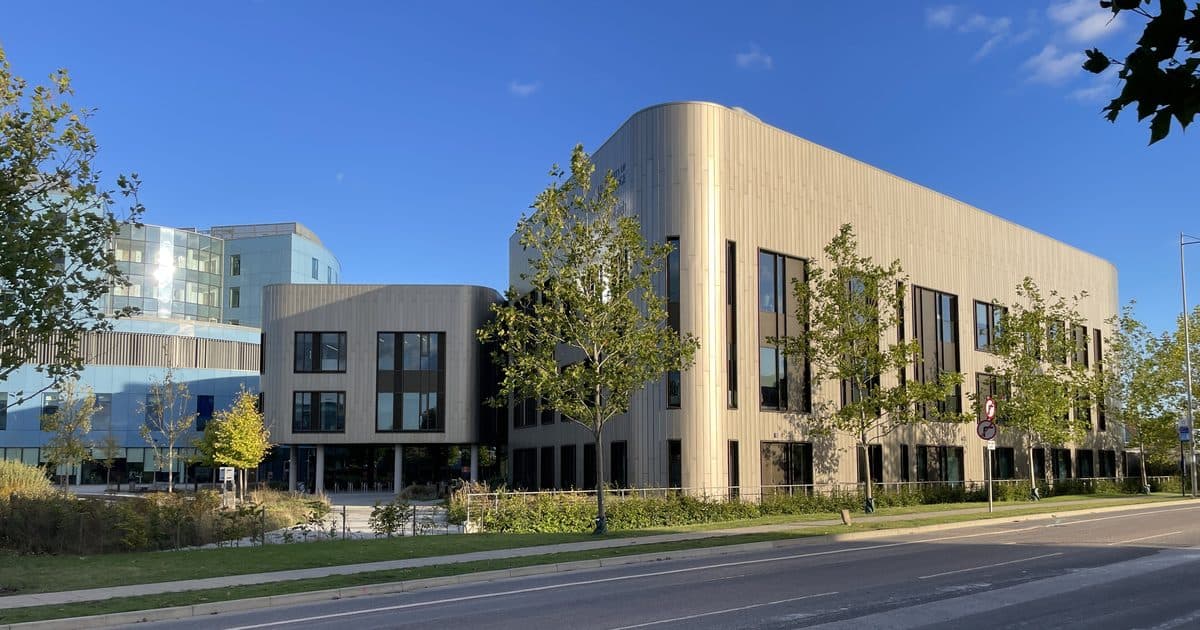
Main block of the John Radcliffe Hospital in Headington, Oxford, the University of Oxford's principal teaching hospital
The short answer

Oxford graduate entry medicine, 2027 entry

To apply for Oxford graduate entry medicine (A101, course title BMBCh4, four years, 2027 entry) you need a 2:1 or above in an applied or experimental science degree, A-levels of at least AAB with an A or A* in Chemistry plus one of Biology, Physics or Maths, and a UCAT taken between July and September 2026.

Oxford applicants also complete the Oxford Supplementary Application Form, with two additional referees, by 6pm on 22 October 2026. Shortlisting takes place in November and interviews are held online on 17 and 18 December 2026, with every shortlisted candidate interviewed at two colleges.

Oxford has approximately 40 to 45 places on the graduate entry course and accepts both home and international applicants. In the 2025 admissions round (2026 entry), Oxford received 302 applications and colleges made 41 quota offers and 5 open offers.

Eligibility

The science degrees Oxford accepts, and why A-level Chemistry still matters

Oxford's course places a strong emphasis on the academic and scientific side of medicine, and says there is not enough time in the curriculum to teach foundational material. You need a bachelor's, master's or PhD in an applied or experimental science with a 2:1 or above (or a GPA above 3.5). Oxford publishes an indicative list, which it says is not exhaustive:

Indicative degree subjects for Oxford A101 (medsci.ox.ac.uk degree requirements page)
Biological and medical sciencesPhysical sciences, maths and engineeringProfessional degrees accepted
Anatomy; Anatomy with Physiology; Physiology (including with Philosophy or Psychology)Chemistry*; Chemical Engineering*; Engineering*Dentistry
Biochemistry; Biochemistry and Molecular Biology; Biomedical ScienceExperimental or Applied Physics; Mathematics; Materials Science*Pharmacy
Biology; Human Biology; Botany; Plant Sciences; Zoology; Marine BiologyAstronomy*; Earth Sciences*; Geology*Veterinary Science
Human Genetics; Molecular Genetics; Molecular Biology; Immunology; Microbiology; Virology; PathologyNatural Sciences
Pharmacology; Pharmaceutical Sciences; Medical Sciences; Human Sciences
Neuroscience (including with Psychology); Experimental Psychology; Veterinary Pathogenesis

Subjects marked * are not biosciences: graduates in these, and in any other non-bioscience subject, also need biology or dual-award science at GCSE or equivalent. If your subject is not listed, Oxford asks you to consider whether it gives an equivalent depth in one or more core sciences (Chemistry, Biology, Physics, Applied Mathematics or Biomedical Sciences).

Nursing, physiotherapy and other vocational degrees are not eligible

With the exceptions of Dentistry, Pharmacy and Veterinary Science, Oxford does not consider degrees that lead directly to a professional vocation eligible, for example Nursing, Midwifery, Nutrition, Optometry and Physiotherapy.

  • A-levels: at least AAB, with an A or A* in Chemistry, if taken within the last five years. Applicants whose A-levels are older than that do not need AAB, but their grades are assessed carefully at shortlisting.
  • Chemistry exemption: graduates with a 2:1 or above in Chemistry or Biochemistry do not need A-level Chemistry.
  • Second science: everyone also needs one of Biology, Physics or Mathematics at A-level.
  • Other qualifications: IB 36 points with 6 in Higher Level subjects including Chemistry, and Access or Foundation courses only where they match A-level content, are examined in writing, and are passed at Distinction.

Source: Oxford Medical Sciences Division, Admissions Criteria: Degree Requirements (no year stated); Oxford Medical Sciences Division, Graduate Entry Medicine: Entry Requirements (requirements undated; statistics from the 2025 round (2026 entry))

Applying

Two deadlines a week apart: UCAS on 15 October, Oxford's own form on 22 October

  1. 1

    Sit the UCAT between July and September 2026

    Oxford uses the UCAT as a single common point of comparison. Results from earlier years or other aptitude tests are not considered, and Oxford cannot consider circumstances relating to the UCAT, because sitting it is a declaration that you are fit to test.

  2. 2

    Submit UCAS by 6pm on 15 October 2026

    List Oxford with course code A101 (course title BMBCh4). You may name one preferred college, or make an open application.

  3. 3

    Complete the Oxford Supplementary Application Form by 6pm on 22 October 2026

    The form opens on 1 September 2026. It asks for two extra referees, at least one familiar with your most recent academic work and neither the same as your UCAS referee. Both references must be submitted through the form by the same deadline.

  4. 4

    Shortlisting in November

    Late or incomplete applications are not considered.

  5. 5

    Online interviews on 17 and 18 December 2026

    You must be available on the published dates: candidates are not admitted without interview, and interviews cannot be arranged at other times, wherever you live.

Oxford strongly advises completing the references section early, because pressing Request triggers the emails to your referees and they need time to respond. Extenuating circumstances affecting past academic results can be declared on the application platform, with evidence ready on request.

Source: Oxford Medical Sciences Division, Graduate Entry Medicine: Application Process (2027 entry)

UCAT preparation

Sitting the UCAT for Oxford?

1-1 UCAT tutoring with top-decile tutors, planned around a degree or a full-time job.

Published data

How Oxford shortlisted in the 2025 round, and what the numbers show

Oxford describes the process it used in the 2025 admissions round (for 2026 entry). UCAS forms, Oxford application forms and the supplementary references were each scored against the published selection criteria by two independent assessors. That application score was combined with a UCAT decile score, based mainly on the Verbal Reasoning, Decision Making and Quantitative Reasoning sections, to give the overall shortlisting score. Oxford has not published a UCAT cut-off.

Oxford graduate entry medicine, 2025 admissions round (2026 entry)
MeasureFigure
UCAS applications received302
Complete applications meeting the published criteria197
Applicants interviewedAbout 2.5 per place available
Offers41 quota offers and 5 open offers
Overall success rate23% (about 1 in 4)
Applicants still completing their first degree30%
Applicants with or completing a master's41%
Applicants with or completing a PhD or DPhil11%
Completed first degrees at First Class59%
Applicants living outside the EU34%

Applications with an extenuating circumstances form or a UCAT special considerations notification were reviewed by a shortlisting committee, along with those just below the initial cut-off. The selection criteria cover academic ability, clear writing, handling quantitative data, commitment to and understanding of medicine, communication, professionalism, NHS values, and a sustained interest in a scientific approach in your own discipline.

Source: Oxford Medical Sciences Division, Graduate Entry Medicine: Entry Requirements (requirements undated; statistics from the 2025 round (2026 entry))

Interview

Online interviews at two colleges on 17 and 18 December 2026

Every shortlisted candidate is interviewed at two colleges, normally with more than one interview: typically two at each college. Interviews are held online on Thursday 17 and Friday 18 December 2026, involving tutors from your chosen or allocated college and clinical tutors. Oxford has not published a more detailed format, such as the length of each interview.

  • In the 2025 round, colleges interviewed blind to your college of choice and to your UCAT score.
  • After interviews, each college ranked everyone it saw, reviewed its ranking once the second college's rank was disclosed, and submitted a final rank.
  • Offers were then provisionally assigned at a particular college, with your chosen or allocated college having priority, and confirmed by college tutors.
  • An open offer guarantees a place to study medicine at Oxford, with the college assigned later in the year.

Because interviewers assess you against the published selection criteria, it helps to be ready to discuss the science in your own degree as well as your understanding of medicine. Interview coaching and the interview dates table may help you plan around Oxford's fixed December dates.

Source: Oxford Medical Sciences Division, Graduate Entry Medicine: Interviews and Selection (2027 entry (December 2026 dates)); Oxford Medical Sciences Division, Graduate Entry Medicine: Entry Requirements (requirements undated; statistics from the 2025 round (2026 entry))

Colleges

Which Oxford colleges take graduate entry medics

Only some colleges accept students for the graduate entry course, and most offer three or four places. Candidates are interviewed by colleges in proportion to the places available, and if a college is oversubscribed for interviews, some applicants may be reallocated to other colleges even if they named it as their preference.

  • Green Templeton: a graduate-only college with about thirty clinical medical students a year
  • Harris Manchester: focused on mature students; you must be at least 21 when the course starts
  • Magdalen
  • Pembroke
  • St Anne's
  • St Catherine's
  • St Edmund Hall
  • St Hugh's
  • St Peter's
  • Somerville
  • Worcester

Source: Oxford Medical Sciences Division, Graduate Entry Medicine: Which college? (no year stated)

The course

Two years built for graduates in a cohort of about 45, then the clinical course

Years one and two are designed for graduate entry students and cover medical science and clinical skills, with integrated clinical teaching split equally between hospitals and general practice in year one. Years three and four are shared with the standard six-year course (A100). The course aims to develop clinician scientists and medical leaders, and teaches in a small cohort of approximately 45 students a year within a medical school of about 200 students a year.

  • Terms: year one is three ten-week terms, slightly longer than usual Oxford terms; later years run up to about 44 weeks.
  • Where: all science teaching in years one and two is in Oxford. Hospital placements include Abingdon, Buckinghamshire, Milton Keynes, Reading and Swindon, and general practice placements are mostly in Oxfordshire.
  • Own study: an Academic Special Interest Project across years one and two, a Longitudinal Patient Case, a ten-week elective and special study modules in the final year.
  • College life: each student belongs to one of eleven colleges, which provide academic tutorials and pastoral support.

Fees for 2027 entry are £10,050 (home) and £52,360 (overseas) for the pre-clinical first year. Fees for later years are not yet confirmed; as a guide, clinical-year fees for students progressing in 2027 are £10,050 (home) and £69,160 (overseas). Oxford notes that an NHS Bursary can support eligible students in years two to four, and that most graduate entry students take a Student Finance England loan.

Source: Oxford Medical Sciences Division, Graduate Entry Medicine: About the Course (no year stated); Oxford Medical Sciences Division, Graduate Entry Medicine: Outline of the Course (no year stated); University of Oxford, Medicine (graduate-entry / accelerated) course page (2027 entry (places line undated)); Oxford Medical Sciences Division, Graduate Entry Medicine: Fees and Funding (no year stated)

Key dates

The Oxford graduate entry cycle, 2027 entry

  1. July to September 2026

    Sit the UCAT

    Oxford Medical Sciences Division, Graduate Entry Medicine: Application Process (2027 entry)

  2. 1 September 2026

    Oxford Supplementary Application Form opens

    Oxford Medical Sciences Division, Graduate Entry Medicine: Application Process (2027 entry)

  3. 6pm, 15 October 2026

    UCAS deadline (course code A101, title BMBCh4)

    Oxford Medical Sciences Division, Graduate Entry Medicine: Application Process (2027 entry)

  4. 6pm, 22 October 2026

    Supplementary form and both additional references due

    Oxford Medical Sciences Division, Graduate Entry Medicine: Application Process (2027 entry)

  5. November 2026

    Shortlisting for interview

    Oxford Medical Sciences Division, Graduate Entry Medicine: Application Process (2027 entry)

  6. 17 and 18 December 2026

    Online interviews at two colleges

    Oxford Medical Sciences Division, Graduate Entry Medicine: Interviews and Selection (2027 entry (December 2026 dates))

  7. September 2027

    Course starts

    Oxford Medical Sciences Division, Graduate Entry Medicine: Application Process (2027 entry)

Interview preparation

Preparing for the Oxford interview?

Practise in the format this school uses, with mock MMI and panel interviews and written feedback after every session.

Rated 5.0 from 660+ reviews · 2,700+ students taught
FAQs

Oxford graduate entry medicine: common questions

When are Oxford graduate entry medicine interviews?

Interviews for 2027 entry are online on Thursday 17 and Friday 18 December 2026. You must be available on those dates, and every shortlisted candidate is interviewed at two colleges.

Can I apply to Oxford graduate medicine with a nursing or physiotherapy degree?

No. Oxford does not consider degrees that lead directly to a professional vocation, such as Nursing, Midwifery, Nutrition, Optometry and Physiotherapy. Dentistry, Pharmacy and Veterinary Science are the exceptions.

Do I need A-level Chemistry for Oxford GEM?

Yes, normally at A or A* if taken within the last five years, alongside one of Biology, Physics or Maths. Graduates with a 2:1 or above in Chemistry or Biochemistry are exempt from the Chemistry requirement.

Does Oxford use UCAT or GAMSAT for graduate entry?

UCAT. You must sit it between July and September in the year you apply, and Oxford does not consider earlier UCAT results or other aptitude tests. In the 2025 round, a UCAT decile score was combined with an application score to shortlist.

How many places are there on Oxford's graduate entry course?

Oxford lists approximately 40 to 45 places. In the 2025 admissions round (2026 entry), colleges made 41 quota offers and 5 open offers from 302 applications.

Can international students apply to Oxford graduate entry medicine?

Yes. Oxford considers home and international applicants. There is an Office for Students quota of 15 overseas students a year across all Oxford medicine, which Oxford says has not so far limited selection for the graduate course. The overseas fee for the 2027 pre-clinical year is £52,360.

Can I apply to Oxford GEM before I finish my degree?

Yes. You do not need to have graduated when you apply. In the 2025 round, 30% of applicants had not completed their first degree at the time of application.

Contact us

Want expert help with your application?

From 1-1 tutoring and personal statement editing to interview coaching and our all-in-one Ultimate Package, we support every stage. Tell us what you are aiming for and we will recommend the right option.

2025/26 results

Why Students & Parents Recommend Us

Ultimate Package students from our 2025/26 cycle, with their UCAT scores and offers, who trained with us for the UCAT, personal statements and interviews.

Ultimate Package
Sophie
Medicine, King's College London
2025 UCAT2,590 / 2,700
“Harry got my UCAT up to 2,590, working through the sections I kept dropping marks on week by week. Gemma then ran my interview practice so the MMI stations didn't catch me out, and Dr Akash mentored me the whole way through. I'm off to King's for Medicine.”
Ultimate Package
Daniel
Medicine, University College London
Medicine offers4 offers
“The interview prep was the part that actually moved the needle. Proper mock MMIs, not just lists of questions, and feedback that was honest about what I was getting wrong. I ended up with four offers and firmed UCL.”
Ultimate Package
Aisha
Dentistry, University of Birmingham
Dentistry offers4 offers
“The Ultimate Package kept me organised from UCAT through to interviews. They knew what dental schools actually ask and tightened up my personal statement. Four offers in the end, and I'm going to Birmingham.”
Ultimate Package
Charlotte
Veterinary Medicine, Royal Veterinary College
Vet offers4 offers
“Vet applications come down to the written SAQs as much as the interview. Dr Rebecca went through my SAQs line by line, sharpened my answers and prepped me for the panels. I came away with four offers and chose the RVC.”

Boost Your Medicine Application

Book your FREE consultation today

Click to book your free consultation

Trusted by leading schools

  • St Paul's School, London
  • City of London School
  • Queen Elizabeth's School, Barnet
  • Francis Holland School, Sloane Square
  • Partner school crest (Ad Maiorem Dei Gloriam)
  • Brampton College, Independent Sixth Form College
  • Partner school crest