One edit
Line-by-line review and edit
Reviewed by Dr Shaneil Tanna
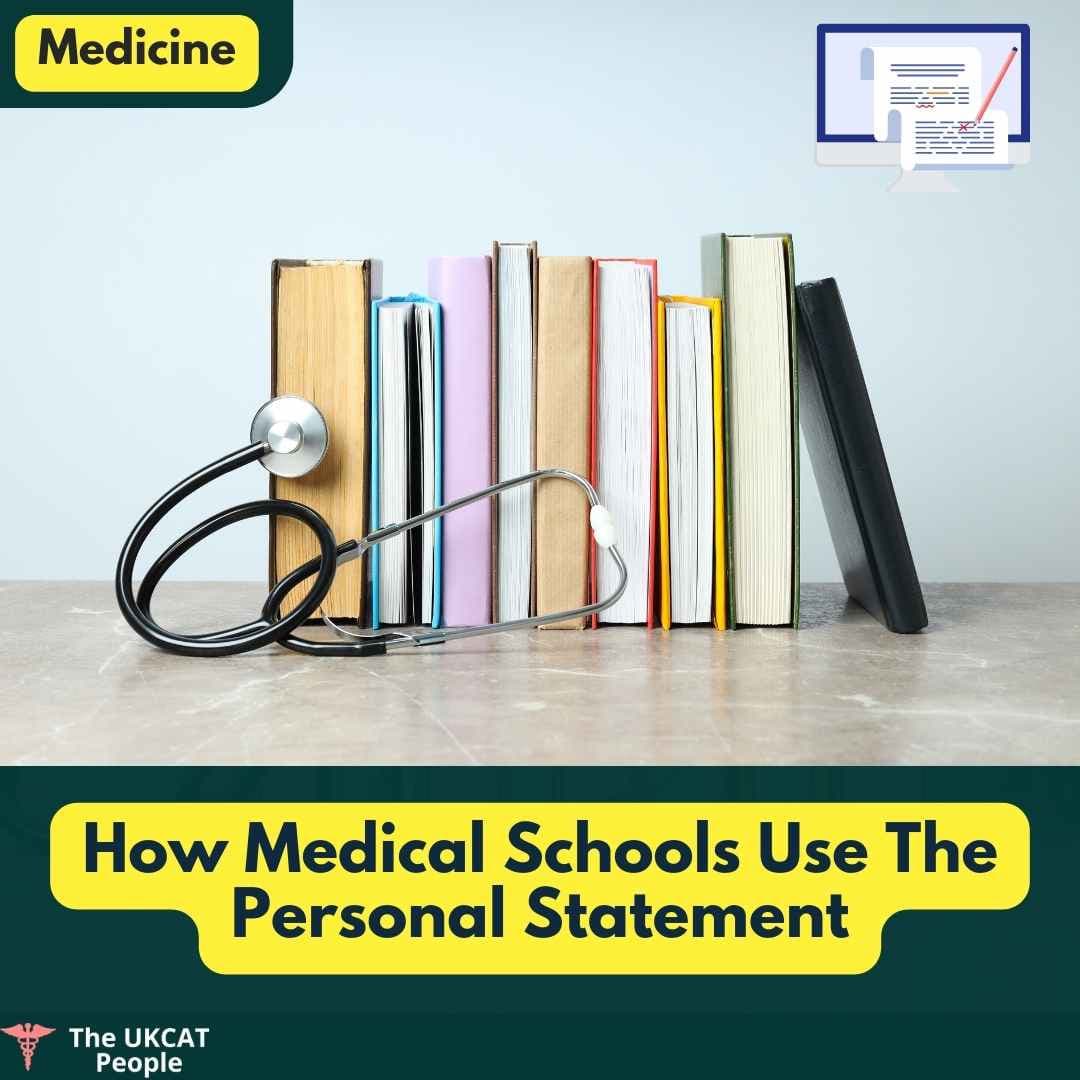
Wondering how universities actually use the medicine personal statement, and whether they even read it? It depends entirely on the school: some never look at it, some read it for red flags, and others score it to decide who gets an interview. From 2026 entry the personal statement is also written as three structured UCAS questions rather than one free-text essay. Below we explain exactly how each UK medical school uses the personal statement, so you know where it really counts.
Yes, but how much they use it varies enormously. Every medical school uses the personal statement slightly differently, so you can tailor yours for the schools to which you are applying. Broadly, UK medical schools fall into one of five categories, which we detail below so you know exactly how much your statement matters at each university.
Important disclaimer: Some universities don’t fit neatly into the categories mentioned, and may use the personal statement in a unique fashion.
You should check the website of each university to which you are applying for more specific information.
Additionally, you should write your personal statement to the best of your abilities regardless of which universities you are applying to! They almost all make exceptions to their rules, and you don’t want to be caught out.
From 2026 entry, UCAS replaced the single free-text personal statement with three structured questions. The total length is still 4,000 characters (including spaces), with a minimum of 350 characters per section, and you can split the characters across the three questions however you like.
For medicine, question three (experience outside the classroom) tends to carry the most weight because work experience, volunteering and reflection matter so much. The way each school uses the statement, described in the five categories below, has not changed: what changed is the format you write it in. For a full breakdown of the new format, read our guide to the UCAS personal statement changes, and see our Ultimate Medicine Personal Statement Guide for how to answer each question.
Examples (2026 entry): Brighton and Sussex (BSMS), Exeter, Manchester, Norwich (UEA), Plymouth, Sheffield, St George's, and Warwick. Always confirm on each school's current admissions page, as policies can change year to year.
Some universities choose not to use the medical personal statement when deciding on candidates to shortlist for interviews or offers.
However, it is important to note that just because they don’t use them it doesn’t mean that they don’t read them. Your personal statement should still meet two key criteria at the bare minimum, even if you are only applying to schools on this list:
Be mentored 1-1 by a doctor
Every question answered, from choosing schools to interview day.
Eg: Birmingham, Edinburgh, Glasgow, Newcastle, Nottingham, St Andrews, Swansea.
Many universities will not mark your personal statement but will still read it. Generally, they are looking for two things:
That you have undertaken at least some health-related work experience (eg if you have not then St Andrews will not consider you for an interview), and that you do not have any red flags in your statement.
Red flags to avoid may include:
Please do not stress about these red flags - a very slim minority of candidates ever show them.
Eg: Aston, Bristol, Edge Hill, Hull York, Kent and Medway, Leicester
These universities will use your personal statement when deciding between candidates who are similar in other areas e.g. grades, UCAT score and interview performance.
It is crucial to make sure that your personal statement is excellent if applying to these universities, as it can make the difference between an offer and a rejection.
Check out our other articles for key tips on how to make your personal statement come out on top in such a comparison. Remember to:
If your statement could decide a close call, it is worth getting it right. See our successful medicine personal statement examples for how strong applicants structure each question, and our guide to extracurricular activities on the personal statement for turning your hobbies and roles into evidence of the right characteristics.
Have your medicine personal statement reviewed by a doctor
Rated 5.0 from 660+ reviews. Line-by-line edits and comments on your actual draft, returned within 5 days, structured for the UCAS three-question format.
One edit
Line-by-line review and edit
Two edits
Review, redraft, second pass
Unlimited
Unlimited edits plus 1-1 coaching
Eg: Buckingham, Cardiff, Dundee, Imperial, King’s, Oxford, UCL, UCLan
Medical schools listed here will score your personal statement in order to decide whether to offer you an interview slot. You should check their websites for specific criteria, but in general, they are looking for the following:
Eg: Aberdeen, Anglia Ruskin, Barts/QMU, Cambridge, Keele, Kent and Medway, Lancaster, Leeds, Liverpool, Queen’s University Belfast, Southampton, Sunderland
Some medical schools base interview questions and/or MMI stations on your personal statement. When applying to these universities, write your personal statement on topics that you are happy to be asked about in more detail. Before attending your interview, brush up on everything you have mentioned in your personal statement and re-read it to remind yourself of what you have discussed. This is also important in personal statements for Oxbridge applications.
This can include aspects of work experience, extra-curricular activities, case studies or diseases that you have mentioned, and books or academic literature that you have read.
Interviewers will not try to “catch you out”, but they will challenge you on the depth and breadth of your knowledge and skills.
For more advice on how to secure an offer at any of the universities mentioned above, check out the rest of our Ultimate Personal Statement Guide 2026!
Choose your Ultimate Package
Rated 5.0 from 660+ reviews. 1-1 mentoring from doctors across UCAT, personal statement and interviews.
Bronze
20 hours
Silver
35 hours
Gold
50 hours
Platinum
75 hours
Most do read it, but not all use it to make decisions. UK medical schools fall into five groups: not used at all, read but not marked, used as a tiebreaker, scored to shortlist for interview, and used to set interview questions. Even schools that do not score it still read it, so it must be medicine-focused and free of red flags.
For 2026 entry, schools that do not use the personal statement to shortlist include Brighton and Sussex (BSMS), Exeter, Manchester, Norwich (UEA), Plymouth, Sheffield, St George's and Warwick. They may still read it, and it must remain medicine-centric. Policies change year to year, so always check each school's current admissions page before relying on this.
Exeter and Manchester do not use the personal statement to decide who is shortlisted for interview. Exeter, for example, does not read it for shortlisting or for mitigating circumstances, for which it uses a separate process. They may still glance at it, so it should stay medicine-focused, but it will not earn or lose you points at these two schools.
Bristol uses the personal statement as a tiebreaker. This means it is not scored upfront, but it can decide between candidates who are very close on grades, UCAT and interview performance. For tiebreaker schools like Bristol it is worth making your statement genuinely strong, because it can be the difference between an offer and a rejection.
Schools that score the personal statement to decide who gets an interview include Buckingham, Cardiff, Dundee, Imperial, King's, Oxford, UCL and UCLan. At these universities the statement is one of the highest-stakes parts of your application, so check each school's published criteria and make sure you evidence motivation, relevant experience, transferable skills and reflection.
No. UCAS has not scrapped the personal statement. From 2026 entry it changed format, from one free-text essay to three structured questions, but it remains a required part of your application. The total length stays at 4,000 characters with a minimum of 350 per section. How each medical school uses it has not changed.
From 2026 entry the personal statement is three questions: (1) why do you want to study this course; (2) how have your qualifications and studies prepared you; and (3) what else have you done outside formal education, and why is it useful. You have 4,000 characters total, split however you like, with at least 350 characters per section.
Yes. Even at schools that do not score it, your statement must be medicine-centric, because many will reject an application whose statement is focused on something else. It also needs to avoid red flags such as poor motivation or attitudes that clash with medical values. You cannot know in advance which of your four choices might use it as a tiebreaker.
Common red flags include poor motivation (applying for money or status), no genuine reason beyond a single past event, an unrealistically idealistic view of medicine, and values that clash with the profession, such as a poor approach to teamwork. Very few applicants show these, so do not panic, but make sure your statement reads as motivated, realistic and reflective.
Schools that may base interview questions or MMI stations on your statement include Aberdeen, Anglia Ruskin, Barts (QMU), Cambridge, Keele, Kent and Medway, Lancaster, Leeds, Liverpool, Queen's Belfast, Southampton and Sunderland. Only write about things you are happy to be questioned on, such as work experience, wider reading or activities, because interviewers will probe the depth of what you claim.
Very important, and increasingly so under the 2026 format, where question three focuses on what you have done outside formal education. Some schools, such as St Andrews, will not interview you without health-related work experience. Reflect on what you learned rather than just listing placements, and use specific examples to show insight into a medical career.
The 2026 UCAS personal statement is 4,000 characters including spaces, the same total as before, but now split across three questions with a minimum of 350 characters per question. There is no fixed line limit. A common guide is roughly 150, 250 and 100 words across the three questions, but you can weight it toward whichever section matters most for medicine.
You write one personal statement that goes to all four medicine choices, so you cannot tailor it to a single school. Instead, choose your four schools strategically based on how each uses the statement, then write a strong, medicine-focused statement that performs well everywhere. Knowing which of your choices score it helps you decide how much polish it needs.
At schools that score or tiebreak on the statement, a strong statement can help offset a borderline UCAT in close decisions, but it rarely overrides a low score at schools that gate on UCAT first. The safest strategy is to match your UCAT score to schools that suit it, then use a polished statement to strengthen the rest of your application.

Want expert help with your application?
From 1-1 tutoring and personal statement editing to interview coaching and our all-in-one Ultimate Package, we support every stage. Tell us what you are aiming for and we will recommend the right option.
Ultimate Package students from our 2025/26 cycle, with their UCAT scores and offers, who trained with us for the UCAT, personal statements and interviews.
“Harry got my UCAT up to 2,590, working through the sections I kept dropping marks on week by week. Gemma then ran my interview practice so the MMI stations didn't catch me out, and Dr Akash mentored me the whole way through. I'm off to King's for Medicine.”
“The interview prep was the part that actually moved the needle. Proper mock MMIs, not just lists of questions, and feedback that was honest about what I was getting wrong. I ended up with four offers and firmed UCL.”
“The Ultimate Package kept me organised from UCAT through to interviews. They knew what dental schools actually ask and tightened up my personal statement. Four offers in the end, and I'm going to Birmingham.”
“Vet applications come down to the written SAQs as much as the interview. Dr Rebecca went through my SAQs line by line, sharpened my answers and prepped me for the panels. I came away with four offers and chose the RVC.”
Book your FREE consultation today
Click to book your free consultation