Complete University Guide 2027
2ndof 40 UK medical schools
Top40th
- Overall score
- 99%
- Entry standards
- 83%
- Student satisfaction
- 84%
- Research quality
- 88%
Source: Complete University Guide 2027 medicine league table.
Reviewed by Dr Akash Gandhi, MBBS MA (Cantab) DGM DRCOG MBA MRCGP
Trusted UK medicine admissions specialists since 2012 · 2700+ students taught
At a glance
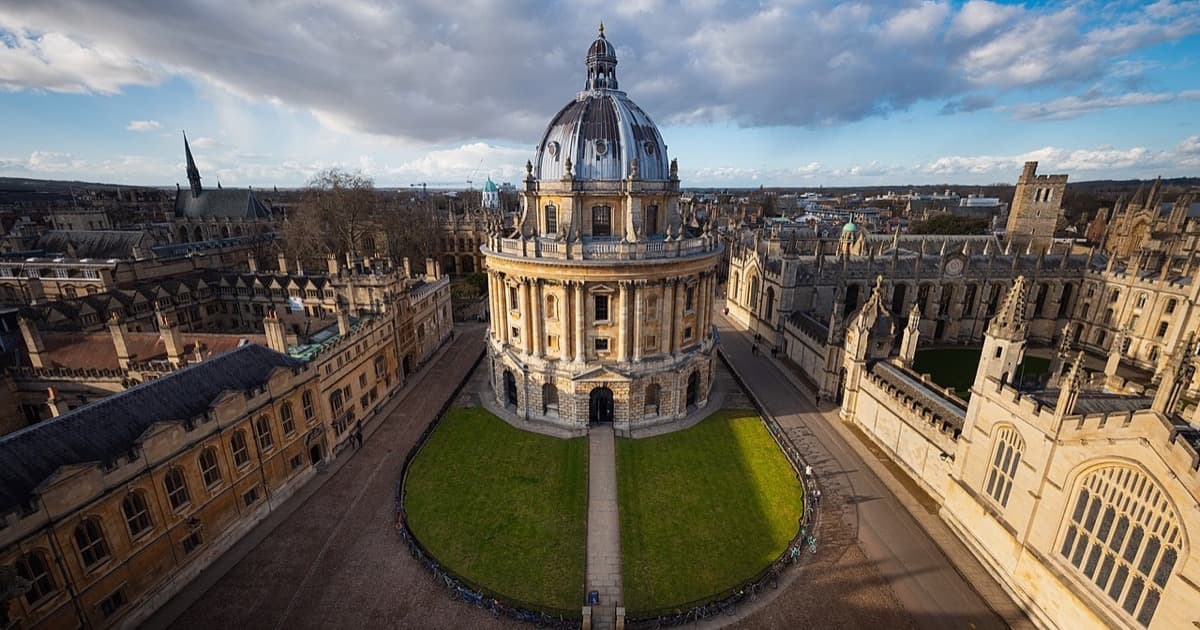
Oxford University Medicine have been ranked number one for the last nine years in the Times Higher Education World University Rankings for clinical, pre-clinical and health sciences - the only non-North American institution to be top-ranked by THE in any subject discipline.
The Medicine course at Oxford provides a well-rounded intellectual training with particular emphasis on the basic science research that underpins medicine. It is beneficial to attend the Oxford University Medicine Open Day.
One of the top medical schools in the UK is the University of Oxford. Founded in 1096, Oxford has a long and rich history of providing top-notch medical education. The university boasts state-of-the-art facilities, including the Oxford Medical School and the Oxford Biomedical Research Centre. Students at Oxford have access to a wide range of clinical placements, giving them the opportunity to gain hands-on experience.
Complete University Guide 2027
Source: Complete University Guide 2027 medicine league table.
The Guardian University Guide 2026
Source: The Guardian University Guide 2026 medicine league table.
For 2026 entry, Oxford received 1,156 applications for Medicine. It made 175 offers, so 15% of applicants received an offer.
All applicants (home and international)
| Entry year | Applications | Interviewed% of applicants | Offers | Post-interview success% of interviewed | Offer rate% of applicants |
|---|---|---|---|---|---|
| 2026 | 1,156 | — | 175 | — | 15% |
| 2025 | 1,164 | — | 173 | — | 15% |
| 2024 | 1,500 | — | 170 | — | 11% |
| 2023 | 1,713 | — | 162 | — | 9% |
Last checked June 2026.
1-1 support from doctors and admissions experts across every stage of your medicine application.



Oxford Medical School offers the pre clinical and the clinical stage. In the Pre-clinical stage of the course (years 1-3), most tutorials, classes, and lectures are delivered by members of academic staff, research staff or NHS clinicians (usually at the level of consultant) and mostly take place in the Medical Sciences Teaching Centre in the Science Area. In the Clinical stage of the course (years 4-6), most teaching is delivered by clinicians from the Oxford University Hospitals NHS Trust as well as local primary care physicians, and University academic staff.
Oxford Medical School uses a traditional teaching style, with the first three years focused on pre-clinical study through lectures, practicals, and small-group tutorials that encourage deep understanding and independent thinking. Students receive personalised attention in college tutorials, often in groups of two to four. The final three years are clinically focused, with placements in hospitals and GP practices, supported by bedside teaching, seminars, and continued self-directed learning. This structure emphasises strong scientific foundations, critical thinking, and lifelong learning.
Oxford offers an Intercalation Year. Oxford has retained a distinct three-year pre-clinical stage that includes studying towards a BA Honours degree in Medical Sciences, followed by a three-year clinical stage. The course is considered to be the best in the world, according to the Times Higher Education’s league table for 2014-15, a position it has held since 2011-12.
The minimum A level grade requirements for Oxford Medical School is A*AA
A levels achieved in one sitting, to include Chemistry, plus at least one of Biology, Physics, Mathematics or Further Mathematics.
There are no formal GCSE requirements for Medicine, however successful candidates usually have very high GCSE grades (used in combination with UCAT score).
Applicants should have received a basic education in Biology, Physics and Mathematics, normally at least a grade C/4 at GCSE or equivalent.
Strong GCSE scores are a prerequisite for applying to Oxford to study Medicine.
39 points
7,6,6 at Higher Level. Candidates are required to take Chemistry and at least one of Biology, Physics or Mathematics to Higher Level.
AAAAA
AA in Advanced Highers (taken in the same academic year), including Chemistry plus one of Biology, Physics or Maths.
Graduate applicants are assessed against the standard A100 requirements (A*AA including Chemistry plus one of Biology, Physics or Maths, or equivalent). A first or strong upper-second class degree is generally expected but cannot compensate for relatively poor A-level results. (The separate A101 accelerated graduate course has its own requirements.)
IELTS 7.5
Minimum 7.0 per component
Resits are generally not accepted, except with documented mitigating circumstances.
No
Oxford Medical School now requires all applicants to be 18 years old by 1st November in the year they intend to start the course
A-Level Requirements at University of Oxford Medical School →
Most useful
How Does Oxford Medical School Look At The UCAT?
👉🏼 AVERAGE UCAT score per year OFFERED a place at Oxford to study Medicine A100 [Home]:
Number of Offers per College at Oxford for Medicine A100:
📝 PS - Have your PS checked - 5⭐ Rated
🎙️ Interviews - 1-1 Online Medicine Interview (Panel & MMI) Tutoring & Mocks tailored to Oxford - 5⭐ Rated
** PLEASE NOTE: For 2025 Entry for Medicine at Oxford - the BMAT will not be used. Instead, the UCAT will be used **
How Did Oxford Medical School Look At The BMAT (2024 Entry and prior)?
What is a good BMAT score for Oxford?
Not Required
While some work experience in hospitals is theoretically desirable, we do appreciate that it can be very difficult to arrange and we therefore have no requirement for it. Any form of voluntary work would be beneficial in the context of applying for Medicine (such as helping out in a hospital, at an old people's home, St John's Ambulance, or work with a charity or overseas agency).
The personal statement is considered along with all other aspects of the application for those applicants who are not automatically short-listed, and may be used as the basis for interview questions for those short-listed.
Note: from 2026 entry, UCAS replaced the single free-text personal statement with three structured questions — why you want to study the course, how your studies have prepared you, and what else you have done to prepare. Any guidance above still applies; it is simply spread across those questions. For worked examples and a review of your own statement, see our medicine personal statement examples and review service.
Interview preparation
Practise with our expert interview tutors: university-specific mock MMI and panel interviews with personalised feedback. Every session is tailored to Oxford's interview format and marking criteria.
Not sure which option fits? Explore all interview coaching or book a free consultation.
Oxford Graduate Medicine This course is an intensive four year medical course and has been designed for graduates who are trained in applied or experimental sciences. After a two-year transition phase covering basic science and clinical skills, the accelerated programme leads into the final two years of the standard course and to the same Oxford medical qualification as the standard (six-year) course. The four-year course is designed specifically for science graduates, and places a strong emphasis on the scientific basis of medical practice.
December every year.
Expect to hear by January
Much of the Oxford Medical School Interview will revolve around science and scientific principles. This is different to almost all other interviews (other than Cambridge). The goal is not solely to see how much knowledge you have, it is more to understand your thought process.
Often the interviewers will push you to the end of your knowledge, before helping you through the problem and seeing how you cope and use the information that is provided to you.
There are no trick questions here, the examiners are extremely friendly. They will try to mimic an Oxford supervision, where a professor will often teach you concepts and topics that go beyond the curriculum.
There is no predetermined list of questions, but will often be around common biological and human concepts such as the nervous system, cardiovascular system, neurological system and genetics.
There is no set method of scoring the Oxford interviews that is publicly available. The interviews are usually scored within each college before the college determines who to give offers to. This is usually in combination with the academic grades that are provided as well as your BMAT score.
These are suggested practice questions based on publicly available information and past trends. They are not official questions from the University and may not appear in your interview. Use them as part of a broader preparation strategy.
Practise under timed conditions with our free generator. It builds a randomised circuit from real Oxford interview themes, with reading time, follow-up questions and a notes summary you can keep.
Free practice tool
A timed mock interview in your browser, built from this university's real interview themes. Choose MMI, panel or SAMMI, answer out loud, and keep a summary of how it went.
0
day streak · 0 mocks
Real timings
Reading and answering phases with bells, exactly like the live circuit.
Follow-up questions
Press for more on each station, the way a real interviewer would.
Notes to keep
Rate each answer and save a written summary to review with a tutor.
Free to use. No sign-up needed.
Student Administrative Officer
Medical Sciences Teaching Centre
South Parks Road
Oxford
OX1 3PL
Tel: 01865 285783
Email: admissions@medschool.ox.ac.uk
Website: www.medsci.ox.ac.uk/study/medicine
Oxford is ranked 2nd out of 40 UK medical schools for Medicine in the Complete University Guide 2027.
Oxford is ranked 1st out of 36 UK medical schools for Medicine in the Guardian University Guide 2026.
Oxford is ranked 2nd out of 40 UK medical schools for Medicine in the Complete University Guide 2027.
In the Complete University Guide 2027 it scores 83% for entry standards, 84% for student satisfaction and 100% for graduate prospects.
The minimum A level grade requirements for Oxford Medical School is A*AA.
A levels achieved in one sitting, to include Chemistry, plus at least one of Biology, Physics, Mathematics or Further Mathematics.
There are no formal GCSE requirements for Medicine, however successful candidates usually have very high GCSE grades (used in combination with UCAT score).
Applicants should have received a basic education in Biology, Physics and Mathematics, normally at least a grade C/4 at GCSE or equivalent.
Strong GCSE scores are a prerequisite for applying to Oxford to study Medicine.
The UCAS course code for the standard Medicine course at Oxford is A100, and the degree awarded is the BM BCh.
The course is based in Oxford, England and lasts 6 years.
Oxford also offers the 4 year graduate entry route (UCAS code A101).
Yes, Oxford requires the UCAT for entry to Medicine (new for 2025 entry).
AVERAGE UCAT score per year OFFERED a place at Oxford to study Medicine A100 [Home] 2025 Entry (/3600): 3131.
Balliol College, Oxford - 5 medicine offers.
Brasenose College, Oxford - 6 medicine offers.
Christ Church, Oxford - 6 medicine offers.
Corpus Christi College, Oxford - 6 medicine offers.
Exeter College, Oxford - 5 medicine offers.
Hertford College, Oxford - 6 medicine offers.
Jesus College, Oxford - 5 medicine offers.
Keble College, Oxford - 7 medicine offers.
For 2026 entry, 15% of applicants to Medicine at Oxford received an offer (175 offers from 1,156 applications). An offer is not a confirmed place.
Oxford uses a panel interview format for Medicine interviews.
December every year.
Expect to hear by January.
No, Oxford does not offer a foundation or gateway year for Medicine.
Yes, Oxford accepts graduate entry applicants for Medicine.
The graduate entry route into Medicine at Oxford has the UCAS course code A101 and leads to the BM BCh, which lasts 4 years.
Oxford Graduate Medicine This course is an intensive four year medical course and has been designed for graduates who are trained in applied or experimental sciences. After a two-year transition phase covering basic science and clinical skills, the accelerated programme leads into the final two years of the standard course and to the same Oxford medical qualification as the standard (six-year) course. The four-year course is designed specifically for science graduates, and places a strong emphasis on the scientific basis of medical practice.
Yes, Oxford assesses the personal statement as part of the Medicine application.
The personal statement is considered along with all other aspects of the application for those applicants who are not automatically short-listed, and may be used as the basis for interview questions for those short-listed.
Yes, you need to be 18 to study Medicine at Oxford.
Oxford Medical School now requires all applicants to be 18 years old by 1st November in the year they intend to start the course.
The international student fee per year is £49,400 (Preclinical, years 1 to 3) and £65,250 (Clinical, years 4 to 6) (2026/27 entry).
Ultimate Package students from our 2025/26 cycle, with their UCAT scores and offers, who trained with us for the UCAT, personal statements and interviews.
“Harry got my UCAT up to 2,590, working through the sections I kept dropping marks on week by week. Gemma then ran my interview practice so the MMI stations didn't catch me out, and Dr Akash mentored me the whole way through. I'm off to King's for Medicine.”
“The interview prep was the part that actually moved the needle. Proper mock MMIs, not just lists of questions, and feedback that was honest about what I was getting wrong. I ended up with four offers and firmed UCL.”
“The Ultimate Package kept me organised from UCAT through to interviews. They knew what dental schools actually ask and tightened up my personal statement. Four offers in the end, and I'm going to Birmingham.”
“Vet applications come down to the written SAQs as much as the interview. Dr Rebecca went through my SAQs line by line, sharpened my answers and prepped me for the panels. I came away with four offers and chose the RVC.”
Book your FREE consultation today
Click to book your free consultation