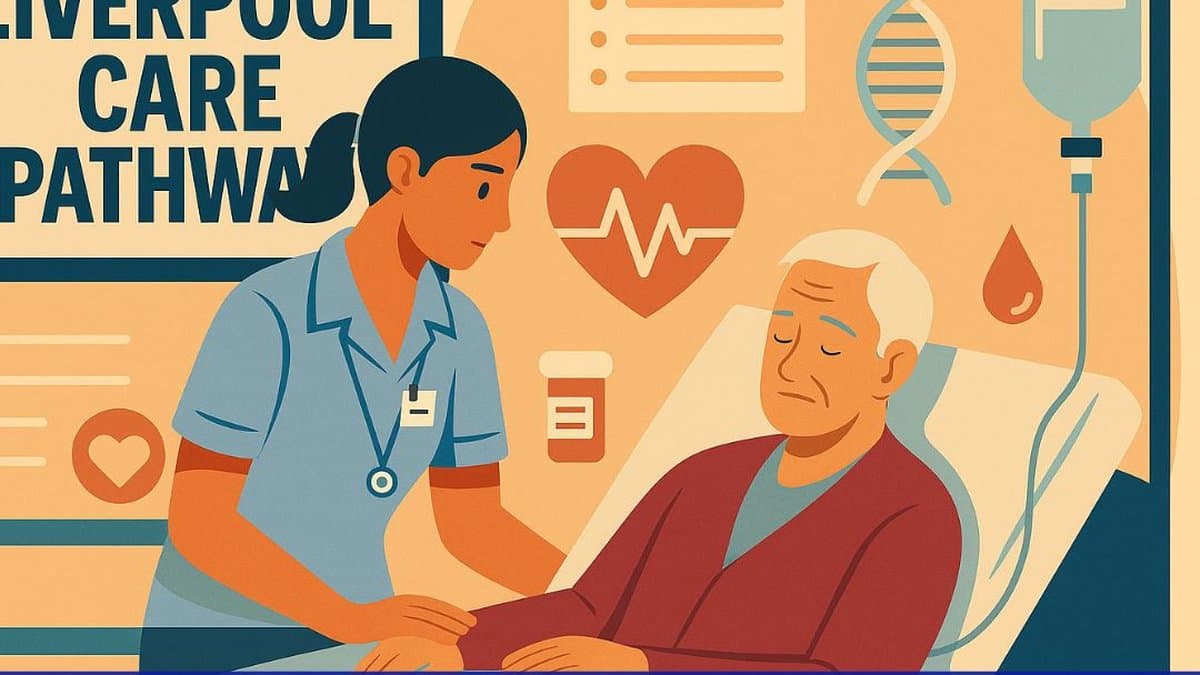
The Liverpool Care Pathway was a protocol used within the NHS to ensure high-quality end-of-life care for terminally ill patients.
Originally a protocol designed to enhance end-of-life care quality within the NHS, the LCP's legacy profoundly shaped discussions around patient autonomy and compassionate treatment.
This topic, along with other NHS hot topics, can help you demonstrate your knowledge and readiness for a career in medicine.
NHS Liverpool Care Pathway Summary - What You Need To Know
The Liverpool Care Pathway can be summarised into the following high-yield points worth remembering:
The Liverpool Care Pathway was essentially a step-by-step method to professionally and empathetically deliver care for the dying.
It was intended to provide patients in the NHS with a peaceful and dignified death.
Response to the pathway varied, with many negative responses from families
The strongest sentiments were that it felt like a tick-box exercise
In response, a review of the pathway was carried out in 2013.
Consequently, the Liverpool Care Pathway was phased out in 2014 and replaced by individualised care plans (ICPs)
Liverpool Care Pathway: What Was It?
The Liverpool Care Pathway was a series of steps for healthcare professionals to follow to make a dying patient as comfortable as possible.
It was developed in the 1990s initially for terminally ill patients with cancer before being expanded to patients with other conditions, such as heart failure and COPD.
NHS Liverpool Care Pathway: Why Was It Introduced?
The Liverpool Care Pathway was introduced to ease the transition between life-prolonging care, more active treatment, and palliative care.
Previously, treatment was more so at the individual discretion of the responsible doctors, whereas the Liverpool Care Pathway aimed to provide a more standardised approach to end-of-life care.
The Liverpool Care Pathway intended to respect patient autonomy by involving patients and their families in decision-making.
For example, when discontinuing an intervention, they advised an approach that allowed patients to ask questions to their doctors about decisions that directly impacted their health.
Beneficence:
In order to act in the best interest of the patient, the Liverpool Care Pathway intended to deliver comfortable end-of-life care, preserving the dignity of the patient until the end.
This involved symptom management, for example, pain relief.
Non-Maleficence:
The pathway tried to prevent unnecessary interventions for patients, so that the focus was on end-of-life care, rather than prolonging discomfort.
Justice:
The Liverpool Care Pathway sought to standardise end-of-life care such that, irrespective of the social determinants of health, palliative care was delivered consistently.
Liverpool Care Pathway Scandal: Why Was The Liverpool Care Pathway Controversial?
The Liverpool Care Pathway was controversial across UK NHS Trusts for a number of reasons:
The Liverpool Care Pathway Had A Lack Of Individualised Care:
Setting out the approach to a dying patient as a “tick-box exercise” came across to patients as dehumanising, with many reporting at the time that they felt neglected by healthcare staff, who ignored their pleas for food and water.
In addition, under the pathway, it was “only necessary to review care for patients nearing the end of life every three days”, exacerbating feelings of loneliness and a lack of control over patients’ health.
The Rapid Media Coverage Of The Liverpool Care Pathway:
The media were swift in covering the failings of the Liverpool Care Pathway, taking into account patient and family experiences.
This was a key factor in contributing to the replacement of the pathway, with the Daily Mail describing it as a ‘pathway to euthanasia’ that compromised patient autonomy.
The media holds immense power in influencing the public’s opinion of the NHS and, therefore, the trust that they have in the system.
It was therefore essential that a review of the Liverpool Care Pathway considered both sides without bias, or giving into the pressure of the media.
The Liverpool Care Pathway Had A Lack Of Clear Communication And Informed Consent:
Some patient's families reported a withdrawal of hydration and nutrition without explanation or consultation.
According to the GMC and the Liverpool Care Pathway guidance, food and drink should always be offered to patients who are ‘able to swallow without serious risk of choking or aspiration’.
If food and drink had been withdrawn from patients, it should have been due to a lack of tolerance, but this was not communicated to the family of patients.
Guidelines state that patients and their families should receive information and an opportunity to ask questions about their healthcare plan.
In cases where the Liverpool Care Pathway was used, the opportunity to ask questions and be reassured by a healthcare professional was never presented and therefore patients felt as if they had no control over what was happening to them.
Review of Liverpool Care Pathway For Dying Patients
A review of the Liverpool Care Pathway for Dying Patients was ordered following the ‘substantial criticism’ of the pathway in the national media.
Led by Baroness Julia Neuberger, a panel was set up to evaluate the use and experience of the Liverpool Care Pathway in England, independent of the NHS and the government.
What was the Liverpool Care Pathway (LCP), and what were its main objectives?
Harder questions, more for understanding, less likely to come up
Can you explain why the Liverpool Care Pathway was initially introduced in the NHS?
What are some key elements of the Liverpool Care Pathway in terms of patient care?
How did the Liverpool Care Pathway aim to improve end-of-life care for terminally ill patients?
Discuss some of the main benefits and criticisms of the Liverpool Care Pathway.
Why was the Liverpool Care Pathway eventually phased out, and what replaced it?
How did healthcare professionals and the public respond to the implementation of the Liverpool Care Pathway?
What lessons can be learned from the controversies surrounding the Liverpool Care Pathway?
How does the Liverpool Care Pathway relate to the principles of palliative care and patient dignity?
In your opinion, what are the essential components of effective end-of-life care in the NHS today?
These questions will help you prepare for discussions on the Liverpool Care Pathway and demonstrate your understanding of palliative care and ethical considerations in medicine.
Ultimate Package
Choose your Ultimate Package
Rated 5.0 from 580+ reviews. 1-1 mentoring from doctors across UCAT, personal statement and interviews.
Liverpool Care Pathway Frequently Asked Questions:
What was the Liverpool Care Pathway?
The Liverpool Care Pathway was a set of guidelines developed in the 1990s to provide end-of-life care for terminally ill patients, initially for those with cancer and later for other conditions.
Why was the Liverpool Care Pathway controversial?
The Liverpool Care Pathway faced criticism for its perceived lack of individualised care, inadequate communication with families, and media portrayal as a "pathway to euthanasia."
What was the purpose of the Liverpool Care Pathway?
The Liverpool Care Pathway aimed to ensure that patients in the final stages of life received compassionate and appropriate care, focusing on comfort rather than active treatment.
How did the Liverpool Care Pathway affect patient care?
While it was intended to improve end-of-life care, the Liverpool Care Pathway was sometimes implemented poorly, leading to instances where patients felt neglected and families were not properly informed.
What led to the discontinuation of the Liverpool Care Pathway?
In 2013, a review led by Baroness Julia Neuberger found multiple failings in the Liverpool Care Pathway, in line with the controversy in the media as well as patient accounts. This led to a phasing out of the Liverpool Care Pathway by 2014.
What replaced the Liverpool Care Pathway?
The Liverpool Care Pathway was replaced by the "Five Priorities for Care of the Dying Person," which highlights the importance of clear communication, empathy, mutual decision-making, active listening, and individualised care plans.
What were the main criticisms of the Liverpool Care Pathway?
Criticisms included it being perceived as a tick-box exercise, a lack of personal care or empathy, unclear communication, and media portrayal of it hastening death with patient accounts of being denied food and water.
Did the Liverpool Care Pathway deny patients food and water?
Some reports indicated that patients were denied hydration and nutrition without proper consultation or explanation, leading to concerns about patient neglect.
What was the role of the media in the controversy over the Liverpool Care Pathway?
The media played a significant role in highlighting negative experiences and fueling public distrust, with some outlets describing the Liverpool Care Pathway as a form of euthanasia.
What did the independent review of the Liverpool Care Pathway find?
The review, led by Baroness Julia Neuberger, found issues with terminology, staff and equipment availability, lack of individualised care, and insufficient documentation.
✍️ About the Author
Written by:Suhaani Sathish - Medical Student at Barts and The London, Queen Mary University of London. Suhaani received offers from all four of her medical school choices and has a strong interest in medical ethics, NHS healthcare policy, and clinical communication. She now helps students prepare for MMI and Panel Interviews with TheUKCATPeople.
Reviewed by:Dr Akash Gandhi MBBS MA (Cantab) DGM DRCOG MBA MRCGP - GP in London and co-Founder of TheUKCATPeople. Dr Gandhi is a medical school admissions and interview expert, having supported thousands of students with their UCAT tutoring, personal statements, and interviews for over a decade. His guidance ensures all ethical and clinical content on our site aligns with GMC and NHS standards.
Contact us
Want expert help with your application?
From 1-1 tutoring and personal statement editing to interview coaching and our all-in-one Ultimate Package, we support every stage. Tell us what you are working towards and we will recommend the right option.
FAQs
Frequently asked questions
What was the Liverpool Care Pathway?
The Liverpool Care Pathway was a set of guidelines developed in the 1990s to provide end-of-life care for terminally ill patients, initially for those with cancer and later for other conditions.
Why was the Liverpool Care Pathway controversial?
It faced criticism for its perceived lack of individualised care, inadequate communication with families, and media portrayal as a 'pathway to euthanasia'.
What was the purpose of the Liverpool Care Pathway?
It aimed to ensure that patients in the final stages of life received compassionate and appropriate care, focusing on comfort rather than active treatment.
How did the Liverpool Care Pathway affect patient care?
While intended to improve end-of-life care, it was sometimes implemented poorly, leading to instances where patients felt neglected and families were not properly informed.
What led to the discontinuation of the Liverpool Care Pathway?
In 2013, a review led by Baroness Julia Neuberger found multiple failings in its implementation and media controversy, resulting in its phased removal by 2014.
What replaced the Liverpool Care Pathway?
It was replaced by the 'Five Priorities for Care of the Dying Person', which emphasise clear communication, empathy, mutual decision-making, active listening, and individualised care plans.
What were the main criticisms of the Liverpool Care Pathway?
Criticisms included its perception as a tick-box exercise, lack of personal care or empathy, unclear communication, and media portrayals suggesting it hastened death.
Did the Liverpool Care Pathway deny patients food and water?
Some reports indicated patients were denied hydration and nutrition without proper consultation or explanation, raising concerns about patient neglect.
What was the role of the media in the controversy over the Liverpool Care Pathway?
The media highlighted negative experiences and fuelled public distrust, with some outlets describing it as a form of euthanasia.
What did the independent review of the Liverpool Care Pathway find?
The review found issues with terminology, staff and equipment availability, lack of individualised care, and insufficient documentation.
Ultimate Package students from our 2025/26 cycle, with their UCAT scores and offers, who trained with us for the UCAT, personal statements and interviews.
Ultimate Package
S
Sophie
Medicine, King's College London
2025 UCAT2,590 / 2,700
“Harry got my UCAT up to 2,590, working through the sections I kept dropping marks on week by week. Gemma then ran my interview practice so the MMI stations didn't catch me out, and Dr Akash mentored me the whole way through. I'm off to King's for Medicine.”
Ultimate Package
D
Daniel
Medicine, University College London
Medicine offers4 offers
“The interview prep was the part that actually moved the needle. Proper mock MMIs, not just lists of questions, and feedback that was honest about what I was getting wrong. I ended up with four offers and firmed UCL.”
Ultimate Package
A
Aisha
Dentistry, University of Birmingham
Dentistry offers4 offers
“The Ultimate Package kept me organised from UCAT through to interviews. They knew what dental schools actually ask and tightened up my personal statement. Four offers in the end, and I'm going to Birmingham.”
Ultimate Package
C
Charlotte
Veterinary Medicine, Royal Veterinary College
Vet offers4 offers
“Vet applications come down to the written SAQs as much as the interview. Dr Rebecca went through my SAQs line by line, sharpened my answers and prepped me for the panels. I came away with four offers and chose the RVC.”