10 hours
1-1 UCAT tutoring
Reviewed by Dr Akash Gandhi·8 September 2026
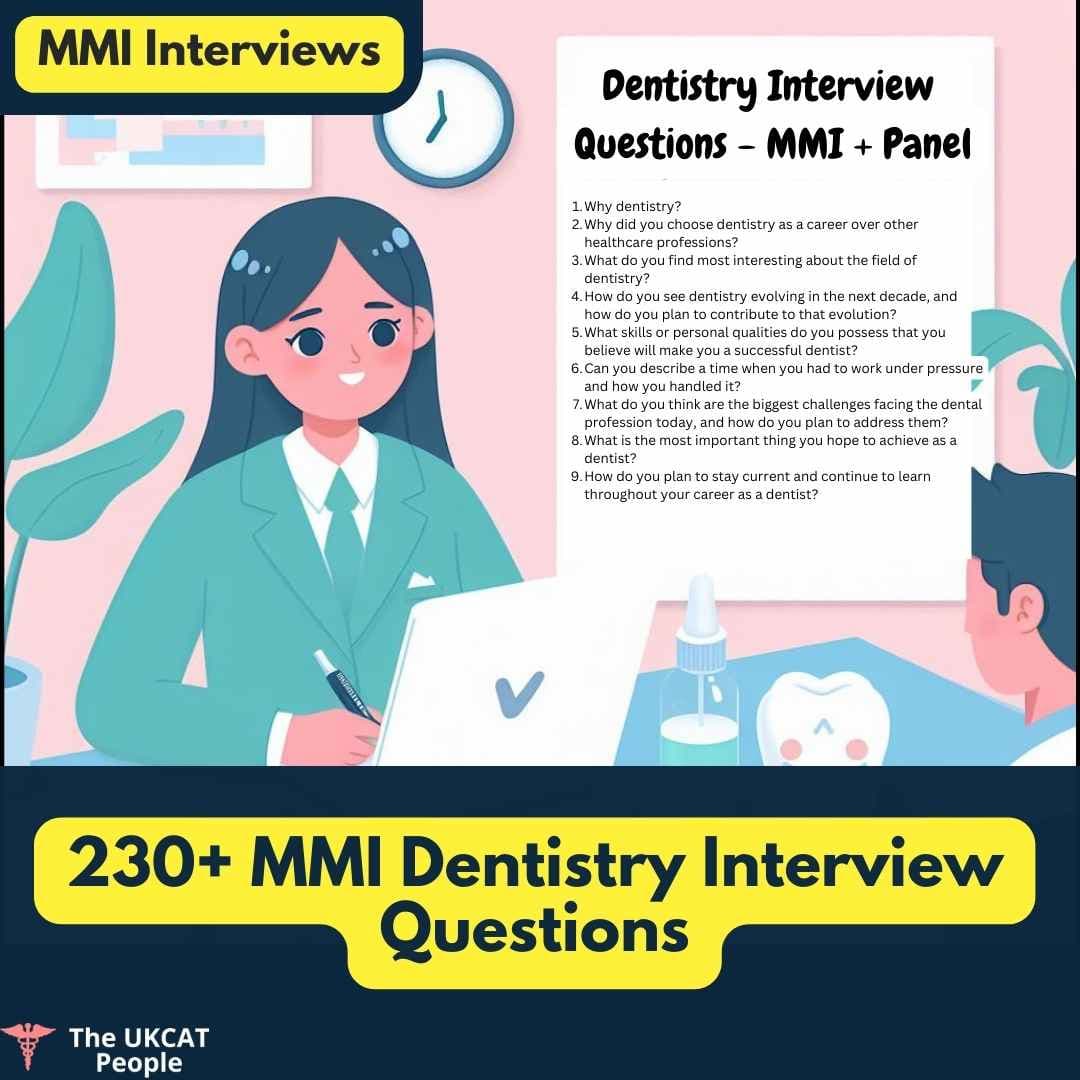
Why dentistry is the motivation question at the front of nearly every UK dental school interview. It asks what first drew you towards the career and what you did afterwards to test whether the real job would suit you. In interviews it matters because your reasons show how well you understand what dentists actually do.
I'm Dr Sonal Gandhi, a dentist and the dentistry admissions lead at TheUKCATPeople, and I hear why dentistry rehearsed more often than any other question. The answers that work are the ones where the reasons match what the applicant actually went and did, which is why motivation opens our dental school interview questions guide.
This guide gives you the reasons that are genuinely true of dentistry, three model answers in different voices, and the follow ups.
Interviewers ask why dentistry because they need to know you understand the job and have tested the idea against something real. A dental degree trains you for one registered profession from the first year, so a reason that doesn't hold up costs you five years.
Your answer also shows how you think, because describing what you saw and how your view shifted is the reflective habit clinical training runs on.
The patients I remember from my first year in practice weren't the complicated ones. They were the people who'd avoided a dentist for a decade and left having booked a check up, because somebody finally explained things without rushing them.
The table below is most of what you need: the reasons applicants offer, and what each one needs attached to it.
Reason people give | Why it's weak on its own | How to make it yours (evidence to attach) |
|---|---|---|
I want to help people | True of nursing, teaching, physiotherapy and paramedic work, so it does not explain the choice of dentistry | Name a moment you watched a specific problem being solved, such as a patient in pain leaving the surgery comfortable after an extraction |
I enjoy science, especially biology | Explains a degree in biomedical science just as well as it explains dentistry | Link the science to the hands, for example how the anatomy of the head and neck explains where a local anaesthetic goes |
I like working with my hands | Interviewers hear this with no test behind it, so it sounds assumed rather than checked | Describe something you practise that needs fine control under a time limit, then say what you found difficult about it |
I want to run my own practice | Sounds like a business plan unless you know what running a practice involves | Mention what you noticed about the business side on work experience: rotas, stock, CQC paperwork or the cost of materials |
The work life balance | Broadly true of general practice, but it is a reason to stay rather than a reason to start | Pair it with the clinical draw, and acknowledge that self employed practice owners carry the risk that comes with the flexibility |
A family member is a dentist | Interviewers worry the choice was inherited rather than made | Use the access as evidence, not as motivation: say what you saw over years that a one week placement would never show you |
The earning potential | It says nothing about patients, and NHS income depends on a contract under real pressure | Leave it out of your opening answer, and if asked directly, say honestly that a stable career mattered alongside the clinical reasons |
I had braces or dental treatment myself | Very common, and on its own it is a story about you as a patient | Say what changed in you, and what you then went and checked from the other side of the chair on work experience |
I like the variety of patients | Easy to say and hard to picture | Ground it in one morning you observed, naming the range of ages and treatments you saw in a single list |
I did not get into medicine | Reads as a second choice unless the reasoning is genuine | Only say this if it is true, then explain what you learnt about dentistry afterwards that made it the better fit for you |
Key Takeaway: I chose dentistry because I wanted to diagnose the problem and treat it myself, and I checked what that was like before applying.
Structure it as a sequence running from what started your interest to what you now know about the work, so an interviewer can follow how your thinking developed.
Ninety seconds to two minutes is usually enough, and you don't need all six every time. In a short station, give the first three and let the interviewer draw out the rest.
Key Takeaway: Start with what drew me in, then spend most of the answer on what I did to check it.
Be mentored 1-1 by a dentist
Every question answered, from choosing schools to interview day.
Most UK dentists work as general dental practitioners on the high street with a mixed NHS and private list, and the rest work in community services, hospital departments, dental public health, the armed forces or academia, as the NHS Health Careers profile of a dentist sets out.
On a Monday morning I might see a child with three decayed baby teeth, a man who wants a broken front tooth rebuilt, and someone in real pain who needs treating there and then. That's the honest version of the variety people mention in interviews.
Manual dexterity here means working in a space the size of a matchbox, upside down through a mirror, on a patient who can't tell you what they feel. The part nobody described to me at seventeen was the business underneath it: rotas, stock and CQC paperwork.
Key Takeaway: I know I am choosing general practice with a mixed NHS and private list, precision work all day, and a business to help run.
Answer it honestly and without defending yourself, because the question asks what you understand about both careers rather than testing your loyalty. Name two or three real differences and say which mattered to you.
If you applied to medicine first, say so plainly and explain what changed your mind. Our reapplying for dentistry guide covers that conversation, and our graduate entry dentistry guide covers the route from another degree.
Dental therapists and hygienists do real clinical work, so treat the question with respect. A dental therapist qualifies through a three year degree and can place fillings, take radiographs, scale and polish and extract baby teeth.
The difference is the breadth of diagnosis and responsibility for the whole treatment plan. Dentists assess the patient overall, plan complex care, carry out surgical extractions and root canal work, and stay accountable.
Key Takeaway: I wanted a defined area I could know thoroughly, work I complete with my own hands, and patients I keep for decades.
Boost your UCAT with 1-1 tutoring
Rated 5.0 from 660+ reviews. 1-1 sessions with top-scoring tutors, weekly or more often, built around your weakest subtests.
10 hours
1-1 UCAT tutoring
20 hours
1-1 UCAT tutoring
30 hours
1-1 UCAT tutoring
The three answers below use the same structure with completely different evidence, so read them for shape rather than for phrases to borrow.
"I came to dentistry through biology, after an EPQ on how the bacteria in dental plaque cause decay. What pulled me in was that a disease I can describe at a cellular level gets treated by one person in one appointment.
I spent a week in a general practice, where I watched the same dentist explain a root canal three different ways depending on who was in the chair. I had assumed the science would be the difficult part, and it was the explaining.
Since then I have practised fine control by modelling teeth in wax. The work is repetitive and demanding, and I want it because it uses the biology I enjoy on someone who walks out better than they walked in."
Why this answer works:
"I was frightened of the dentist until I was about thirteen, when I needed two fillings and the dentist talked me through everything before she touched me. That was when I understood that how a clinician behaves changes what a patient can tolerate.
Because I did not want to apply on one good memory, I arranged three days of work experience and a virtual placement. I saw an anxious man who had not been seen for eleven years, and the dentist spent most of that appointment explaining rather than treating.
I have since worked as a lifeguard, which taught me to keep my voice steady when others cannot. Dentistry is precision work on frightened patients, and that is the part I want to be good at."
Why this answer works:
"Nobody in my family works in healthcare, so I started with what I could reach. On a supermarket customer service desk I found I was good at the part where somebody arrives annoyed and leaves feeling dealt with properly.
I emailed about twenty practices before one agreed to two days of shadowing, alongside three virtual work experience programmes. I watched a dentist tell a patient that the tooth he wanted saving could not be saved, then explain the options and let him decide.
Reading about NHS access has filled in the rest. I want a career where I diagnose a problem and treat it myself, in a community I know, and where being decent with people is part of the clinical skill."
Why this answer works:
Key Takeaway: My reasons only mean something if I can name the moment I saw them being true.
The follow ups come straight out of what you've just said, so anything you claim should be something you can discuss for another minute.
Key Takeaway: Everything in my first answer is something I am willing to be asked a harder question about.
Talk about your motivation by working backwards from what you've actually done, because your own life holds better evidence than anything you'd invent. A part time job, volunteering, an EPQ or your own treatment all give you something specific.
Interviewers are listening for a consistent set of things:
To rehearse out loud and get marked feedback, our 1-1 dentistry interview tutoring pairs you with a dentistry interview expert matched to the universities you've applied to.
Key Takeaway: My motivation is easiest to explain when I describe what I did and what it taught me, in that order.
Prepare for your dental school interviews
Rated 5.0 from 660+ reviews. Mock MMI and panel interviews with expert tutors, built around dental school questions.
10 hours
1-1 interview coaching
20 hours
1-1 interview coaching
30 hours
1-1 interview coaching
You are unlikely to be asked any of these word for word, and you do not need a prepared answer to each one. Use them to check your understanding: if you could speak for a minute on most of them, you know this topic well enough for whatever the interviewer actually asks.
"Why do you want to be a dentist?"
"Two things brought me here, and the second is the reason I applied. The first was my own treatment: I had a molar filled at fourteen, and the dentist showed me the decay on the X-ray and explained what she was about to do, which turned something I dreaded into something I understood.
That was interest rather than a decision, so I went to find out what the work was like. I did a week in a general practice and three virtual work experience programmes, and I read around NHS access and the dental contract.
The week in practice decided it, because I watched the same dentist take a child through a first check up, rebuild a chipped front tooth, and tell an anxious man that his tooth needed taking out. What struck me was how much of the skill sat in the explaining.
I know the honest version of this career: it is repetitive, it is hard on your back, and running a practice is a business as well as a clinic. I want it because I would diagnose a problem and fix it myself, for people I would keep seeing for years."
Why this answer works:
Key Takeaway: Say what started it, say what you did to check it, then say what you now know the job really is.
Take one honest reason and one real moment that proves it, because that pairing survives any follow up an interviewer builds on top of it. If you can describe what you saw and what it changed, you'll never need a script.
Next, work through our dentistry interview questions bank, then the ultimate dentistry personal statement guide, our dentistry personal statement examples, how to become a dentist and the best books for a dentistry application.
Motivation is usually one station of several, so once this answer feels like yours, move on to our dentistry ethical scenarios guide, which uses the same plain approach for the ethics stations.
Your interview answer and your UCAS answer are the same argument in two formats. The first of the three UCAS personal statement questions asks why you want to study the course, so write it first and let it become the spine of what you say.
Key Takeaway: One reason I mean, one moment that proves it, and the honesty to say what the job is actually like.
Start with what first drew you to dentistry, then spend most of the answer on what you did to test it and what you learnt. Finish with what you know the job really involves, including the precision, the anxious patients and the pressures on NHS dentistry. Around ninety seconds is usually enough.
It is not banned, but it should never be your opening reason, because it says nothing about patients and NHS income depends on a contract under real pressure. If you are asked directly, it is fine to say that a stable career mattered to you, as long as the clinical reasons come first and sound genuine.
Yes, if it is true. Interviewers respect an honest account far more than a story that unravels under questioning. Explain what you learnt about dentistry afterwards that made it the better fit, such as the defined scope, the continuity with the same patients, or completing treatment within one appointment.
No. Plenty of applicants have never had anything beyond a check up, and a personal treatment story is common enough that it rarely explains a career choice on its own. What matters is what you went and observed from the other side of the chair, and what that changed in how you think.
Because dentistry has a defined area you can know thoroughly, keeps the same patients for years, often resolves a problem within a single appointment, and depends on the quality of your hands. Independence also arrives earlier, since dental foundation training is usually one year. Name the differences that genuinely mattered to you.
Say so honestly and describe what you did instead. Virtual work experience programmes, a part time job dealing with the public, volunteering and reading around NHS dentistry all count as evidence. Interviewers know that placements are hard to find, and what they are assessing is what you learnt, not how well connected you were.
Around ninety seconds to two minutes in a panel interview, and often shorter in a multiple mini interview station. Give your spark, your testing and one specific observation, then stop. Leaving room for follow up questions produces a better conversation than filling every second of the time available.
Yes, briefly and without drama. Naming the repetition, the physical strain on your back and hands, patient anxiety and NHS contract pressure shows you have looked at the career properly. Follow each one with what you have seen dentists do about it, so the answer reads as understanding rather than as second thoughts.
Effectively yes. Since 2026 entry the personal statement is three questions, and the first asks why you want to study the course. Write that section carefully, then use it as the spine of your spoken answer. Interviewers often have your statement in front of them, so the two should agree.
Mostly yes, because your reasons do not change between interviews. What can change is the emphasis: some schools ask motivation as a full panel question, others as a short multiple mini interview station. Practise a two minute version and a forty five second version of the same honest answer.

Want expert help with your application?
From 1-1 tutoring and personal statement editing to interview coaching and our all-in-one Ultimate Package, we support every stage. Tell us what you are aiming for and we will recommend the right option.
Ultimate Package students from our 2025/26 cycle, with their UCAT scores and offers, who trained with us for the UCAT, personal statements and interviews.
“Harry got my UCAT up to 2,590, working through the sections I kept dropping marks on week by week. Gemma then ran my interview practice so the MMI stations didn't catch me out, and Dr Akash mentored me the whole way through. I'm off to King's for Medicine.”
“The interview prep was the part that actually moved the needle. Proper mock MMIs, not just lists of questions, and feedback that was honest about what I was getting wrong. I ended up with four offers and firmed UCL.”
“The Ultimate Package kept me organised from UCAT through to interviews. They knew what dental schools actually ask and tightened up my personal statement. Four offers in the end, and I'm going to Birmingham.”
“Vet applications come down to the written SAQs as much as the interview. Dr Rebecca went through my SAQs line by line, sharpened my answers and prepped me for the panels. I came away with four offers and chose the RVC.”
Book your FREE consultation today
Click to book your free consultation