Interview Coaching
MMI & panel, with dentists
Reviewed by Dr Sonal Gandhi, BDS (Hons), King's College London
Trusted UK dentistry admissions specialists since 2012 · 2,700+ students taught
At a glance
Manchester does not tie its dentistry interview dates to a named cycle. The university's usual window is January to March. The interview format is MMI, seven minute stations.
Source: University of Manchester official page, checked 16 September 2026. Universities can change interview dates, so confirm before you book travel.
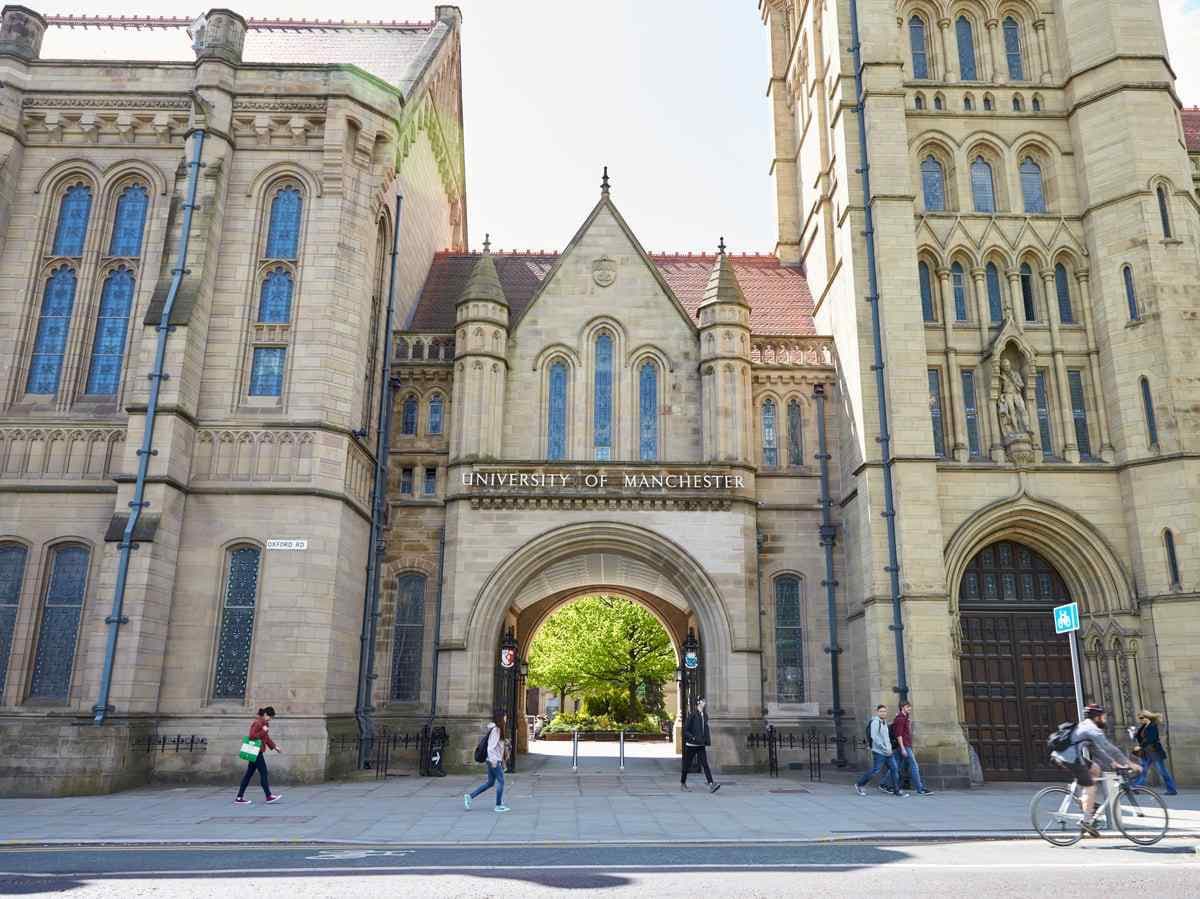
The University of Manchester is home to one of the UK’s largest and most prestigious dental schools, offering world-class training for future dentists. Ranked in the Top 10 for Dentistry in the UK (QS World University Rankings 2025), Manchester combines cutting-edge research, early clinical exposure, and strong NHS partnerships to prepare you for a successful dental career.
From Year 1, you’ll gain hands-on experience in the University Dental Hospital of Manchester and community outreach clinics, treating real patients under expert supervision. Teaching is delivered through enquiry-based and team-based learning, ensuring you develop both academic knowledge and practical clinical skills.
Students also have the opportunity to take an intercalated BDS degree, pausing their dental studies for a year to achieve a BSc in a related bioscience or healthcare subject.
This unique option allows you to explore research interests and strengthen your career prospects.
Manchester was the first UK dental school to integrate community outreach into its curriculum, meaning you’ll make a difference while you study by supporting patients in local practices and health centres.
Graduates leave as highly skilled, reflective practitioners, ready for Dental Foundation
Training and future specialisation in areas such as orthodontics, oral surgery, and restorative dentistry.
The course is fully accredited by the General Dental Council (GDC).
For 2026 entry, 44% of home applicants interviewed at Manchester received an offer (139 of 319).
~14% of applicants receive an offer
2026 entry data
For 2026 entry, Manchester received 981 home applications for Dentistry and invited 319 applicants to interview (33%). It made 139 offers, so 14% of home applicants received an offer.
Home applicants
| Entry year | Applications | Interviewed% of applicants | Offers | Post-interview success% of interviewed | Offer rate% of applicants |
|---|---|---|---|---|---|
| 2026 | 981 | 31933% | 139 | 44% | 14% |
| 2025 | 730 | 35148% | 126 | 36% | 17% |
| 2024 | 780 | 33943% | 107 | 32% | 14% |
| 2023 | 858 | 34040% | 99 | 29% | 12% |
| 2022 | 869 | 30635% | 80 | 26% | 9% |
| 2021 | 1,018 | 36336% | 175 | 48% | 17% |
| 2020 | 983 | 53755% | 208 | 39% | 21% |
International applicants
| Entry year | Applications | Interviewed% of applicants | Offers | Post-interview success% of interviewed | Offer rate% of applicants |
|---|---|---|---|---|---|
| 2026 | 135 | 3727% | 9 | 24% | 7% |
| 2025 | 94 | 1516% | 11 | 73% | 12% |
| 2024 | 172 | 1810% | 8 | 44% | 5% |
| 2023 | 146 | 118% | 8 | 73% | 5% |
| 2022 | 184 | 127% | 12 | 100% | 7% |
| 2021 | 83 | 67% | 4 | 67% | 5% |
| 2020 | 88 | 1719% | 11 | 65% | 13% |
Last checked September 2026.
The Bachelor of Dental Surgery (BDS) course will prepare you for a dentistry career through a combination of a clinical study and basic and advanced dental sciences.
Early Clinical Experience
You will be introduced to the clinical environment in the first semester of Year 1, enabling you to integrate theory and practice early on in the course.
Interdisciplinary learning
Learn alongside students and professionals from a range of backgrounds, including those training in complementary professions such as dental nursing and therapy.
Intercalation opportunities
You can study another subject to achieve a BSc award over one year between Years 2 and 3 of the BDS course.
Foundation year available
Students who do not have the required science qualifications for Year 1 entry but have achieved good grades in other non-science subjects may apply for the BDS with Foundation Year .
The teaching at Manchester Dental School is hands-on and integrated, with students introduced to both the sciences underpinning dentistry and clinical settings from as early as the first semester. Teaching blends lectures, seminars, and lab sessions with real patient experience in the University Dental Hospital and community outreach clinics. Teamwork is at the heart of the learning experience, as BDS students often work alongside dental hygiene and therapy students, fostering collaboration, confidence, and patient-centred care throughout their training.
Yes
Expert 1-1 support for your application
1-1 support from qualified dentists and admissions experts across every stage of your dentistry application.
Interview Coaching
MMI & panel, with dentists
1-1 Mock Interview
Marked on real criteria
Dentistry Ultimate Package
Full application support
Universities revise entry requirements between cycles, usually in August and September. Always confirm with the university before you apply.
AAA at A level including Biology/Human Biology and Chemistry. Where the science A-level syllabus is available with a practical element this also must be offered and passed.
At least seven GCSEs at grade 7 (A) or above, including GCSE/IGCSE English Language, Mathematics and at least two science subjects at a minimum of grade 6 (B).
Still sitting your GCSEs? Protect the grades this course screens for with 1-1 GCSE Maths, Biology and Chemistry tutoring from medics.
36 points are required overall (to include core points) with at least 666 at higher level. If Maths and English Language are not offered as part of the Diploma, they should be offered at GCSE or IGCSE at grade B (6) or above. Major subjects must include Chemistry and Biology, plus one further subject at higher level. We accept both Maths options as part of the Diploma.
AAAA at Highers by the end of Secondary 5 and at least AA at Advanced Highers by the end of Secondary 6.
We require at least two Advanced Highers at grades AA by the end of Secondary 6.
Graduate applicants must have achieved or be predicted a minimum of an upper second class (2:1) honours degree and should have achieved a minimum of BBB at A-level (32 in IB) in their first sitting. Applicants with a relevant science degree are exempted from the subject specification at A-Level, but must still meet the BBB academic standard. Applicants offering other degrees will need to hold at least two science subjects at A-level including Biology and Chemistry. UCAT, Maths at minimum Grade B (6) at GCSE and English Language requirements also apply.
(IELTS): A minimum average score of 7.0 and with not less than 6.5 in any one component taken at the same sitting;
Manchester’s BDS programme permits one A-level resit, but only under certain conditions-specifically, the resit must be of either Year 12 or Year 13 (not both), the applicant should have achieved at least grade B in all subjects at the first sitting, and must still meet the required A*AA grades upon resit.
Deferred entry is allowed and encouraged, provided it’s clearly stated in the UCAS application. Deferral requests are best made at the point of application, as they may be harder to accommodate once an offer has been given.
Manchester accepts dental students who are 17 or over at the start of the course, so you do not have to be 18. It will not consider anyone who would still be 16 on the day the course starts.
Yes. Manchester publishes a contextual adjustment for dentistry applicants.
Who it applies to, in the university's own words:
Contextual A level offer of AAB including Chemistry and Biology, against a standard AAA. WP Plus and WP Plus Plus applicants may offer six GCSEs at grade 7 or above rather than seven. No contextual UCAT threshold reduction is published for dentistry, and SJT bands 3 and 4 are not considered.
The dentistry application process page says nothing about widening participation. The former pre-dental entry route now returns a 404 for 2026 and 2027, and was in any case an academic-background route rather than a deprivation-based one.
Source: Manchester BDS course page. Last checked 16 September 2026.
Compare contextual offers at every UK dental school, with each university's criteria in its own words.
Most useful
***Note: scores lower than this would be considered holistically (hence why average scores can be lower than the cut-off).
👉🏼 AVERAGE UCAT score INVITED to interview (not a cut-off, includes both non-WP & WP - so take some caution)
👉🏼 AVERAGE UCAT score GIVEN AN OFFER to interview (not a cut-off)
🏆 Manchester Dentistry Admission Statistics (Home)
🏆 Manchester Dentistry Admission Statistics (International)
We do not use predicted grades for A Levels for 2024 entry, we would expect students to achieve AAA including Chemistry and Biology/Human Biology on results day.
📝 PS - Have your PS checked - 5⭐ Rated
🎙️ Interviews - 1-1 Dentistry Interview (Panel & MMI) Tutoring & Mocks Online tailored to Manchester- 5⭐ Rated
No
No
For 2026 entry, Manchester are expecting some in person work experience:
We would like to see some work experience focused towards dentistry, but other types of work experience are also acceptable.
We are expecting some in-person work experience. Please note that we are prepared to accept work experience in a non-traditional dental setting, such as a care setting.
Where in-person work experience is limited, we advise you to supplement this with alternatives.
Speaking to dentists, other members of the dental team and current dental students about what a dental career involves is also an excellent way to become familiar with the career pathway. Online resources and MOOCs are also useful supplements to help you develop your understanding of the course and the profession.
It’s really important that you are able to reflect appropriately on the work experience you’ve done. We want to see evidence that you understand the qualities and attributes required to become a healthcare professional.
We are trying to ascertain that you have a clear idea of what it is like to study dentistry and what the role of a dentist entails. Tell us how you got involved in such work, how much time you spend doing it and, most importantly, what you have gained from it.
This will give you additional time to carry out work experience if you still want to. This, however, will not be a requirement.
Work experience taken outside of a two-year timeframe is also acceptable.
We will also allow applicants to evidence their insight in other ways on their Non-Academic Information Form and at interview. Speaking to dentists, other members of the dental team and current dental students about what a dental career involves is also an excellent way to become familiar with the career pathway.
We encourage applicants to learn more about a career in dentistry or dental hygiene and therapy to develop the values, attitudes and behaviours required of a dental professional. You may wish to read through online resources related to the career pathway in order to learn about the key issues in dentistry.
Not looked at (2026 Entry).
It appears as though Manchester will not be using the NAIF (Non Academic Information Form) this year for BDS Dentistry.
See our dentistry personal statement examples: model statements in the new UCAS format, each with commentary on what works and why.
Interview preparation
Our 1-1 dentistry interview tutoring is online and your tutor is matched to Manchester, so every mock runs in the multiple mini interview (MMI) format Manchester uses, with written feedback after each one.
We cover every UK dental school and last year our students were offered places at every one, including Manchester.
Ten hours is £749 (£75 an hour) and includes the £349 Ultimate Q&A Guide free (300+ questions with model answers written by dentists), plus WhatsApp support between sessions.

 Most popular
1-1 Interview Coaching
Our best-value full programme
Free Q&A Guide (£349)
Buy
1-1 Interview Coaching
Deepest prep for multiple offers and Oxbridge
Free Q&A Guide (£349)
Buy

Interview Guide
Model answers to every common interview question
Free with any coaching package
BuyNot sure which option fits? Explore all interview coaching or book a free consultation.
No
No. Manchester offers only the five-year BDS (A206); its former pre-dental entry route has been discontinued. Eligible applicants can receive a contextual reduced offer of AAB (including a non-science subject) instead of the standard AAA.
The University of Manchester assesses BDS Dentistry applicants through a Multiple Mini Interview (MMI). The university officially states the MMI consists of five stations, each eight minutes long, with each interview lasting seven minutes; candidates rotate through the stations, starting at a randomly allocated one, and there is no reading or writing component and no advance information provided.
Home applicants attend on campus in Manchester, while international applicants domiciled overseas are interviewed online via Zoom. The interview does not test A-level science knowledge; instead it evaluates innate skills, competencies, personal qualities and behavioural attributes, including communication, work/volunteering experience and its influence on career choice, and an informed layperson's awareness of current dental issues and ethical dilemmas.
The University of Manchester has not published specific interview dates for 2027 entry Dentistry. Its official pages say only that Manchester BDS Dentistry interviews normally run from January to March, without naming dates or stating which cycle that pattern belongs to.
The interview is a five station MMI. Each station lasts seven minutes and has its own interviewer, with gaps of two minutes or more between stations. Home applicants attend in person in Manchester, and applicants domiciled overseas may interview online via Zoom.
Comparing this against your other choices? Every UK dental school's interview window is in one table, checked against each university's own website, in our UK dental school interview dates guide.
Manchester Dental School looks for the following qualities in their interview applicants:
During the interview, applicants will be asked about their motivation for pursuing dentistry, seeking specific experiences that influenced their decision. Work experience, not limited to traditional dentistry environments, is highly valued.
Candidates should discuss their experiences, emotional responses, and lessons learned. Ethical issues may be discussed to assess coherent reasoning, without expecting a specific viewpoint. Applicants should demonstrate tolerance, acceptance, and understanding, and may share personal experiences to inform discussions if desired.
In summary, Manchester Dental School seeks to offer places to applicants who possess strong communication skills, genuine motivation for dentistry, diverse experiences, ethical awareness, and a tolerant and accepting attitude.
These are suggested practice questions based on publicly available information and past trends. They are not official questions from the University and may not appear in your interview. Use them as part of a broader preparation strategy.
Prepare with 1-1 dentistry interview coaching and practise with our dentistry interview questions guide.
Practise under timed conditions with our free generator. It builds a randomised circuit from real Manchester interview themes, with follow-up questions and a notes summary you can keep. It opens preset to Manchester's own interview format, and you can record your answers to watch them back.
Faculty of Biology, Medicine and Health
Oxford Road
Manchester
M13 9PLH
Tel: 0161 306 0211
Boost your dental school application
AAA at A level including Biology/Human Biology and Chemistry. Where the science A-level syllabus is available with a practical element this also must be offered and passed.
At least seven GCSEs at grade 7 (A) or above, including GCSE/IGCSE English Language, Mathematics and at least two science subjects at a minimum of grade 6 (B).
Manchester’s BDS programme permits one A-level resit, but only under certain conditions-specifically, the resit must be of either Year 12 or Year 13 (not both), the applicant should have achieved at least grade B in all subjects at the first sitting, and must still meet the required A*AA grades upon resit.
Yes, Manchester requires the UCAT for entry to Dentistry.
Ranked according to UCAT score (2024 Entry).
SJT Band 4 = Rejection.
SJT Band 3 = de-prioritised (ie SJT Band 1&2 are preferred).
Predicted grades are not used.
2025 Entry (/3600): 2840-2950 (non-WP, range as depends on SJT Band), 2750-2800 (WP+, range as depends on SJT Band).
2024 Entry (/3600): 2820 (non-WP), 2760 (WP+).
2023 Entry (/3600): 2810 (non-WP), 2690 (WP+).
2022 Entry (/3600): 2800* (non-WP), 2660 (WP+).
2021 Entry (/3600): 2740* (non-WP), 2600 (WP+).
For 2026 entry, 14% of home applicants to Dentistry at Manchester received an offer (139 offers from 981 applications). An offer is not a confirmed place.
33% of home applicants for Dentistry at Manchester were invited to interview for 2026 entry (319 of 981).
Of the home applicants interviewed for Dentistry at Manchester in 2026, 44% received an offer (139 of 319).
Yes, Manchester interviews applicants for Dentistry, using a multiple mini interview (MMI) format.
For 2026 entry, 33% of home applicants for Dentistry at Manchester were invited to interview (319 of 981).
Manchester uses a multiple mini interview (MMI) format for Dentistry interviews.
Yes. Our 1-1 dentistry interview tutoring is online and your tutor is matched to Manchester, so every mock runs in the multiple mini interview (MMI) format Manchester uses, with written feedback after each one.
We cover every UK dental school and last year our students were offered places at every one, including Manchester.
Ten hours is £749 (£75 an hour) and includes the £349 Ultimate Q&A Guide free (300+ questions with model answers written by dentists), plus WhatsApp support between sessions.
Book on the dental school interview coaching page at www.theukcatpeople.co.uk/dentistry-interview-coaching, or start with a single £125 mock: upgrade within 7 days of your feedback and the full £125 comes off any package.
The Dentistry interview at Manchester covers motivation & manchester context, manual dexterity & attributes of a dentist, ethical scenarios, professionalism & gdc principles, communication skills, role play scenarios, nhs & current issues in dentistry and teamwork, resilience & equity.
The University of Manchester has not published specific interview dates for 2027 entry Dentistry. Its official pages say only that Manchester BDS Dentistry interviews normally run from January to March, without naming dates or stating which cycle that pattern belongs to.
No, Manchester does not offer a foundation or gateway year for Dentistry.
No. Manchester offers only the five-year BDS (A206); its former pre-dental entry route has been discontinued. Eligible applicants can receive a contextual reduced offer of AAB (including a non-science subject) instead of the standard AAA.
No, Manchester does not offer a graduate entry route for Dentistry.
No, Manchester does not formally score the personal statement for Dentistry applicants.
Not looked at (2026 Entry).
It appears as though Manchester will not be using the NAIF (Non Academic Information Form) this year for BDS Dentistry.

Want expert help getting into Manchester?
From admissions test prep and personal statement editing to interview coaching and our all-in-one Ultimate Package, we help applicants at every stage. Tell us where you are and we will recommend the right option.
Ultimate Package students from our 2025/26 cycle, with their UCAT scores and offers, who trained with us for the UCAT, personal statements and interviews.
“Harry got my UCAT up to 2,590, working through the sections I kept dropping marks on week by week. Gemma then ran my interview practice so the MMI stations didn't catch me out, and Dr Akash mentored me the whole way through. I'm off to King's for Medicine.”
“The interview prep was the part that actually moved the needle. Proper mock MMIs, not just lists of questions, and feedback that was honest about what I was getting wrong. I ended up with four offers and firmed UCL.”
“The Ultimate Package kept me organised from UCAT through to interviews. They knew what dental schools actually ask and tightened up my personal statement. Four offers in the end, and I'm going to Birmingham.”
“Vet applications come down to the written SAQs as much as the interview. Dr Rebecca went through my SAQs line by line, sharpened my answers and prepped me for the panels. I came away with four offers and chose the RVC.”
Book your FREE consultation today
Click to book your free consultation