Interview Coaching
MMI & panel, with dentists
Reviewed by Dr Sonal Gandhi, BDS (Hons), King's College London
Trusted UK dentistry admissions specialists since 2012 · 2,700+ students taught
At a glance
Bristol dentistry interviews for 2027 entry are listed by the university as late December 2026 to March 2027. The interview format is structured interview, online.
Source: University of Bristol official page, checked 16 September 2026. Universities can change interview dates, so confirm before you book travel.
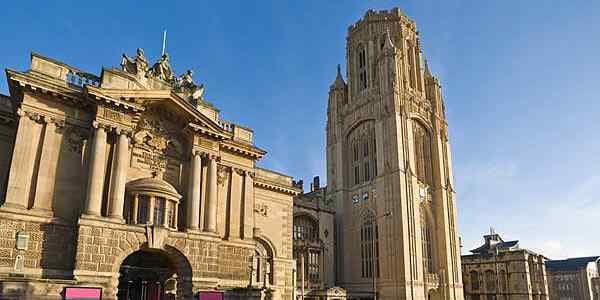
The University of Bristol Dental School delivers a five-year Bachelor of Dental Surgery (BDS) degree that integrates scientific teaching, clinical skills, and professional development.
In September 2023 the Dental School relocated to a new purpose-built facility, designed with input from staff and students, equipped with the latest simulation and clinical training technologies.
The programme is structured around four core themes: practitioner, scholar and scientist, professional and agent of change, and person and citizen.
Students begin in Year One with foundations in biomedical sciences, oral health, and communication, alongside simulated clinical skills in the new training facilities.
From Year Two onwards, students provide supervised dental care to patients with an increasing variety of oral and dental conditions, progressing in responsibility and complexity each year.
An intercalated year is available after Year Three, allowing students to obtain a BA, BSc, or Master’s degree in a related discipline.
Clinical training is delivered both within the Dental School and in placements across Bristol and the surrounding region, ensuring exposure to a diverse patient population.
The course emphasises a patient-centred approach, teamwork, and professionalism, with student welfare supported by a personal tutor system and senior tutor network.
The BDS is accredited by the General Dental Council (GDC), and graduates are eligible to register and enter Dental Foundation Training before pursuing careers in general practice, hospital dentistry, community services, research, or specialist training.
This five-year degree comprises clinical activity with integrated scientific and technical teaching. With a strong core of clinical work throughout, theory, science, clinical skills, personal and professional development, and teamwork are integrated at the relevant levels.
Year one introduces the clinical environment through peer group activities and observations. Clinical skills training and patient contact commence early in year two.
Later in the Bristol Uni Dentistry program you can choose to intercalate in a science subject to obtain an Honours BA or BSc. There is the opportunity to undertake community work in the UK or abroad during your elective in year four.
You will begin your dental practice in the Bristol Dental Hospital before extending your practice to community teaching clinics in the city. Here you will treat patients with a wide variety of dental diseases in a primary care setting in preparation for dental practice beyond graduation.
Yes
Universities revise entry requirements between cycles, usually in August and September. Always confirm with the university before you apply.
AAA including Chemistry and one of Biology, Physics or Mathematics.
7 or A in GCSE Mathematics or equivalent. 4 or C in GCSE English or equivalent
Still sitting your GCSEs? Protect the grades this course screens for with 1-1 GCSE Maths, Biology and Chemistry tutoring from medics.
36 points overall with 18 at Higher Level, including 6, 6 at Higher Level in Chemistry and one of Biology, Physics or Mathematics (either Analysis and Approaches or Applications and Interpretations).
AA in Chemistry and either Biology, Physics or Mathematics, and Standard Higher: AAAAB.
Graduates are required to obtain a 2:1 in their degree and BBB at A-level including Chemistry and one of Biology, Physics or Mathematics.
IELTS 7.5 overall with 7.0 in all skills
Not accepted except in extenuating circumstances
Yes- you may apply one year in advance and defer your place until the next academic year. Clearly state your intention to defer in your UCAS application
Bristol publishes no minimum age for its BDS. The 2027 admissions statement for A206 says nothing about age, and the university accepts under-18s generally, subject to a signed parental consent form, a UK emergency contact and approved accommodation.
Expert 1-1 support for your application
1-1 support from qualified dentists and admissions experts across every stage of your dentistry application.
Interview Coaching
MMI & panel, with dentists
1-1 Mock Interview
Marked on real criteria
Dentistry Ultimate Package
Full application support
Yes. Bristol publishes a contextual adjustment for dentistry applicants.
Who it applies to, in the university's own words:
Contextual A level offer of ABB, including an A in Chemistry and a B in one of Biology, physics or maths, against a standard AAA. The dentistry admissions statement puts it as contextual offers usually two grades lower than the typical offer, and notes there is no UCAT cut-off score, though the UCAT ranks applicants for interview.
There is also a separate widening-access route: BDS Gateway to Dentistry, with automatic progression to BDS Dentistry.
The dentistry admissions statement defers eligibility detail to the central contextual offers page rather than listing dentistry-specific criteria.
Source: Bristol BDS course page. Last checked 16 September 2026.
Compare contextual offers at every UK dental school, with each university's criteria in its own words.
Most useful
100% weighting on UCAT (no UCAT cut-off, everyone is ranked, 2024 Entry)
As we do not weight A-levels or GCSEs (or equivalent qualifications), applicants who are predicted to, or have already achieved our minimum academic entry requirements will then have their application scored with a 100% weighting on the UCAT result, which will be used to select candidates for interview.
Once invited to interview, UCAT is not looked at.
👉🏼 LOWEST UCAT score INVITED TO INTERVIEW At Bristol BDS Dental School ie Bristol Dentistry Cut Off Score [non-WP]
👉🏼 AVERAGE UCAT score INVITED TO INTERVIEW At Bristol BDS Dental School [Non-WP]
👉🏼 LOWEST UCAT Score GIVEN AN OFFER at Bristol Dental School (BDS):
👉🏼 AVERAGE UCAT Score GIVEN AN OFFER at Bristol Dental School (BDS) non-WP:
👉🏼 Historic Application Statistics
As you can see, once you have an interview at Bristol Dental School you have approximately a 50% chance of being given an offer
Selection Criteria:
As we do not weight A-levels or GCSEs (or equivalent qualifications), applicants who are predicted to, or have already achieved our minimum academic entry requirements will then have their application scored with a 100% weighting on the UCAT result, which will be used to select candidates for interview.
SJT is not used when selecting candidates (2025 Entry)
📝 PS - Have your PS checked - 5⭐ Rated
🎙️ Interviews - 1-1 Dentistry Interview (Panel & MMI) Tutoring & Mocks Online tailored to Bristol- 5⭐ Rated
No
No
2 weeks preferred
Work experience is not a requirement for this course but we recommend two weeks' work experience to inform applicants' decisions. This may also help during an interview.
While not a requirement for the course, we would suggest that applicants have a minimum of two weeks’ work experience. Suitable work experience and subsequent reflection is important to inform an applicant about their potential vocation and what a career in healthcare entails.
Applicants may be asked to reflect upon work experience during their intervew. We recognise that not all applicants are able to obtain clinical work experience, but encourage applicants to seek out opportunities to work with the public in a customer service role, or volunteering in a care or health environment (nursing home, local hospice, shelter for the homeless, working with people with disabilities or special needs), or youth group. We are aware that many of applicants will have been unable to undertake work experience during the coronavirus crisis. Please be assured that we will be taking the situation into account and you will not be penalised should your ability to gain relevant work experience have been adversely affected.
We encourage applicants to seek opportunities to develop their awareness of the role of a dental practitioner, and the skills and attributes required of such roles through means such as online research, supporting their families and communities, etc. Should they be invited to interview, applicants are required to complete a form prior to attending which documents the type and duration of their work experience. The contents of this form can be used as a prompt during the interview.
The personal statement is not scored.
We may refer to the personal statement and reference to differentiate between applicants with similar academic profiles. In these cases, we use the following criteria:
See our dentistry personal statement examples: model statements in the new UCAS format, each with commentary on what works and why.
Interview preparation
Our 1-1 dentistry interview tutoring is online and your tutor is matched to Bristol, so every mock runs in the interview format Bristol uses (recorded as Structured), with written feedback after each one.
We cover every UK dental school and last year our students were offered places at every one, including Bristol.
Ten hours is £749 (£75 an hour) and includes the £349 Ultimate Q&A Guide free (300+ questions with model answers written by dentists), plus WhatsApp support between sessions.

 Most popular
1-1 Interview Coaching
Our best-value full programme
Free Q&A Guide (£349)
Buy
1-1 Interview Coaching
Deepest prep for multiple offers and Oxbridge
Free Q&A Guide (£349)
Buy

Interview Guide
Model answers to every common interview question
Free with any coaching package
BuyNot sure which option fits? Explore all interview coaching or book a free consultation.
No
Yes. Alongside the standard five-year BDS (A206), Bristol runs Gateway to Dentistry (BDS), UCAS code A208, a six-year widening-participation route with a foundation year for applicants from backgrounds under-represented in dentistry who do not meet the standard A-level offer. Check the university website for the full eligibility criteria, which change year to year.
A levels/Scottish Highers A-levels: BBC including B in Biology or Chemistry. Applicants with predicted or achieved grades of AAB or above, or with A in Chemistry, are not eligible for this course. SQA: Advanced Higher: BB including Biology or Chemistry, and Standard Level: BBBBC. Applicants with achieved or predicted Advanced Higher grades of AA, or with Chemistry at an A grade, are not eligible for this course.
GCSEs/Scottish Nationals 4 (C) in GCSE Maths or equivalent (Standard numeracy requirement) and 4 (C) in GCSE English or equivalent (Standard literacy requirement).
International Baccalaureate 29 points overall, including 5 at Higher Level in Biology or Chemistry. Applicants with predicted or achieved grades of 33 points overall including 16 at Higher Level, or with 6 at Higher Level in Chemistry, are not eligible for this course.
BTEC offer DMM in Applied Sciences, Medical Sciences or Health and Social Care (Science pathway). Applicants who are taking BTECs plus A-level Chemistry are not eligible for this course.
Yes
The University of Bristol assesses BDS Dentistry applicants through a structured interview (explicitly not a Multiple Mini Interview) delivered remotely via Zoom. The university states the formal interview lasts approximately 45-60 minutes and involves four assessors who are present throughout the single-panel session.
Interviews for 2026 entry ran between December 2025 and February 2026, with candidates required to respond to their invitation within two weeks. The interview evaluates suitability for dentistry, including professional conduct and integrity, motivation and understanding of the profession, and communication through structured questioning and set tasks.
Applicants are shortlisted for interview against a UCAT threshold that varies year on year.
For 2027 entry, the University of Bristol admissions statement for A206 Dentistry says applicants are shortlisted on UCAT score and that interviews run from late December to March. Applicants are assessed using a formal online interview system, and no offer is made without an interview.
The Bristol interviews web page has not been updated for 2027 entry and still shows the 2026 entry pattern: various dates between December 2025 and February 2026, hosted remotely on Zoom, lasting about 45 to 60 minutes with four assessors, plus two prepared tasks.
Comparing this against your other choices? Every UK dental school's interview window is in one table, checked against each university's own website, in our UK dental school interview dates guide.
Several topics are more likely to come up at the University of Bristol Dental School MMI Interview, which can be derived from past Bristol MMI stations, including:
Bristol will always have some slightly unusual stations. For 2025 entry this is what tasks they asked you to prepare in advance:
These are suggested practice questions based on publicly available information and past trends. They are not official questions from the University and may not appear in your interview. Use them as part of a broader preparation strategy.
👉🏼 Read more: 230+ Dentistry Interview Questions
Prepare with 1-1 dentistry interview coaching and practise with our dentistry interview questions guide.
Practise under timed conditions with our free generator. It builds a randomised circuit from real Bristol interview themes, with follow-up questions and a notes summary you can keep. It opens preset to Bristol's own interview format, and you can record your answers to watch them back.
University of Bristol
Lower Maudlin Street
Bristol
BS1 2LY
Tel: 0117 394 1649
Email: choosebristol-ug@bristol.ac.uk
Web: bristol.ac.uk/dental/
Boost your dental school application
AAA including Chemistry and one of Biology, Physics or Mathematics.
7 or A in GCSE Mathematics or equivalent. 4 or C in GCSE English or equivalent.
Not accepted except in extenuating circumstances.
Yes, Bristol requires the UCAT for entry to Dentistry.
100% weighting on UCAT (no UCAT cut-off, everyone is ranked, 2024 Entry).
As we do not weight A-levels or GCSEs (or equivalent qualifications), applicants who are predicted to, or have already achieved our minimum academic entry requirements will then have their application scored with a 100% weighting on the UCAT result, which will be used to select candidates for interview.
Once invited to interview, UCAT is not looked at.
Yes, Bristol interviews applicants for Dentistry.
The interview format is recorded as: Structured.
Bristol uses a Structured interview format for Dentistry interviews.
Yes. Our 1-1 dentistry interview tutoring is online and your tutor is matched to Bristol, so every mock runs in the interview format Bristol uses (recorded as Structured), with written feedback after each one.
We cover every UK dental school and last year our students were offered places at every one, including Bristol.
Ten hours is £749 (£75 an hour) and includes the £349 Ultimate Q&A Guide free (300+ questions with model answers written by dentists), plus WhatsApp support between sessions.
Book on the dental school interview coaching page at www.theukcatpeople.co.uk/dentistry-interview-coaching, or start with a single £125 mock: upgrade within 7 days of your feedback and the full £125 comes off any package.
The Dentistry interview at Bristol covers motivation & bristol context, manual dexterity & attributes of a dentist, ethical scenarios, professionalism & gdc principles, communication skills, role play scenarios, nhs & current issues in dentistry and teamwork, resilience & equity.
For 2027 entry, the University of Bristol admissions statement for A206 Dentistry says applicants are shortlisted on UCAT score and that interviews run from late December to March. Applicants are assessed using a formal online interview system, and no offer is made without an interview.
Yes, Bristol offers a foundation or gateway route into Dentistry.
Yes. Alongside the standard five-year BDS (A206), Bristol runs Gateway to Dentistry (BDS), UCAS code A208, a six-year widening-participation route with a foundation year for applicants from backgrounds under-represented in dentistry who do not meet the standard A-level offer. Check the university website for the full eligibility criteria, which change year to year.
No, Bristol does not offer a graduate entry route for Dentistry.
No, Bristol does not formally score the personal statement for Dentistry applicants.
The personal statement is not scored.
We may refer to the personal statement and reference to differentiate between applicants with similar academic profiles. In these cases, we use the following criteria Evidence of Work Experience & motivation and understanding of dentistry.
No, Bristol accepts Dentistry applicants who are under 18.
Yes, you can intercalate during Dentistry at Bristol.

Want expert help getting into Bristol?
From admissions test prep and personal statement editing to interview coaching and our all-in-one Ultimate Package, we help applicants at every stage. Tell us where you are and we will recommend the right option.
Ultimate Package students from our 2025/26 cycle, with their UCAT scores and offers, who trained with us for the UCAT, personal statements and interviews.
“Harry got my UCAT up to 2,590, working through the sections I kept dropping marks on week by week. Gemma then ran my interview practice so the MMI stations didn't catch me out, and Dr Akash mentored me the whole way through. I'm off to King's for Medicine.”
“The interview prep was the part that actually moved the needle. Proper mock MMIs, not just lists of questions, and feedback that was honest about what I was getting wrong. I ended up with four offers and firmed UCL.”
“The Ultimate Package kept me organised from UCAT through to interviews. They knew what dental schools actually ask and tightened up my personal statement. Four offers in the end, and I'm going to Birmingham.”
“Vet applications come down to the written SAQs as much as the interview. Dr Rebecca went through my SAQs line by line, sharpened my answers and prepped me for the panels. I came away with four offers and chose the RVC.”
Book your FREE consultation today
Click to book your free consultation