Interview Coaching
MMI & panel, with dentists
Reviewed by Dr Sonal Gandhi, BDS (Hons), King's College London
Trusted UK dentistry admissions specialists since 2012 · 2,700+ students taught
At a glance
Queens Belfast has not published dentistry interview dates for 2027 entry yet. Most UK interviews run December to March. The interview format is MMI, in person; online for international.
Source: Queen's University Belfast official page, checked 16 September 2026. Universities can change interview dates, so confirm before you book travel.
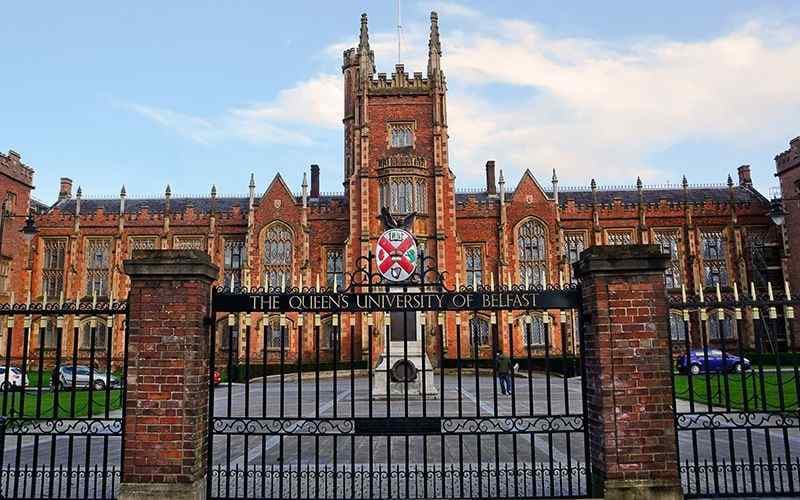
The Dental School at Queen's has been responsible for delivering dental education in Northern Ireland since 1920. In the National Student Survey, where final year students have an opportunity to give anonymous feedback on the completion of their 5-year course, the Bachelor of Dental Surgery degree at Queen’s University is consistently highly rated.
Of those interviewed, 43% went on to receive an offer.
Home applicants
| Entry year | Applications | Interviewed% of applicants | Offers | Post-interview success% of interviewed | Offer rate% of applicants |
|---|---|---|---|---|---|
| 2024 | — | 204 | 87 | 43% | — |
| 2023 | — | 181 | 68 | 38% | — |
| 2022 | — | 183 | 54 | 30% | — |
| 2021 | — | 166 | 54 | 33% | — |
Last checked June 2026.
Stage 1 and 2
Students are attached to dental clinics and also undertake modules where they learn about the foundations of clinical practice including the biomedical and behavioural sciences as well as the principles of dental patient management, dental health promotion and core clinical dental skills.
Stage 3
Introduces a greater clinical component within the various clinical dental specialities as well as developing students’ core clinical skills in Restorative dentistry. Students also learn about the impact of systemic disease in dentistry.
Stage 4 and 5
Emphasis is on teaching advanced dental clinical skills within the range of clinical specialities in dentistry. Students carry out the full range of dental treatment for their own adult and child patients. Clinical tuition takes place in classes within the Dental School and in Outreach dental clinics.
Teaching at Queen’s combines modern clinical facilities with early hands-on experience. From year one, students develop practical and operative skills using sophisticated simulation labs-such as haptic dental simulators, prosthetics labs, and digital dentistry techniques-and then smoothly transition to treating real patients across both on-campus clinics and regional outreach sites. This approach ensures students grow their knowledge, confidence, and clinical competence in a realistic, supportive setting.
Expert 1-1 support for your application
1-1 support from qualified dentists and admissions experts across every stage of your dentistry application.
Interview Coaching
MMI & panel, with dentists
1-1 Mock Interview
Marked on real criteria
Dentistry Ultimate Package
Full application support
Universities revise entry requirements between cycles, usually in August and September. Always confirm with the university before you apply.
AAA at A-level including Biology/Human Biology and Chemistry. GCSE Mathematics minimum grade C/4 is required if not offered at AS-level or A-level. For A-level School Leavers a maximum of one Applied A-level will be counted. Please also note that only one Mathematics subject will be counted at A-level. A-level Critical Thinking and both A-level and AS-level General Studies are not acceptable.
For NI and GB applicants, GCSE performance in the best 9 subjects will be scored with 4 points awarded for an A* (grade 9 in the new grading scale) and 3 for an A grade (grade 8/7 in the new grading scale). Points are not awarded for B and C grades (grades 6, 5 and 4 in the new grading scale).
Still sitting your GCSEs? Protect the grades this course screens for with 1-1 GCSE Maths, Biology and Chemistry tutoring from medics.
36 points overall including 6 6 6 at Higher Level including Biology and Chemistry + GCSE Mathematics grade C/4 or an equivalent acceptable to the University
Applications from graduates or those in the final year of their degree are considered and the full academic background is taken into account. The minimum A-level threshold (or equivalent in other qualifications) is either BBB at first attempt, ie: prior to commencing degree studies for those with an Upper Second Class Honours degree, or BBC at the first attempt for those with a First Class Honours Degree or a PhD and an Upper Second Class Honours degree. Applicants must have an appropriate science background at GCSE and A-level or equivalent (see below) and at least a 2.1 Honours classification in their primary (first) degree, which can be from a wide range of different subjects. A-level Chemistry and Biology/Human Biology are required. In addition, GCSE Mathematics minimum grade C/4 is required if not offered at AS-level or A-level. Graduate applicants who fulfil these criteria are then scored with their UCAT.
Graduate applicants from a non-science background but who fulfil the conditions in terms of grades achieved at the first attempt (ie in their original choice of A-level subjects) and degree performance will be considered if they undertake the appropriate Science qualifications on completion of their degree.
IELTS score of 7.5 with a minimum of 7.0 in Speaking and Listening and 6.0 in the other test components
No specified
Yes
It is not possible to admit students on to the five-year programme under the age of 16
Most useful
The UCAT is considered in a holistic manner - there is no specific UCAT Cut Off Score (2026 Entry)
👉🏼 Past Thresholds ie Cut Off Scores for Queens Belfast BDS Dentistry Programme for INVITATION TO INTERVIEW
👉🏼 AVERAGE Queens Belfast BDS Dentistry Score for INVITATION TO INTERVIEW
👉🏼 LOWEST Queens Belfast BDS Dentistry Score for GIVEN AN OFFER
👉🏼 AVERAGE Queens Belfast BDS Dentistry Score for GIVEN AN OFFER
UCAT Points Scoring (Maximum 9 Points) - 2026 Entry (prior to this was only 6 points)
👉🏼 GCSE Points Scoring (Maximum 36 Points) - Top 9 GCSEs are scored:
Achieved A Level grades meeting the requirements = 36/36 points confirmed
UCAT Score /6 [When out of 3600]
GCSE Score /36
Achieved A Level grades meeting the requirements = 36/36 points confirmed
International applicants are considered holistically, no UCAT needed.
Consideration of SJT use for 2023 entry
📝 PS - Have your PS checked - 5⭐ Rated
🎙️ Interviews - 1-1 Dentistry Interview (Panel & MMI) Tutoring & Mocks Online tailored to Queen's Belfast- 5⭐ Rated
No
No
Work experience in a dental clinical setting is not a requirement for admission.
No
Personal statements are not scored as part of the selection process and the following general factors are taken into account when considering applications:
See our dentistry personal statement examples: model statements in the new UCAS format, each with commentary on what works and why.
Interview preparation
Our 1-1 dentistry interview tutoring is online and your tutor is matched to Queens Belfast, so every mock runs in the multiple mini interview (MMI) format Queens Belfast uses, with written feedback after each one.
We cover every UK dental school and last year our students were offered places at every one, including Queens Belfast.
Ten hours is £749 (£75 an hour) and includes the £349 Ultimate Q&A Guide free (300+ questions with model answers written by dentists), plus WhatsApp support between sessions.

 Most popular
1-1 Interview Coaching
Our best-value full programme
Free Q&A Guide (£349)
Buy
1-1 Interview Coaching
Deepest prep for multiple offers and Oxbridge
Free Q&A Guide (£349)
Buy

Interview Guide
Model answers to every common interview question
Free with any coaching package
BuyNot sure which option fits? Explore all interview coaching or book a free consultation.
No. Queen's Belfast offers only the standard five-year BDS (A200). Its widening-access route is the Pathway Opportunity Programme (POP) for eligible Northern Ireland students, which gives a guaranteed interview and an offer up to one A-level grade lower (AAB), rather than a separate foundation year.
Queen's University Belfast assesses BDS Dentistry applicants with a Multiple Mini Interview (MMI) as the second stage of a two-stage process. Stage 1 ranks applicants on academic profile and UCAT, and shortlisted candidates are invited to the Stage 2 interview.
The MMI typically has around four stations of two questions each, with two assessors per station, assessing non-academic qualities such as empathy, resilience and professionalism rather than dental knowledge. Home applicants interview in person in Belfast and international applicants online, with offers based on interview ranking.
Queen's University Belfast does not publish interview dates for its Dentistry BDS, A200. The linked admissions policy statement is still the one for 2026 entry, and the 2027 course page says the 2027 policy was anticipated in June or July 2026, so no window is confirmed for this cycle. Queen's does set out the format. UK and Republic of Ireland applicants are ranked on academic ability and UCAT, then a proportion interview in person, which the 2026 policy places in Belfast. International and EU other applicants are ranked on academic ability alone and interview online. Offers are made solely on the outcome of the interview.
Comparing this against your other choices? Every UK dental school's interview window is in one table, checked against each university's own website, in our UK dental school interview dates guide.
Interviews are designed to test the following:
Prepare with 1-1 dentistry interview coaching and practise with our dentistry interview questions guide.
Practise under timed conditions with our free generator. It builds a randomised circuit from real Queens Belfast interview themes, with follow-up questions and a notes summary you can keep. It opens preset to Queens Belfast's own interview format, and you can record your answers to watch them back.
Queen’s University Belfast School of Dentistry
Grosvenor Road
Belfast
Northern Ireland
BT12 6BP
Tel: 02890 972215
Web: qub.ac.uk/schools/mdbs/
Boost your dental school application
AAA at A-level including Biology/Human Biology and Chemistry. GCSE Mathematics minimum grade C/4 is required if not offered at AS-level or A-level. For A-level School Leavers a maximum of one Applied A-level will be counted. Please also note that only one Mathematics subject will be counted at A-level. A-level Critical Thinking and both A-level and AS-level General Studies are not acceptable.
For NI and GB applicants, GCSE performance in the best 9 subjects will be scored with 4 points awarded for an A* (grade 9 in the new grading scale) and 3 for an A grade (grade 8/7 in the new grading scale). Points are not awarded for B and C grades (grades 6, 5 and 4 in the new grading scale).
No specified.
Yes, Queens Belfast requires the UCAT for entry to Dentistry.
The UCAT is considered in a holistic manner - there is no specific UCAT Cut Off Score (2026 Entry).
UCAT 20%, GCSEs 80%.
Assign a score to UCAT 0-9 points, Assign a score to GCSE points /36 points 4 for A*, 3 for A etc.
2025 Entry: 36 points (used old scoring system, see below).
2024 Entry: 38 points (used old scoring system, see below).
2023 Entry: 37 points (used old scoring system, see below).
2022 Entry: 33 points (scoring system changed here).
2021 Entry: 33 points.
Of the home applicants interviewed for Dentistry at Queens Belfast in 2024, 43% received an offer (87 of 204).
Yes, Queens Belfast interviews applicants for Dentistry, using a multiple mini interview (MMI) format.
Queens Belfast uses a multiple mini interview (MMI) format for Dentistry interviews.
Yes. Our 1-1 dentistry interview tutoring is online and your tutor is matched to Queens Belfast, so every mock runs in the multiple mini interview (MMI) format Queens Belfast uses, with written feedback after each one.
We cover every UK dental school and last year our students were offered places at every one, including Queens Belfast.
Ten hours is £749 (£75 an hour) and includes the £349 Ultimate Q&A Guide free (300+ questions with model answers written by dentists), plus WhatsApp support between sessions.
Book on the dental school interview coaching page at www.theukcatpeople.co.uk/dentistry-interview-coaching, or start with a single £125 mock: upgrade within 7 days of your feedback and the full £125 comes off any package.
The Dentistry interview at Queens Belfast covers motivation & queen's belfast context, manual dexterity & attributes of a dentist, ethical scenarios, professionalism & gdc principles, communication skills, role play scenarios, nhs & current issues in dentistry and teamwork, resilience & equity.
Queen's University Belfast does not publish interview dates for its Dentistry BDS, A200. The linked admissions policy statement is still the one for 2026 entry, and the 2027 course page says the 2027 policy was anticipated in June or July 2026, so no window is confirmed for this cycle. Queen's does set out the format. UK and Republic of Ireland applicants are ranked on academic ability and UCAT, then a proportion interview in person, which the 2026 policy places in Belfast. International and EU other applicants are ranked on academic ability alone and interview online. Offers are made solely on the outcome of the interview.
No, Queens Belfast does not offer a foundation or gateway year for Dentistry.
No. Queen's Belfast offers only the standard five-year BDS (A200). Its widening-access route is the Pathway Opportunity Programme (POP) for eligible Northern Ireland students, which gives a guaranteed interview and an offer up to one A-level grade lower (AAB), rather than a separate foundation year.
No, Queens Belfast does not formally score the personal statement for Dentistry applicants.
Personal statements are not scored as part of the selection process and the following general factors are taken into account when considering applications (i) Candidates are expected to state explicitly that Dentistry is their career choice. (Please note that an applicant cannot normally be considered for both Medicine and Dentistry).
No, Queens Belfast accepts Dentistry applicants who are under 18.
It is not possible to admit students on to the five-year programme under the age of 16.
International students pay £41,500 per year for Dentistry at Queens Belfast.

Want expert help getting into Queens Belfast?
From admissions test prep and personal statement editing to interview coaching and our all-in-one Ultimate Package, we help applicants at every stage. Tell us where you are and we will recommend the right option.
Ultimate Package students from our 2025/26 cycle, with their UCAT scores and offers, who trained with us for the UCAT, personal statements and interviews.
“Harry got my UCAT up to 2,590, working through the sections I kept dropping marks on week by week. Gemma then ran my interview practice so the MMI stations didn't catch me out, and Dr Akash mentored me the whole way through. I'm off to King's for Medicine.”
“The interview prep was the part that actually moved the needle. Proper mock MMIs, not just lists of questions, and feedback that was honest about what I was getting wrong. I ended up with four offers and firmed UCL.”
“The Ultimate Package kept me organised from UCAT through to interviews. They knew what dental schools actually ask and tightened up my personal statement. Four offers in the end, and I'm going to Birmingham.”
“Vet applications come down to the written SAQs as much as the interview. Dr Rebecca went through my SAQs line by line, sharpened my answers and prepped me for the panels. I came away with four offers and chose the RVC.”
Book your FREE consultation today
Click to book your free consultation