Dentistry · Dental School Profile
Dentistry at University of Leeds Dental School (A200 BChD) 2026
MMI interviewUCAT requiredUpdated 24 June 2026
Reviewed by Dr Sonal Gandhi, BDS (Hons), King's College London
Trusted UK dentistry admissions specialists since 2012 · 2700+ students taught
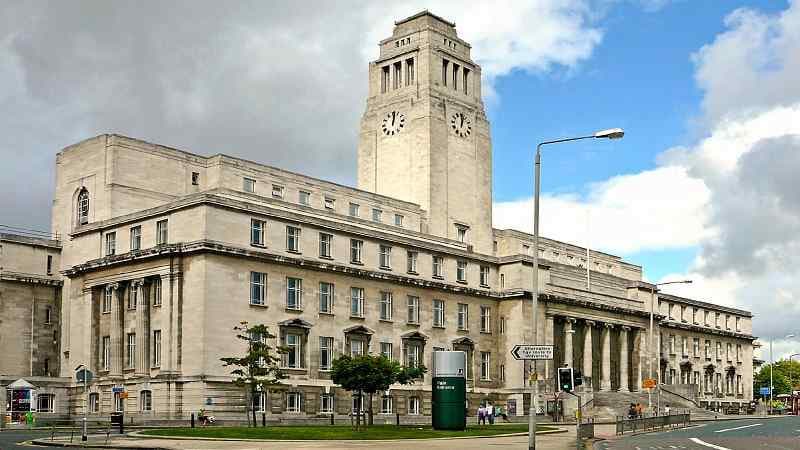
At a glance
- Location
- Leeds, England
- Founded
- 1904
- Degree awarded
- BChD (UCAS code A200)
- Course length
- 5 years
- Home fee
- £10,050 per year (2027/28)
- International fee
- £51,750 (per year) (2025 entry)
- Interview format
- MMI
- UCAT required
- Yes
- SJT Band 4 accepted
- Yes
- Foundation year
- No
Overview of University of Leeds Dentistry
The School of Dentistry is one of the country's leading centres for dental study and research. They are proud of their international reputation for the proficiency of the alumni, the insight of research, and the quality of facilities available to students and collaborators.
They combine expert teaching with innovative research work, producing both the highest quality of dental practitioners and research which will shape the discipline they work in. Leeds also does teach dental hygiene and therapy as an alternate degree.
Leeds School of Dentistry Course Structure
Leeds University Dentistry BChD course integrates clinical dentistry, science, and personal development. You’ll graduate from Leeds as a highly qualified and well-equipped professional, trained to think critically and work independently.
You gain early clinical exposure in year 1 and experience in a range of settings throughout the course - at the dental hospital, in the community, at outreach clinics, and through hospital placements. You can also undertake a four-week local or international placement at the end of your fourth year.
The clinical and teaching facilities are excellent. You will have access to 3D virtual reality dental training simulators to practice clinical skills and build your confidence.
Leeds Dental Hospital is a distinguished institution renowned for providing top-notch dental care and oral health education. Situated in Leeds, the hospital is recognised for its cutting-edge facilities and an experienced team of dental professionals.
Its commitment to outstanding patient care and dental education makes it a leading choice for individuals seeking quality dental treatments and students aspiring for a fruitful career in dentistry.
Teaching style
Leeds Dental School uses a blended, hands-on teaching style that combines lectures, small-group seminars, and personal tutorials with extensive simulation-based training. Students practise in state-of-the-art labs using phantom heads, haptic technology, and 3D-printed teeth before progressing to early patient care at the Leeds Dental Institute and in outreach clinics. This gradual, clinically focused approach ensures strong foundational skills and confidence in real-world dentistry.
Intercalated BSc
Yes
Leeds University Dentistry Entry Requirements
A-Levels
AAA including biology and chemistry; alternative conditions ABB including A in biology or chemistry plus Access to Leeds/ROpps/Reach for Excellence. General Studies and Critical thinking A Levels are not accepted.
GCSEs
A minimum of 6 GCSEs at grade B/6 or higher, including Chemistry, Biology (or Dual Science) English, and Maths. Scottish Nationals are not required if Highers subject requirements are met as above.
International Baccalaureate (IB)
At least 35 points overall including a score of 6 in higher level Chemistry and Biology, plus a further higher at grade 6. English must be offered at higher or subsidiary level (grade 5 minimum if not offered at GCSE). Maths Studies is acceptable.
Scottish Highers
AA in Biology and Chemistry at Advanced Higher plus AABBB in Highers.
A in an Advanced Higher in Biology or Chemistry plus AAABB in Highers with A in Chemistry or Biology, respectively.
AAAAAA in Highers including Biology and Chemistry.
6 subjects at National level at Grade B to include English, Maths, Dual Science (or Biology and Chemistry).
Graduates (degree requirements)
2:1 in related science/healthcare subject and GCSE Maths at grade C/4.
English language requirements
IELTS 7.0 overall, with no less than 7.5 in listening and speaking and no less than 6.0 in writing and reading.
Resits
Yes
Deferred entry
Yes
Minimum age requirements
How we can helpMost popular

Expert 1-1 support for your application
1-1 support from qualified dentists and admissions experts across every stage of your dentistry application.
Most useful
Leeds Uni Dentistry Admission Tests
Leeds Dental School UCAT Cut off 2026
UCAT at the University of Leeds Dental School (BDS)
The Leeds UCAT Cut off Score for 2025 Entry was 2500.
What is known
- Academics are SCORED
- UCAT score is ADDED to the academic score
- GCSEs are heavily looked upon
👉🏼 LOWEST UCAT Score INVITED TO INTERVIEW [ie Leeds UCAT Cut Off Score]:
- 2025 Entry (/3600): 2500 (Non-WP), 2260 (WP), 2290 (International)
- 2024 Entry (/3600): 2730 (Non-WP), 2190 (WP), 2800 (International)
👉🏼 AVERAGE UCAT Score INVITED TO INTERVIEW [ie Leeds UCAT Cut Off Score]:
- 2025 Entry: 2670 (Non-WP)
- 2024 Entry: 2639 (Non-WP)
- 2023 Entry: 2593 (Non-WP)
👉🏼 Leeds Dentistry Application Statistics
- 2022 Entry: 549 Applications, 482 Interviews, 73 Offers
- 2021 Entry: 436 Applications, 284 Interviews, 118 Offers
- 2020 Entry: 551 Applications, NA Interviews, 115 Offers
📝 PS - Have your PS checked - 5⭐ Rated
🎙️ Interviews - 1-1 Dentistry Interview (Panel & MMI) Tutoring & Mocks Online tailored to Leeds- 5⭐ Rated
BMAT
No - As of 2024 Entry the BMAT is no longer required for Leeds Dental School to study Dentistry.
GAMSAT
No
Leeds Dental School Work Experience
Not required. Applicants are expected to demonstrate insight into the profession and motivation to study the subject.
University of Leeds Dentistry Personal Statement
Yes
Used to assess the nature of the applicant's interest in the academic subject and is an important part of the selection process. Applicants must demonstrate their enthusiasm and aptitude for the academic subject. Further information about what we wish to hear about is available in our personal statement guidelines.
Values-based recruitment
The School of Dentistry aligns its selection and recruitment process to the NHS Constitution’s Values Based Recruitment.
We agree that the NHS Culture of Compassionate Care, or the 6 x Cs, are important values for you to be selected on:
- Care
- Compassion
- Competence
- Communication
- Courage
- Commitment
We will be assessing these qualities through your personal statement and at interview.
So what do we want to see in your personal statement?
Your motivation to be a dental professional, and insight into the field
We want your passion for a career in dentistry to shine through the relevant experiences and achievements that you have pursued.
We understand that gaining dental work experience can be tricky. We do like to see that applicants have obtained work experience, but don’t worry if you haven’t. There are many other ways to show your motivation, insight, passion and commitment.
Perhaps you had work experience at a care home with mobile dentistry, or have been to open days or taster classes at a dental school. Alternatively, you might have completed a free MOOC (Massive Open Online Course) in dentistry, or read dental publications online and in journals Remember, it is not enough to just state ‘I have a passion for dentistry because I had a nice dentist’; you have to reflect how your experiences have given you the skills to be a good dental professional.
Avoid simply writing lists of things you have done, but pick out specific examples and expand on them. For example, if you have observed team-working skills between the dentist, the nurse and the technician, tell us how you have demonstrated that you can work as part of a team - maybe you’re in a sports club or work in a shop each week?
Evidence of your social and cultural awareness
We are looking for individuals who can communicate and work with a wide range of people, including those who are vulnerable, or in need of support.
An understanding of the diversity of the world we live in is one of the key skills a dental professional requires. Think about activities that give you the opportunity to learn about other cultures and groups, especially those with protected characteristics. What experiences have encouraged you to put yourself in someone else’s shoes, or given you a new perspective on life?
If you drop in every week to brighten the day of a lonely elderly person, or you care for someone in your family, then you are also exhibiting caring qualities. Working in a shop that serves a wide range of people or organising a charity event could give you some good grounding in being socially and culturally aware. Through these experiences, you can demonstrate empathy, respect for diversity, listening skills, compassion and care.
Evidence of your life experience
Regardless of whether you are coming from school, or returning to education after 20 years, you will have some form of life experience. We are not looking for applicants to have done everything by the time they leave school, but we are looking to see if you can identify your life experience to date and reflect on the skills it has nurtured, regardless of your age or situation.
You will have something to talk about in this section that reflects who you are, and how your life experiences will make you a better dental practitioner. Again, think about what makes a good healthcare professional and draw examples from your life that show us you have those skills too. For example, being in a position of authority (e.g. sports captain or workplace supervisor) will show us that you can be committed and responsible.
Please don’t underestimate the fact that you may have held down a job for many months or years, even if it’s nothing to do with healthcare, because it tells us something about you if an employer is willing to employ you. You must be trustworthy, reliable, punctual and a good worker. Then, take it one step further and explain how those particular skills will be useful when managing your work life balance and how they will make you a good dental student and professional.
We’re looking for prospective students who have the life skills to succeed on the course. Be it resilience, self-awareness, compassion, or a number of other qualities, show us how you stand out.
Your interests, activities and achievements
What do you like to do in your spare time? Don’t fixate on manual dexterity, as we can test for that at our Multiple Mini Interviews. We are interested in you, and what you like to do. A wide range of activities tells us that you have good time management skills (particularly if you’re also juggling work or keeping your grades high). Difficult activities with a number of challenges will show you resilience and tenacity.
Whether it’s martial arts or needlework that fills your spare time, everything you do could evidence a skill that a dental professional will need - even the fun stuff! What lessons have you learned through pursuing your personal interests, and how will they support you in dental field?
Reflect on your experiences
Both good and bad - we are keen to know if you have faced challenges in your life and have found a way to overcome them. Even if at the time, you didn’t manage them well, the fact that you thought about it, reflected on it and have come up with other ways to deal with the issue is what reflectiveness is all about. That in itself shows you are able to be courageous.
When you write your statement, and you are letting us know about your activities and your experience, weave your reflections into the words that you write. What we don’t want is blocks covering the headings above. We are interested in you, what you have done to further your passion and excitement for the subject and then reflect on the skills learnt along the way.
“One of the most challenging situations I faced was when I cared for one of the disabled clients over a weekend for respite care". Expanding the comment by adding on “I was nervous about this task, but prepared for it by seeking guidance from the carer beforehand and reading up about this particular disability” will dramatically enhance your application and make you stand out from your peers.
Graduate entry at Leeds
Yes
Interview preparation
1-1 Tutoring for Leeds University Dentistry Interviews 2026
Practise with qualified dentists: university-specific mock MMI and panel interviews with personalised feedback. Every session is tailored to Leeds's interview format and marking criteria.
- 1x Mock Interview (Panel/MMI Style) - OnlineBuy
- Ultimate Dentistry Interview Questions & Answers GuideBuy
- Interview Coaching - 10 hours + Ultimate Q&A Guide (Free)Buy
- Interview Coaching - 20 hours + Ultimate Q&A Guide (Free)Buy
- Interview Coaching - 30 hours + Ultimate Q&A Guide (Free)Buy
Not sure which option fits? Explore all interview coaching or book a free consultation.
Does Leeds have a gateway or foundation year?
Access to Leeds is the undergraduate widening access programme. It could offer students the chance to study an undergraduate degree with lower entry requirements than those listed on our course pages. If you participate in the scheme you will take part in a study module and you will benefit from support and events to help prepare you for university.
Leeds Dental School Interview Questions 2026
- Leeds Dental School (BDS) uses an MMI - Multiple Mini Interview format
- The Leeds interview is typically held online
- Interviews are scheduled in February 2025 for home and international candidates.
- Stations are typically 7 minutes long with 1 minute of reading time
Interview dates
- Selection for interviews is determined by academic performance and the UCAT
- The dentistry interviews are usually in February every year
🎓 Leeds Dentistry Interview Questions & Topics for 2026 Entry
Several topics are more likely to come up at the University of Leeds Dental School MMI Interview, which can be derived from past Leeds MMI stations and information on their website.
What does Leeds look for at their dentistry A200 BDS interview?
The Leeds Dentistry Interview is based upon the NHS Value Based Recruitment strategies, and will either be something practical (a role-play / manual dexterity task) or question-based stations.
Each applicant will participate in a set of multiple mini-interviews (MMIs). Candidates should expect to be present for an entire morning or afternoon session. The format of the interviews is a number of different tasks undertaken consecutively. These tasks are carefully designed to determine each candidate’s suitability to study one of our dental courses.
The performance will be assessed separately for each station and an overall score generated.
The evaluation criteria for admission to the Leeds BDS course include various factors such as:
- Communication
- Responsibility & professionalism
- Ethics
- Understanding of issues in dentistry
💯 Leeds MMI Interview Questions Scoring in 2026 Entry
- Leeds receives around 450 applicants in an average year, of whom roughly 300 will receive interviews, with around 100 of these interviewees being made an offer.
- Applicants will be advised of the outcome of their Leeds application by 31 March.
❓ Leeds Interview Questions 2026 Entry
These are suggested practice questions based on publicly available information and past trends. They are not official questions from the University and may not appear in your interview. Use them as part of a broader preparation strategy.
Motivation to study Dentistry
- Why Dentistry?
- Why Leeds?
- Reflecting on a placement you observed, what is one thing that genuinely changed how you think about being a dentist? (Keep your example rooted in your dental work experience.)
- What qualities of a dentist did you see from your dental work experience?
- What is the role of prevention in dentistry?
- What do you know about the Leeds Dentistry course? How is it taught?
- Why do you think you will be well suited to this course?
- Several allied health roles involve patient care; what specifically draws you to dentistry rather than, say, becoming a pharmacist or paramedic?
- What are your hobbies?
- Outside of academics, what kind of group or volunteering activity would you want to keep doing while studying here?
Personal Insight/Qualities
- Why should patients trust you?
- Are you good at simplifying ideas?
- How would your friends describe you?
- What are your best qualities?
- How do you manage stress?
- How can you illustrate to us that you are a good leader?
- Can you provide an example of a time when you demonstrated resilience?
- Give us an example of a time when you demonstrated teamwork.
- What are your strengths and weaknesses?
- How would your friends describe you?
- If a patient or colleague criticised your work, how would you respond to that feedback?
- Give us an example of a time when you were resilient. Why does this matter for a career in dentistry?
- If you take part in any precise, hands-on activity such as model-making, baking or playing an instrument, how has it sharpened your fine motor control?
- Tell us about a recent piece of dentistry-related news or research you came across and what stood out to you about it.
Dental Situations
- You are planning preventive care for a patient who keeps developing the same oral problem despite previous treatment. How would you reason through the underlying causes and decide what to do differently this time?
- What would guide your approach to a patient who wants only cosmetic changes you think are unnecessary?
- During a routine appointment a patient suddenly becomes faint and unwell in the chair. How would you approach assessing them?
NHS & Local Area
- What role does the Care Quality Commission play in regulating dental care?
- What do we mean by aerosol-generating procedures?
- What is the role of the National Institute for Health and Care Excellence?
- What does the General Dental Council do, and why does it matter to patients?
- What do you know about how the NHS charges for appointments?
- What are the NHS values, and why are they important?
- What is it like to be a dentist?
- How do you deal with overpopulation?
- What do you know about the local area here in Leeds?
- What are the main challenges facing the future of dentistry in the UK?
- What are the greatest challenges facing healthcare as a whole, and dentistry in particular?
- How has COVID changed the way that dental practices operate?
- How does oral health differ here compared to other areas in the UK?
Ethical Scenarios
- Understanding of the four ethical principles
- How important do you think it is for a dentist to model good health behaviours, and could falling short of that undermine patient trust?
- If you became aware that a colleague was repeatedly arriving for clinic visibly impaired, what would you do?
- Who can you escalate concerns to within a practice?
Other Stations including Manual Dexterity
- Some of the first year covers the science underpinning dental materials; how useful do you think that scientific grounding is in day-to-day clinical practice?
- Walk us through this short text - who has written it, and what argument or position are they putting forward?
- Photo: here is an image of a patient's mouth showing dental problems - describe what you can observe.
- Tell us about a time precision really mattered in something you were doing by hand.
- What interests do you have that has allowed you to develop your manual dexterity?
- What do you do to keep improving a practical skill once you have reached basic competence?
- Role play: the nurse leaves the room to attend to an emergency, and speak to the patient (general talk)
👉🏼 Read more: 230+ Dentistry Interview Questions for 2024
🗣️ How to prepare for your University of Leeds dentistry interview (MMI)
- Leeds runs a multiple mini interview (MMI) circuit of roughly six-minute stations, so the single biggest skill to build is sustaining a structured answer for the full time without prompting. Candidates report that stations have little or no follow-up questioning, so silence sits awkwardly unless you self-generate depth. Drill timed six-minute responses using our ultimate MMI preparation guide.
- Because each Leeds station stands alone with no examiner rescue, practise a 'fill the time' framework: state your position, give two or three reasons, weigh a counterpoint, then reflect and conclude. Run this against unfamiliar prompts on our free mock interview generator until expanding a thin question into six minutes feels natural.
- Past Leeds applicants describe interviewers as deliberately neutral or 'cold', giving no encouraging nods. Train yourself not to read warmth into the room: rehearse with a stony-faced partner so you keep your composure and pacing when you get zero feedback. A 1-1 dentistry interview coaching session is ideal for simulating that flat, unresponsive examiner.
- Leeds has asked candidates how they would treat an LGBTQ+ patient, so prepare to talk about inclusive, non-judgemental care, equality of access and respecting patient identity in a clinical setting. Frame answers around GDC Standards on treating patients fairly and never discriminating. Build the vocabulary using our answering ethics interview questions guide.
- A reported Leeds station asked about the importance of referencing, which surprises candidates expecting clinical scenarios. Be ready to discuss academic integrity, plagiarism, evidence-based practice and giving credit to research as part of being a professional, honest clinician. This links directly to the GDC themes covered in our 200+ dentistry interview Q&A guide.
- Know why Leeds specifically, not just why dentistry. Reference its integrated, patient-contact-early programme at the Leeds Dental Institute, its enquiry-based learning style and its strong community and outreach ethos in the Yorkshire region. Anchor your reasons in the school's values rather than generic praise, and cross-check your shortlist using our compare UK dental schools hub.
- Expect a manual dexterity or practical task within the Leeds circuit, as dexterity matters for a hands-on dental school. Practise precise fine-motor tasks under time pressure (wire bending, knot tying, sculpting) and crucially be ready to narrate what you are doing and how you would improve. Tie this to the clinical training detailed in our a career in dentistry guide.
- Leeds values reflective practice, so a work-experience station will reward what you learned over where you went. Prepare two or three specific moments (a patient interaction, an observed treatment, a difficult conversation) and articulate the insight each gave you about dentistry. Use our dentistry work experience guide to structure that reflection properly.
- Some Leeds stations may involve a communication or role-play element such as explaining something to a layperson or breaking a piece of news. Practise plain-English explanations without jargon, active listening and checking understanding. Rehearse these scenarios out loud, then pressure-test them on our free mock interview generator.
- Be ready for follow-up on any application paperwork beyond your personal statement, since interviewers may pull a single claim and ask you to expand it for the full station. Re-read everything you submitted and prepare to go deeper on every interest, achievement and reflection you mentioned. If your statement feels thin in places, our dentistry personal statement help can shore it up before interview.
- Prepare for topical NHS dentistry issues that Leeds, with its strong community focus, may probe: access deserts and 'dental deserts', the NHS dental contract and UDAs, prevention versus treatment, and inequalities in oral health. Have a balanced view ready rather than a one-sided rant, and ground it in how to become a dentist and the NHS training pathway.
- Solidify your grasp of GDC professionalism, since ethics stations at Leeds lean on the Standards for the Dental Team: confidentiality, consent, raising concerns, and putting patients' interests first. Be able to apply a four-pillars approach (autonomy, beneficence, non-maleficence, justice) to a scenario. Practise applying it to fresh cases using our practice dentistry interview questions.
- Treat the Leeds circuit as independent rounds: a weak station does not sink you, so reset emotionally after each buzzer rather than carrying frustration forward. Build this resilience by running full back-to-back mock circuits, ideally within a structured dentistry application package that times and scores you across stations.
- If you are a graduate, mature or reapplying candidate, prepare to explain your route and what it adds to your readiness for Leeds, which welcomes diverse backgrounds. Have a clear, positive narrative ready for any station that touches on your journey. Our graduate-entry dentistry guide and reapplying gap year guide can help you frame it.
Free University of Leeds Dentistry Mock Interview
Practise under timed conditions with our free generator. It builds a randomised circuit from real Leeds interview themes, with reading time, follow-up questions and a notes summary you can keep.
Free practice tool
Mock interview generator
A timed mock interview in your browser, built from this university's real interview themes. Choose MMI, panel or SAMMI, answer out loud, and keep a summary of how it went.
0
day streak · 0 mocks
Real timings
Reading and answering phases with bells, exactly like the live circuit.
Follow-up questions
Press for more on each station, the way a real interviewer would.
Notes to keep
Rate each answer and save a written summary to review with a tutor.
Free to use. No sign-up needed.
Contact details for Leeds
University of Leeds
Leeds
LS2 9JT
Tel: 0113 343 9922
Email: denadmissions@leeds.ac.uk
Web: medicinehealth.leeds.ac.uk/dentistry
Next step · Dentistry
Boost your dental school application
- 1-1 mentoring from qualified dentists and admissions experts
- A strategy built around your target dental schools
- UCAT, personal statement and interview coaching in one programme
FAQs
Leeds dentistry FAQs
What are the A-Level requirements for Dentistry at Leeds?
AAA including biology and chemistry; alternative conditions ABB including A in biology or chemistry plus Access to Leeds/ROpps/Reach for Excellence. General Studies and Critical thinking A Levels are not accepted.
What are the GCSE requirements for Dentistry at Leeds?
A minimum of 6 GCSEs at grade B/6 or higher, including Chemistry, Biology (or Dual Science) English, and Maths. Scottish Nationals are not required if Highers subject requirements are met as above.
Does Leeds require the UCAT for Dentistry?
Yes, Leeds requires the UCAT for entry to Dentistry.
What UCAT score do you need for Dentistry at Leeds?
The Leeds UCAT Cut off Score for 2025 Entry was 2500.
Academics are SCORED.
UCAT score is ADDED to the academic score.
GCSEs are heavily looked upon.
2025 Entry (/3600): 2500 (Non-WP), 2260 (WP), 2290 (International).
2024 Entry (/3600): 2730 (Non-WP), 2190 (WP), 2800 (International).
2025 Entry: 2670 (Non-WP).
2024 Entry: 2639 (Non-WP).
2023 Entry: 2593 (Non-WP).
Leeds Dentistry Application Statistics.
2022 Entry: 549 Applications, 482 Interviews, 73 Offers.
What type of interview does Leeds use for Dentistry?
Leeds uses a multiple mini interview (MMI) format for Dentistry interviews.
When are the Dentistry interviews at Leeds?
Selection for interviews is determined by academic performance and the UCAT.
The dentistry interviews are usually in February every year.
Does Leeds offer a foundation or gateway year for Dentistry?
No, Leeds does not offer a foundation or gateway year for Dentistry.
Access to Leeds is the undergraduate widening access programme. It could offer students the chance to study an undergraduate degree with lower entry requirements than those listed on our course pages. If you participate in the scheme you will take part in a study module and you will benefit from support and events to help prepare you for university.
Does Leeds accept graduate entry for Dentistry?
Yes, Leeds accepts graduate entry applicants for Dentistry.
Is the personal statement assessed for Dentistry at Leeds?
Yes, Leeds assesses the personal statement as part of the Dentistry application.
Used to assess the nature of the applicant's interest in the academic subject and is an important part of the selection process. Applicants must demonstrate their enthusiasm and aptitude for the academic subject. Further information about what we wish to hear about is available in our personal statement guidelines.
Do you need to be 18 to study Dentistry at Leeds?
Yes, you need to be 18 to study Dentistry at Leeds.