580+ 5-Star ReviewsWhatsApp
Medicine in Ireland

Trinity College Dublin

Ireland's oldest university (1592), running a single 5-year programme with no separate graduate-entry route.

Reviewed by Dr Akash Gandhi, MBBS MA (Cantab) DGM DRCOG MBA MRCGPUpdated August 2026

Trusted UK and international medicine admissions specialists since 2012 · 2700+ taught

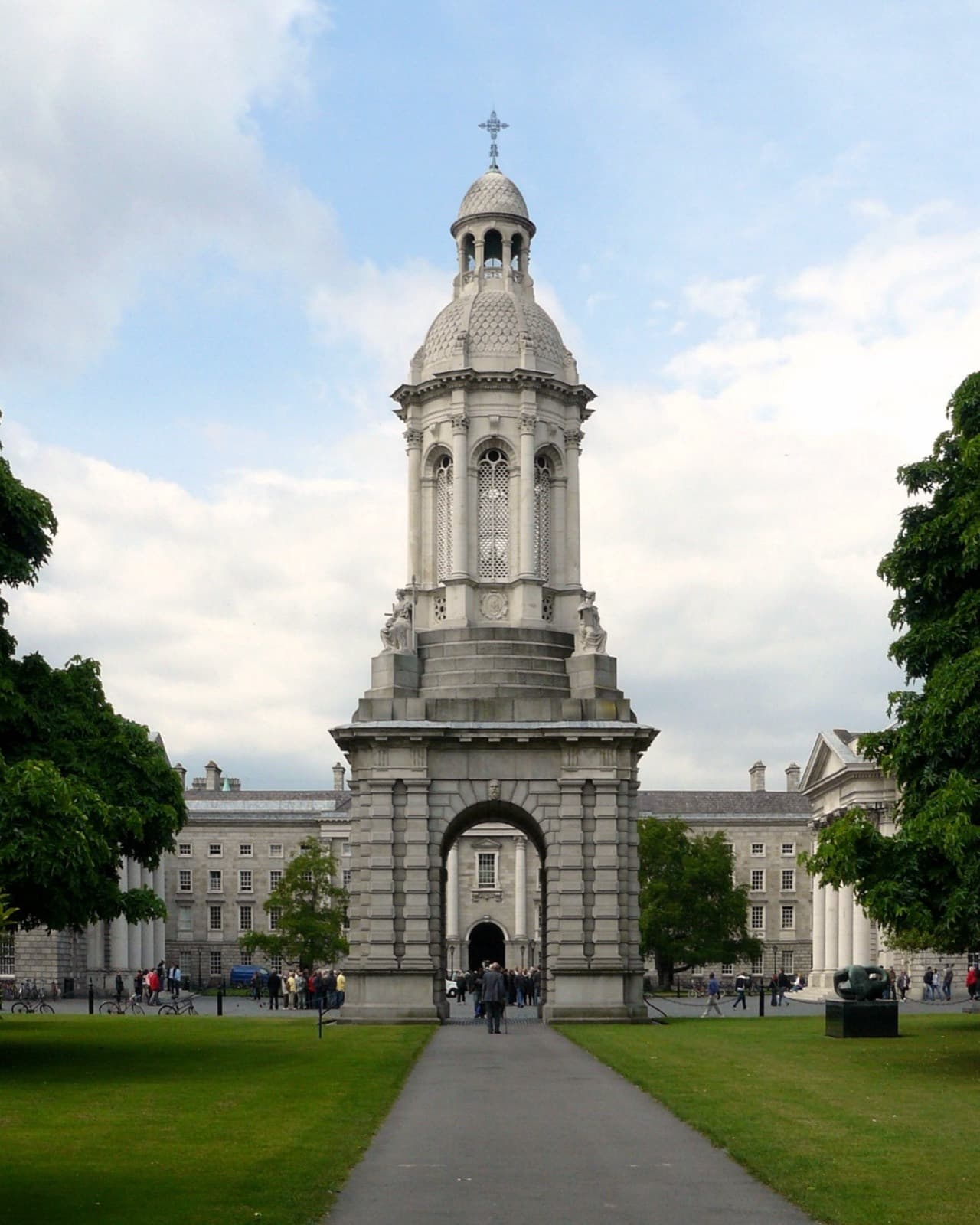
Trinity College Dublin campus
Trinity College Dublin Campanile, by Memorino (CC BY-SA 3.0, via Wikimedia Commons)

At a glance

Location
Dublin, Ireland
Founded
1592
Reputation
Ireland's #1 university; 75th in the world (QS 2026)
Degree awarded
MB BCh BAO
Programmes
Undergraduate (5 years)
Non-EU tuition
approximately €49,000 to €57,000 per year
Graduate entry
No (5-year course)
Annual intake
136 places (total annual intake)
Admissions tests
HPAT (EU) · GAMSAT/MCAT (graduate)
North American route
Atlantic Bridge
Recognised by UK GMC
Yes

Overview

Trinity College Dublin, founded in 1592, is Ireland's oldest university and runs an integrated 5-year medical degree in the heart of Dublin.

There is no separate graduate-entry track: graduates apply into the same 5-year course. The MB BCh BAO is accredited by the Irish Medical Council and recognised by the UK GMC.

  • Ireland's oldest university, founded in 1592.
  • A single 5-year programme; graduates enter the same course.
  • Non-EU undergraduates do not sit the HPAT.

Why Trinity is popular with international students

Ireland's #1 university; 75th in the world (QS 2026)

Trinity College Dublin is Ireland's oldest and most prestigious university, founded by royal charter in 1592, and its School of Medicine (established 1711) is the oldest in the country. It is consistently ranked Ireland's number one university, placing 75th in the QS World University Rankings 2026, and that reputation, together with a historic walled campus in the middle of Dublin, is the main reason international applicants are drawn to it.

For applicants the appeal is a leading, research-intensive medical school with a recognised brand worldwide, set in a genuine city-centre campus rather than an out-of-town site. Trinity runs a single, integrated five-year programme, so the cohort is tight and the teaching consistent from first year to graduation.

Campus, city and teaching hospitals

Trinity's historic, cobbled, walled campus sits in the very centre of Dublin, a short walk from Grafton Street and the city's main institutions. It is one of the most recognisable university campuses in Europe and gives students a true city-centre experience.

Where you train

  • St James's Hospital and Tallaght University Hospital as the two main teaching hospitals, both linked to the city by the Luas tram
  • Affiliated sites including the Royal Victoria Eye and Ear Hospital, Naas General Hospital and the National Rehabilitation Hospital, plus GP placements

How international students apply

Which route you use depends on where you are applying from, not which school you choose:

  • North America (Canada and the US): apply through the Atlantic Bridge Programme.
  • Other non-EU: apply directly to Trinity through its international portal.
  • EU, UK and EEA: apply through the CAO.

Applying from Canada or the US?

North American students apply to Trinity through the Atlantic Bridge Programme: one application and one set of documents covering all six Irish medical schools. Our Atlantic Bridge Programme guide walks through eligibility, the MCAT or GAMSAT, Casper, deadlines, the personal statement and how to get in.

For the full picture across all six schools, see our guide to studying medicine in Ireland and the Irish medical schools comparison.

Entry requirements and admissions tests

  • HPAT-Ireland for EU undergraduate applicants via the CAO; non-EU undergraduates are exempt.
  • Graduates enter the same 5-year course (there is no separate graduate-entry programme); the MCAT is not required for this route.
  • Shortlisted applicants may be interviewed.

Trinity does not publish a fixed interview format; shortlisted applicants may be interviewed.

Tips for applying to Trinity

  • Non-EU undergraduate applicants do not sit the HPAT-Ireland test, which is required of EU applicants only.
  • There is no separate graduate-entry route and the MCAT is not required: graduates apply into the same five-year programme, so a strong degree (a competitive cGPA, typically around 3.5 or above) and references matter.
  • North American applicants apply through the Atlantic Bridge Programme; lead with reflective, well-evidenced recommendation letters.

Fees for international students

Non-EU undergraduateapproximately €49,000 to €57,000 per year
EU / UK / EEAEU/EEA students may qualify for the Free Fees scheme: the State pays tuition and you pay the annual student contribution.

Trinity's non-EU medicine fee is banded by year of study and rises in the clinical years; confirm the current figure on tcd.ie.

US federal loans: Trinity is approved by the US Department of Education to certify William D. Ford Federal Direct Loans (Federal School Code G06842). Pell and other grants are not available for study outside the US, so it is loans only, and you should confirm your programme's current eligibility with Trinity's fees office before relying on it.

Compare costs across all six schools in our Ireland medicine fees breakdown. Fees rise most years, so confirm the figure for your year of entry on the official course page.

Application support

Applying to medicine?

Complete medicine application support: UCAT tutoring, personal statement reviews and interview coaching from doctors.

Can you return to the US or Canada after graduating?

An Irish medical degree from Trinity is internationally recognised, but how you get home matters and is worth planning from your first year. Here is what the route back looks like:

United States: Yes. Trinity is listed in the World Directory of Medical Schools, so graduates can sit the USMLE, gain ECFMG certification and apply through ERAS for the US residency match; the school supports applicants with the MSPE and transcripts. Trinity holds a US Federal School Code (G06842) and is approved to certify William D. Ford Federal Direct Loans, though grants such as Pell are not available for study abroad, so it is loans only.
Canada: Canadian graduates write the MCCQE and NAC OSCE and enter the CaRMS match. Trinity uploads the MSPE, transcript and an English-proficiency letter directly to applicants' CaRMS accounts, and Canadian graduates regularly return to provincial residency programmes.
United Kingdom: Yes. The MB BCh BAO is recognised by the UK GMC for registration. You register with the GMC and enter the two-year UK Foundation Programme.
Ireland: Graduates typically complete a one-year internship registered with the Medical Council of Ireland before moving into specialist training.

North American applicants can read the full route home, including the USMLE, ECFMG and the residency match, in our Atlantic Bridge Programme guide.

Contact us

Want expert help applying to Trinity?

From personal statement editing and interview coaching to our all-in-one Ultimate Package, we support applicants to Trinity at every stage. Tell us where you are applying from and we will recommend the right option.

Next step

Medicine application tutoring with experts

Work with doctors and admissions experts across every stage of your application.

Rated 5.0 from 580+ reviews · 2700+ students taught
FAQs

Trinity: frequently asked questions

How do international students apply to medicine at Trinity?

North America (Canada and the US): apply through the Atlantic Bridge Programme.

Other non-EU: apply directly to Trinity through its international portal.

EU, UK and EEA: apply through the CAO.

How much does medicine at Trinity cost for international students?

Non-EU undergraduate medicine at Trinity costs approximately €49,000 to €57,000 per year. EU/EEA students may qualify for the Free Fees scheme: the State pays tuition and you pay the annual student contribution. Trinity's non-EU medicine fee is banded by year of study and rises in the clinical years; confirm the current figure on tcd.ie.

Does Trinity offer graduate entry medicine?

No. Trinity runs a single undergraduate programme; graduates apply into the same course.

Can I return to practise in the US or Canada after studying medicine at Trinity?

Yes. Trinity is listed in the World Directory of Medical Schools, so graduates can sit the USMLE, gain ECFMG certification and apply through ERAS for the US residency match; the school supports applicants with the MSPE and transcripts. Trinity holds a US Federal School Code (G06842) and is approved to certify William D. Ford Federal Direct Loans, though grants such as Pell are not available for study abroad, so it is loans only.

Canadian graduates write the MCCQE and NAC OSCE and enter the CaRMS match. Trinity uploads the MSPE, transcript and an English-proficiency letter directly to applicants' CaRMS accounts, and Canadian graduates regularly return to provincial residency programmes.

Why is Trinity a popular choice for international medical students?

Trinity College Dublin is Ireland's oldest and most prestigious university, founded by royal charter in 1592, and its School of Medicine (established 1711) is the oldest in the country. It is consistently ranked Ireland's number one university, placing 75th in the QS World University Rankings 2026, and that reputation, together with a historic walled campus in the middle of Dublin, is the main reason international applicants are drawn to it.

For applicants the appeal is a leading, research-intensive medical school with a recognised brand worldwide, set in a genuine city-centre campus rather than an out-of-town site. Trinity runs a single, integrated five-year programme, so the cohort is tight and the teaching consistent from first year to graduation.
Is a medical degree from Trinity recognised in the UK?

Yes. The MB BCh BAO is recognised by the UK GMC for registration. Graduates can register with the GMC and enter the UK Foundation Programme.

2025/26 results

Why Students & Parents Recommend Us

Ultimate Package students from our 2025/26 cycle, with their UCAT scores and offers, who trained with us for the UCAT, personal statements and interviews.

Ultimate Package
Sophie
Medicine, King's College London
2025 UCAT2,590 / 2,700
Harry got my UCAT up to 2,590, working through the sections I kept dropping marks on week by week. Gemma then ran my interview practice so the MMI stations didn't catch me out, and Dr Akash mentored me the whole way through. I'm off to King's for Medicine.
Ultimate Package
Daniel
Medicine, University College London
Medicine offers4 offers
The interview prep was the part that actually moved the needle. Proper mock MMIs, not just lists of questions, and feedback that was honest about what I was getting wrong. I ended up with four offers and firmed UCL.
Ultimate Package
Aisha
Dentistry, University of Birmingham
Dentistry offers4 offers
The Ultimate Package kept me organised from UCAT through to interviews. They knew what dental schools actually ask and tightened up my personal statement. Four offers in the end, and I'm going to Birmingham.
Ultimate Package
Charlotte
Veterinary Medicine, Royal Veterinary College
Vet offers4 offers
Vet applications come down to the written SAQs as much as the interview. Dr Rebecca went through my SAQs line by line, sharpened my answers and prepped me for the panels. I came away with four offers and chose the RVC.

Boost Your Medicine Application

Book your FREE consultation today

Click to book your free consultation

Trusted by leading schools

  • St Paul's School, London
  • City of London School
  • Queen Elizabeth's School, Barnet
  • Francis Holland School, Sloane Square
  • Partner school crest (Ad Maiorem Dei Gloriam)
  • Brampton College, Independent Sixth Form College
  • Partner school crest