Interview Tutoring 10h
1-1 sessions
Reviewed by Dr Rebecca Massie, BVetMed MRCVS, Royal Veterinary College
Trusted UK veterinary medicine admissions specialists since 2012 · 2700+ students taught
At a glance
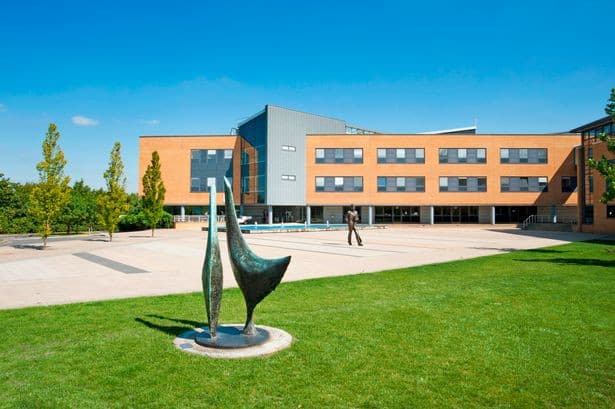
The University of Surrey is a public research university in Guildford, England. The university received its royal charter in 1966, along with a number of other institutions following recommendations in the Robbins Report. Surrey is a campus-based university with a tight-knit community of students. Surrey ranked 34th in the Complete University Guide 2021. The year group size for Veterinary Medicine at Surrey is approximately 150 students.
With £45m state-of-the-art facilities, including a £11m Veterinary Pathology Centre, the diverse BVMSci Veterinary Medicine and Science course will fully equip you to excel in this dynamic field. Surrey gives you the opportunity to benefit from their wide partner network and strong industry links within the veterinary profession. You may also get to take on challenging research with partner organisations, allowing you to gain a unique insight into veterinary research.
Surrey’s hands-on, practical training and partnership-based teaching are designed to build your confidence right from day one, and allow you to understand the range of career opportunities open to you. Surrey achieved 100% overall satisfaction for this course in the National Student Survey 2019, demonstrating that students are very happy with the way in which the course is structured and delivered.
In your first year of the university of surrey veterinary medicine course, you’ll study topics that are fundamental to veterinary medicine, including anatomy, physiology, animal husbandry, cells and genes, ensuring you have a solid foundation upon which to build the rest of your degree.
During your second year, you’ll learn about epidemiology, infectious diseases and pathology with some practical sessions taught off campus at Surrey Wildlife Trust, Chichester, Merrist Wood and Sparsholt Colleges.
By third year, you’ll delve deeper into clinical medicine and surgery, diagnostic techniques, pharmacology and scientific communication. In fourth year, studies include anaesthesia, surgery and patient care, contemporary issues in veterinary medicine and zoological medicine.
A distinguishing feature of the fourth year is the rotating cycle of small group practical workshops visiting external partners.
The final year is delivered via the University of Surrey’s external partner network of Vet practices and The Surrey-based Veterinary Pathology Centre which is one of the largest and most sophisticated of its kind in Europe. You become immersed in real practice life in small animal, farm and equine clinics throughout the year, returning to Surrey regularly for professional practice teaching. We have dedicated University staff to visit and support you on these final year placements.
Intercalation
Students within the BVMSci may apply to undertake an undergraduate intercalated degree programme following the successful completion of the second year (Level 5) and before the start of the third year (Level 6).
The University of Surrey Veterinary School offers an integrated curriculum that combines scientific knowledge with clinical and professional skills from the start. Students gain early hands-on experience through animal handling, clinical skills training, and group-based learning in modern facilities. Teaching methods include practical sessions, communication practice, and reflective activities. In later years, students complete immersive clinical rotations at partner practices and specialist centres, preparing them for real-world veterinary work.
Expert 1-1 support for your application
1-1 support from our admissions experts across every stage of your vet school application.
Interview Tutoring 10h
1-1 sessions
Interview Tutoring 20h
1-1 sessions
Vet Ultimate Package
Full application support
Universities revise entry requirements between cycles, usually in August and September. Always confirm with the university before you apply.
AAA including Biology and Chemistry. A Level General Studies and Critical Thinking are not accepted. Applicants taking the Science Practical Endorsement are required to pass.
Five GCSEs at grade 7 (A) including Chemistry and Biology (or Double Science), plus English Language and Mathematics at grade 5 (B).
Still sitting your GCSEs? Protect the grades this course screens for with 1-1 GCSE Maths, Biology and Chemistry tutoring from medics.
Minimum score of 35 overall. Required subjects: HL6/SL7 in Biology and Chemistry.
AAAAB overall. Required subjects: Biology and Chemistry at Grade A.
We are able to consider applications from final year bachelors degree students, or applicants who hold a bachelors degree in a Bioscience related field, with an expected or attained 2:1 Honours degree.
IELTS Academic: 7.0 overall with 7.0 in each element.
Most useful
Unlike medicine and dentistry, Surrey does not use the UCAT or any other written admissions test. Veterinary admissions instead turn on your hands-on animal and clinical work experience, your UCAS application and personal statement, and your interview.
Prepare for the interview with 1-1 vet school interview coaching, and compare entry requirements, fees and competition across every UK vet school in our UK vet schools guide.
We do not require evidence of Veterinary Work Experience as part of your application. As part of the shortlisting process there will be an online questionnaire.
You should have a clear understanding and insight into the profession, demonstrating the personal skills and qualities relevant to the course. Personal statements may also be reviewed during the admissions process.
Your personal statement will be taken into account in your application for Surrey Veterinary Medicine, but they weight their Personal Qualities Review more heavily in assessment of your motivation/character.
Surrey Vet School uses an online questionnaire to help differentiate between students.
The online questionnaire is designed to enable you to demonstrate your current knowledge and understanding of the veterinary profession and that you have the necessary motivation and insight to undertake a degree in veterinary medicine. You will have the opportunity to provide further information about your completed animal related work experience. The second part of the questionnaire is a number of Situational Judgement Tests (SJTs) which assess key attributes outlined by the Royal College of Veterinary Surgeons Day One Competencies. You will be asked to review each judgement test and rank in order the statements based on how you would react to the situation.
Not offered
Surrey Veterinary Medicine Gateway Course
The University of Surrey School of Veterinary Medicine uses a Multiple Mini Interview (MMI) format consisting of seven short questions. Surrey's official applicant advice document confirms the interview "consists of seven short questions asked (and later marked) by a series of interviewers.
" The interviews are delivered online as pre-recorded responses: candidates record their answers to each question as if in a face-to-face interview, with each question lasting approximately four minutes and the whole session lasting under one hour, completed in one sitting within a set window (typically November to January). Recorded responses are independently marked by a combination of Surrey staff, current students, vet school alumni and veterinary surgeons from the partner network.
The MMI explicitly does NOT assess clinical or veterinary knowledge, and veterinary work experience is not assessed. Interview shortlisting also follows an earlier online questionnaire stage based on the RCVS Day One Competences.
University of Surrey Veterinary Medicine and Science interviews for 2027 entry are conducted online between November 2026 and January 2027 and last no longer than an hour.
Shortlisted applicants are emailed an online questionnaire on 20 October 2026, returnable by midday on 27 October 2026, and those who pass it are invited to a multiple mini interview of seven pre-recorded questions of four minutes each, sat within a window of four days.
Interviews will take place November - December and all applicants must attend the University for a Multiple Mini Interview cycle that lasts under one hour. Candidates will be assessed and independently marked against agreed criteria on each of the MMI stations.
nterviews dates are conducted between November 2025 and January 2026 and will last no longer than an hour. They are conducted as 7 pre-recorded questions which you will record your answers to, as if in a face-to-face interview. Each question lasts 4 minutes. You will have a time frame of 4 days in which to sit your interview, choosing a time which is convenient to you, but once started, the interview must be completed in one sitting.
Prepare with 1-1 vet school interview coaching and practise with our vet school interview questions guide.
Practise under timed conditions with our free generator. It builds a randomised circuit from real Surrey interview themes, with follow-up questions and a notes summary you can keep. It opens preset to Surrey's own interview format, and you can record your answers to watch them back.
Boost your vet school application
AAA including Biology and Chemistry. A Level General Studies and Critical Thinking are not accepted. Applicants taking the Science Practical Endorsement are required to pass.
Five GCSEs at grade 7 (A) including Chemistry and Biology (or Double Science), plus English Language and Mathematics at grade 5 (B).
No, Surrey does not require the UCAT for entry to Veterinary Medicine.
Yes, Surrey interviews applicants for Veterinary Medicine.
The interview format is recorded as: MMI (online).
Surrey uses a MMI (online) interview format for Veterinary Medicine interviews.
The Veterinary Medicine interview at Surrey covers motivation and insight into the profession, personal attributes and reflection, ethics and moral reasoning, communication and empathy scenarios and awareness of animal welfare and current issues.
University of Surrey Veterinary Medicine and Science interviews for 2027 entry are conducted online between November 2026 and January 2027 and last no longer than an hour.
Yes, Surrey assesses the personal statement as part of the Veterinary Medicine application.
Your personal statement will be taken into account in your application for Surrey Veterinary Medicine, but they weight their Personal Qualities Review more heavily in assessment of your motivation/character.
Surrey Vet School uses an online questionnaire to help differentiate between students.
Yes, you need to be 18 to study Veterinary Medicine at Surrey.
International students pay £39,900/ per year for Veterinary Medicine at Surrey.

Want expert help getting into Surrey?
From admissions test prep and personal statement editing to interview coaching and our all-in-one Ultimate Package, we help applicants at every stage. Tell us where you are and we will recommend the right option.
Ultimate Package students from our 2025/26 cycle, with their UCAT scores and offers, who trained with us for the UCAT, personal statements and interviews.
“Harry got my UCAT up to 2,590, working through the sections I kept dropping marks on week by week. Gemma then ran my interview practice so the MMI stations didn't catch me out, and Dr Akash mentored me the whole way through. I'm off to King's for Medicine.”
“The interview prep was the part that actually moved the needle. Proper mock MMIs, not just lists of questions, and feedback that was honest about what I was getting wrong. I ended up with four offers and firmed UCL.”
“The Ultimate Package kept me organised from UCAT through to interviews. They knew what dental schools actually ask and tightened up my personal statement. Four offers in the end, and I'm going to Birmingham.”
“Vet applications come down to the written SAQs as much as the interview. Dr Rebecca went through my SAQs line by line, sharpened my answers and prepped me for the panels. I came away with four offers and chose the RVC.”
Book your FREE consultation today
Click to book your free consultation